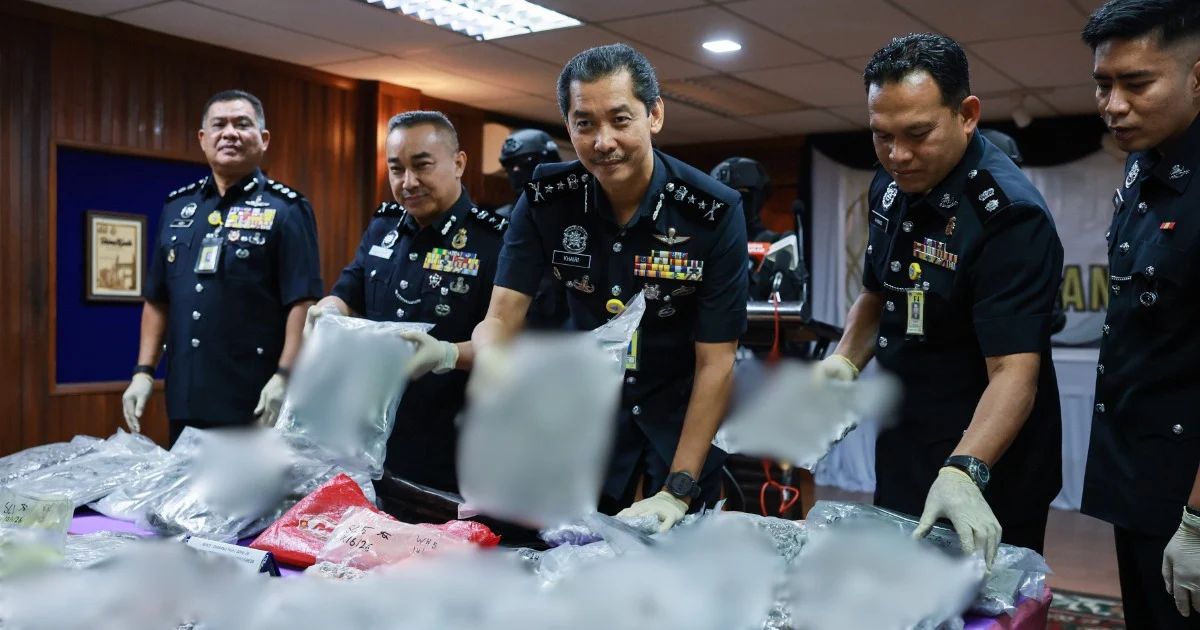
Police in Kuala Terengganu have apprehended two brothers who are believed to have been using their residential property in Kampung Duyong Besar as a warehouse for a substantial drugs operation. The raid, which uncovered narcotics estimated to be worth RM1.76 million, represents a significant seizure in the state's ongoing battle against drug trafficking networks.
The operation demonstrates how residential properties across Malaysia continue to be exploited by organised crime syndicates as storage and distribution points for illicit substances. Rather than operating from warehouses or industrial zones that might attract heightened scrutiny, criminal groups increasingly favour family homes where neighbours may remain unaware of the illicit activities occurring within. This tactic has proven effective in numerous cases throughout Southeast Asia, where suburban and rural locations provide cover whilst maintaining proximity to distribution networks in urban centres.
The arrest of the two siblings underscores the vulnerability of local communities when drug operations embed themselves in everyday residential settings. Kampung Duyong Besar, a district within Kuala Terengganu, would typically be characterised as a neighbourhood where residents expect safety and normalcy. The discovery that such a significant cache of illegal substances had been stored there highlights the sophisticated methods employed by drug traffickers to evade detection whilst establishing a physical presence in smaller towns beyond the capital.
The RM1.76 million valuation of the seized materials reflects either substantial quantities of lower-grade narcotics or smaller volumes of higher-potency substances such as crystal methamphetamine or heroin. The actual street value could exceed the estimated amount significantly, depending on the composition of the seizure and prevailing market rates in the region. Such large operations typically serve multiple distribution channels, potentially supplying dealers across Terengganu and neighbouring states.
The use of family properties for drug storage suggests these operations may have involved legitimate-appearing economic activity or income streams to justify the residence's maintenance and utilities. This layering of criminal activity within the fabric of ordinary domestic life represents a persistent challenge for enforcement agencies attempting to identify and disrupt supply chains. Intelligence gathering and community reporting remain crucial tools in identifying suspect properties before they facilitate larger criminal enterprises.
Terengganu has faced persistent challenges related to drug trafficking, given its geographical position along established trafficking routes between Thailand and the Malaysian peninsula. The state's coastal access and proximity to international borders create conditions favourable for narcotics smuggling. Operations like this bust represent concentrated efforts by state authorities to intercept drugs before they distribute further into the community, though enforcement agencies acknowledge that supply interdiction alone cannot address the structural demand that sustains these markets.
The successful execution of this raid likely resulted from intelligence gathered through community tips, surveillance operations, or information derived from previous drug-related investigations. Police coordination between state and federal authorities has improved substantially in recent years, enabling more sophisticated targeting of organised drug networks. The brothers' arrest may lead to further investigations into their supply chains and customer networks, potentially yielding additional arrests and seizures.
Custody and legal proceedings against the suspects will proceed through Malaysia's specialised drug courts, where trafficking-related offences carry severe penalties including lengthy imprisonment and, in cases involving quantities above the statutory threshold, potential capital punishment. The severity of these consequences reflects the government's zero-tolerance stance on large-scale narcotics operations, though enforcement effectiveness remains a matter of ongoing public debate regarding rehabilitation, demand reduction, and prevention initiatives.
The seizure carries broader implications for understanding trafficking patterns in Malaysia's east coast region. Successive major busts in Terengganu suggest either increasing law enforcement effectiveness or, conversely, intensifying smuggling volumes as organisations attempt to move larger quantities through geographical chokepoints. Distinguishing between these scenarios requires analysis of arrest frequencies, seizure values, and distribution networks over extended periods.
For Malaysian communities, incidents of this nature reinforce awareness that drug operations can exist undetected in residential neighbourhoods. Public vigilance combined with effective police work remains essential to disrupting these networks. The arrest of the two brothers represents a concrete success, though authorities emphasise that sustained effort across prevention, interdiction, and community engagement is necessary to meaningfully reduce drug availability and associated harms throughout the nation.