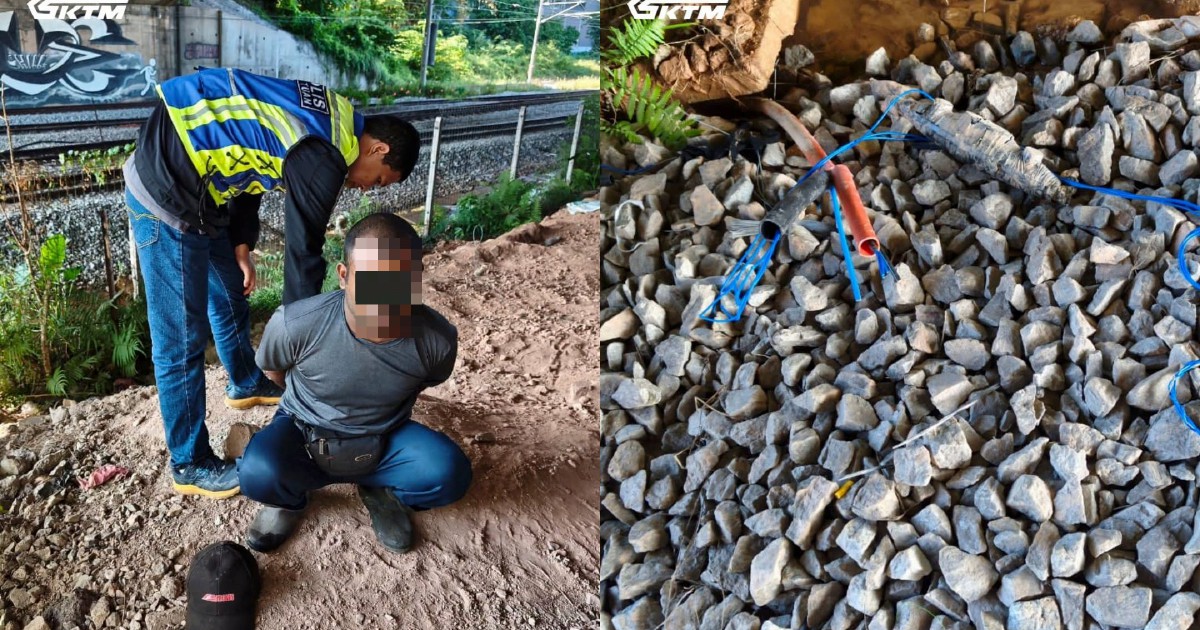
Railway infrastructure remains a persistent target for metal thieves across Malaysia, a challenge starkly illustrated by the detention of two suspects in Shah Alam yesterday. Auxiliary policemen deployed by Keretapi Tanah Melayu Bhd (KTMB), the nation's principal rail network operator, caught the pair red-handed during an attempted cable theft operation.
Theft of railway equipment, particularly copper and aluminium cabling, has emerged as a recurring security headache for KTMB and transport authorities nationwide. The monetary value of stolen materials often proves secondary to the operational disruption such crimes inflict on the network. Cable theft directly threatens service reliability, forces costly repairs, and potentially endangers passengers when maintenance backlogs accumulate. In recent years, organised syndicates have operated across multiple states, targeting both active and dormant sections of track.
The Shah Alam incident underscores the vulnerability of rail assets despite the deployment of security personnel. KTMB operates approximately 1,671 kilometres of track spanning the peninsula, making comprehensive monitoring extraordinarily resource-intensive. Thieves typically work under cover of darkness, accessing remote sections where surveillance presence is thinnest. The auxiliary police force, though essential to KTMB's security framework, operates within finite budgetary and personnel constraints that often prove inadequate against determined criminal activity.
Metal theft networks frequently operate with sophisticated logistics, employing spotters, extraction teams, and buyers who quickly process stolen materials into untrackable commodity markets. The low risk of apprehension—relative to the resale value of metals—creates powerful financial incentives for criminal groups. Copper cable commands particularly high prices in scrap markets, with international demand from construction and manufacturing sectors driving consistent buyer networks.
The timing and coordination of such thefts suggest possible organised involvement. Shah Alam, as a major industrial and residential hub adjacent to Kuala Lumpur, presents attractive targeting opportunities due to significant infrastructure density and multiple access points. The proximity to rapid urbanisation also means expanding informal settlements where stolen materials can be quickly concealed and distributed to illicit traders.
For passengers relying on KTMB's services, cable theft translates into delayed departures, cancelled routes, and reduced frequency schedules. The railway operator must divert maintenance crews to emergency repairs rather than planned infrastructure upgrades. Over time, accumulated theft incidents strain maintenance budgets and deter long-distance commuters from choosing rail over private vehicles, a particularly problematic outcome given Malaysia's congestion and environmental challenges.
Response mechanisms require coordination across multiple agencies. KTMB's own auxiliary police collaborate with federal and state law enforcement, though jurisdictional boundaries and resource-sharing arrangements sometimes complicate swift action. Prevention strategies range from increased patrol frequency to installation of perimeter fencing and CCTV surveillance on vulnerable sections. Some operators internationally have introduced live electrical deterrent systems—though human rights concerns and safety risks limit their applicability.
The broader structural vulnerability stems partly from KTMB's ownership model and funding constraints. As a state-owned enterprise, the operator juggles service expansion, maintenance backlogs, and security costs within tight budget allocations. Investing substantially in advanced security infrastructure requires capital outlays competing against operational needs. Community-based vigilance programmes have shown modest success elsewhere, though implementation in sprawling suburban areas remains challenging.
These arrests, while welcome, represent tactical victories in an ongoing strategic challenge. Long-term solutions demand multifaceted approaches: strengthening KTMB's security capacity through improved technology and personnel training, enhancing coordination with law enforcement agencies, increasing penalties for metal theft to raise criminal risk calculus, and disrupting the downstream markets where stolen materials are rapidly converted to cash. Regional cooperation across Southeast Asia would help, given evidence that some organised syndicates operate across borders and sell stolen materials to international traders.
The incident also reflects broader societal issues. Economic pressures driving individuals toward theft crimes, inadequate community policing capacity in peripheral areas, and weakly regulated scrap metal trading networks all enable such criminal activity to persist. Without addressing these root causes alongside enforcement action, arrest of individual perpetrators will remain a recurring necessity rather than a strategic solution.
For Malaysian rail users, infrastructure security directly affects service quality and system reliability. The February arrest reinforces the reality that protecting national assets demands sustained investment, inter-agency cooperation, and community partnership. Until these elements align comprehensively, KTMB's operations will remain vulnerable to determined theft networks exploiting security gaps across its sprawling network.

