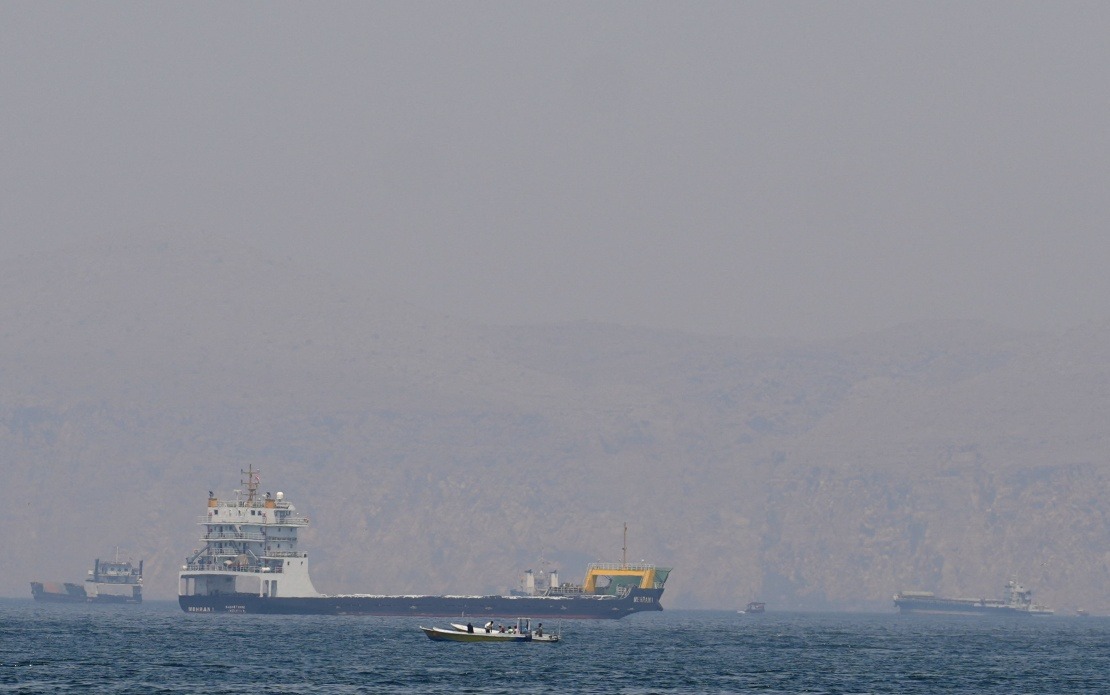
US President Donald Trump has declared that no maritime tolls will be levied in the Strait of Hormuz for the next 60 days, though he has made clear that America may unilaterally impose its own fees thereafter should negotiations stall. Speaking on his Truth Social platform, Trump framed any future American charges as compensation for protective services rendered to West Asian nations, suggesting that fees could cover what he termed "reimbursement of costs" for both past and future security guarantees in the region.
The president's ultimatum reflects heightened tensions over control of one of the world's most strategically vital waterways, through which roughly one-third of globally traded liquefied natural gas and approximately one-fifth of all seaborne oil passes annually. For Malaysia and other Southeast Asian economies heavily dependent on energy imports from the Gulf, disruptions to Hormuz traffic directly threaten supply chains and energy costs. Trump's assertion that "there will be no tolls... unless they are imposed by and for the United States of America" represents an explicit claim to unilateral authority over a waterway through which much of Asia's energy supply transits.
The 60-day window comes against a backdrop of Iranian threats to close the strait entirely. Iran's Khatam al-Anbiya Central Headquarters, a semi-official military-linked organization, announced the potential closure citing alleged American breaches of commitment and Israeli violations of ceasefire agreements in Lebanon. These accusations suggest fragile trust between Washington and Tehran regarding regional security arrangements, with each side accusing the other of bad faith.
The Trump administration has moved swiftly to counter Iran's narrative. US Central Command dismissed Iranian claims about closure and breach, insisting instead that American military forces maintain continuous presence and vigilance throughout the region to enforce all aspects of existing agreements. Captain Tim Hawkins, a CENTCOM spokesperson, directly rejected Iran's implicit assertion of control, telling Axios that "Iran does not control the Strait of Hormuz," underlining the military reality that American naval assets dominate the waterway.
For Southeast Asian nations including Malaysia, the dispute carries profound implications. The region's economies depend critically on uninterrupted maritime access to Gulf energy resources, and any escalation of tensions in Hormuz directly affects regional prosperity. Malaysian shipping companies, energy importers, and manufacturers reliant on stable fuel prices face uncertainty during this 60-day period, with no guarantee that the grace period will lead to a comprehensive settlement. The prospect of American toll collection after the ceasefire expires adds another layer of complexity to regional supply chains already strained by geopolitical volatility.
Trump's framing of tolls as payment for "guardian angel" services reveals how the Trump administration views its military presence in the Gulf—as a service for which compensation is owed rather than a commitment undertaken for broader strategic interests. This transactional approach differs markedly from traditional US posture in the region and suggests that Washington may increasingly expect Gulf allies to fund American military operations directly. Such an arrangement could reshape alliances in West Asia and create precedents affecting American military commitments elsewhere.
The 60-day timeline appears deliberately calibrated to allow negotiation space while maintaining pressure on all parties. If neither side makes concessions during this window, Trump's threat of American tolls would represent an unprecedented assertion of unilateral control over international maritime commerce. Such a move would likely provoke international opposition and potentially trigger similar assertions of control by other nations claiming security interests in contested waters—a development with ramifications for global shipping.
Iran's military establishment has historically used threats of closure as leverage during negotiations, though actual implementation remains technically challenging given American naval supremacy in the region. The Iranian announcement appears designed to signal resolve to domestic audiences and to demonstrate that Tehran retains disruptive capacity even as it negotiates. However, the credibility of such threats diminishes if the Strait remains open throughout the 60-day period, potentially undermining Iran's negotiating position.
Southeast Asian policymakers will closely monitor whether the Trump administration's demand for toll compensation gains traction among Gulf states and international shipping interests. If accepted, it would establish a costly precedent for maritime commerce through one of the world's most important chokepoints. Conversely, if rejected, it may signal that even Washington cannot unilaterally impose such fees without broader international cooperation, limiting the practical impact of Trump's ultimatum.
The broader context involves ongoing regional tensions between American-aligned Gulf states, Iran, Israel, and various militias, with Lebanon ceasefire violations cited by Iran as evidence of American unreliability. These wider regional conflicts threaten to spill over into maritime disputes, making the Strait of Hormuz a potential flashpoint where broader geopolitical conflicts could trigger economic disruption affecting global energy markets and Southeast Asian interests.
As the 60-day clock begins, Malaysia and its neighbours should prepare contingency plans for energy supply disruptions and monitor developments closely. The outcome of this period will shape not only Gulf politics but also the global maritime order and the cost of energy imports upon which Southeast Asia's economies depend. Trump's threat to impose American tolls, while rhetorically bold, remains contingent on successful American enforcement and international acquiescence—conditions that remain far from assured.
%22%2F%3E%3C%2Fpattern%3E%3C%2Fdefs%3E%3Crect%20width%3D%22100%25%22%20height%3D%22100%25%22%20fill%3D%22url(%23ph154wcg)%22%2F%3E%3Crect%20width%3D%22100%25%22%20height%3D%22100%25%22%20fill%3D%22url(%23ph154wcp)%22%2F%3E%3Ctext%20x%3D%2250%25%22%20y%3D%2250%25%22%20text-anchor%3D%22middle%22%20dominant-baseline%3D%22central%22%20fill%3D%22rgba(255%2C255%2C255%2C0.95)%22%20font-family%3D%22Georgia%2C%20'Times%20New%20Roman'%2C%20serif%22%20font-weight%3D%22700%22%20font-size%3D%22226%22%20letter-spacing%3D%22-0.02em%22%3EEnergy%3C%2Ftext%3E%3C%2Fsvg%3E)