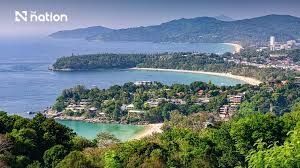
Thailand is escalating its enforcement efforts against networks of foreign nationals illegally controlling land and businesses through local intermediaries, with a significant operation targeting Phuket, Phang Nga, Surat Thani and Krabi yielding substantial results. The coordinated three-phase initiative by Thai police resulted in the detention of 96 individuals across the four southern provinces, demonstrating the authorities' determination to combat what has become an increasingly sophisticated method of circumventing property ownership restrictions designed to protect Thai interests.
The operation uncovered considerable assets under investigation, with authorities examining 172 separate land plots spanning 51.38 hectares collectively valued at approximately 1.671 billion baht. Among the 96 detained, 67 were foreign nationals while 29 were Thai citizens believed to be complicit in the schemes. The sheer scale of the property holdings suggests a deeply entrenched network of illegal transactions, raising concerns about how extensively such proxy arrangements have proliferated across Thailand's most economically vital regions.
Israeli nationals constituted the largest single nationality group implicated in these activities, with 15 individuals arrested during the operation. The remaining foreign detainees comprised a diverse international mix, including six French nationals, four Russians, two each from Poland, Switzerland, South Africa, Britain, the Netherlands and Ukraine, alongside single individuals from Slovakia, Australia, the Philippines and Turkey. This geographic spread indicates that land acquisition through proxies has become a widespread phenomenon among foreign communities in Thailand, rather than an isolated problem confined to any particular nationality or region.
The fundamental illegality at the heart of these operations centres on the deliberate circumvention of Thailand's Land Code, which explicitly prohibits foreign nationals from owning land within the country. By employing Thai citizens as nominees—individuals who formally hold title to properties while the actual control and beneficial interest remain with foreign nationals—these networks create a technically compliant surface appearance while violating both the letter and spirit of Thai property law. This mechanism effectively transfers wealth and decision-making authority over prime real estate to foreign hands without following proper legal channels.
The geographic focus on southern tourist provinces reflects where such schemes have become most prevalent and lucrative. Phuket, Phang Nga, Surat Thani and Krabi represent Thailand's most valuable tourism real estate markets, where foreign demand for commercial and residential properties remains extraordinarily high. The concentration of wealth and foreign investment in these areas creates powerful incentives for middlemen to facilitate illegal transactions, while the transient nature of tourist populations can make oversight more challenging for authorities attempting to monitor ownership patterns.
These operations also encompassed efforts to identify and arrest individuals working without valid employment permits, suggesting that the authorities are taking a comprehensive approach to removing foreign economic influence from these protected sectors. Many foreign nationals involved in proxy schemes simultaneously operate businesses without proper work authorisation, compounding their legal violations and creating additional grounds for prosecution and deportation.
The investigation specifically identified companies acting as corporate nominees for land transactions, indicating that some schemes operate through business structures rather than relying solely on individual proxies. Such corporate vehicles can obscure beneficial ownership across multiple layers of corporate entities, making detection and prosecution considerably more complex for enforcement agencies attempting to unravel these networks.
For Malaysian readers, this situation carries relevant implications regarding similar challenges that may exist domestically. While Malaysia maintains its own restrictions on foreign property ownership, the sophistication and scale of Thailand's proxy schemes illustrate how determined foreign investors can exploit loopholes and find willing local collaborators. Malaysian authorities monitoring foreign investment patterns should consider whether comparable schemes operate within Malaysia's property markets, particularly in high-value areas and tourist destinations where foreign demand naturally concentrates.
The crackdown also underscores Thailand's broader struggle with maintaining sovereignty over its economic assets while simultaneously seeking foreign tourism and investment revenue. This tension between welcoming foreign capital and protecting Thai ownership of strategic land assets remains unresolved, with periodic enforcement operations serving as temporary pressure relief rather than permanent solutions. Without addressing underlying demand from foreign purchasers and the economic incentives driving Thai collaborators to facilitate illegal transactions, such enforcement actions may provide only temporary disruption to these networks.
The authorities' statement emphasised their ongoing commitment to tracking additional networks and companies involved in similar proxy arrangements, suggesting that this operation represents merely one phase of a longer-term enforcement effort. Thai police indicated that investigations into nominee companies operating in the tourism sector would continue, potentially yielding additional arrests and property seizures in coming months.

