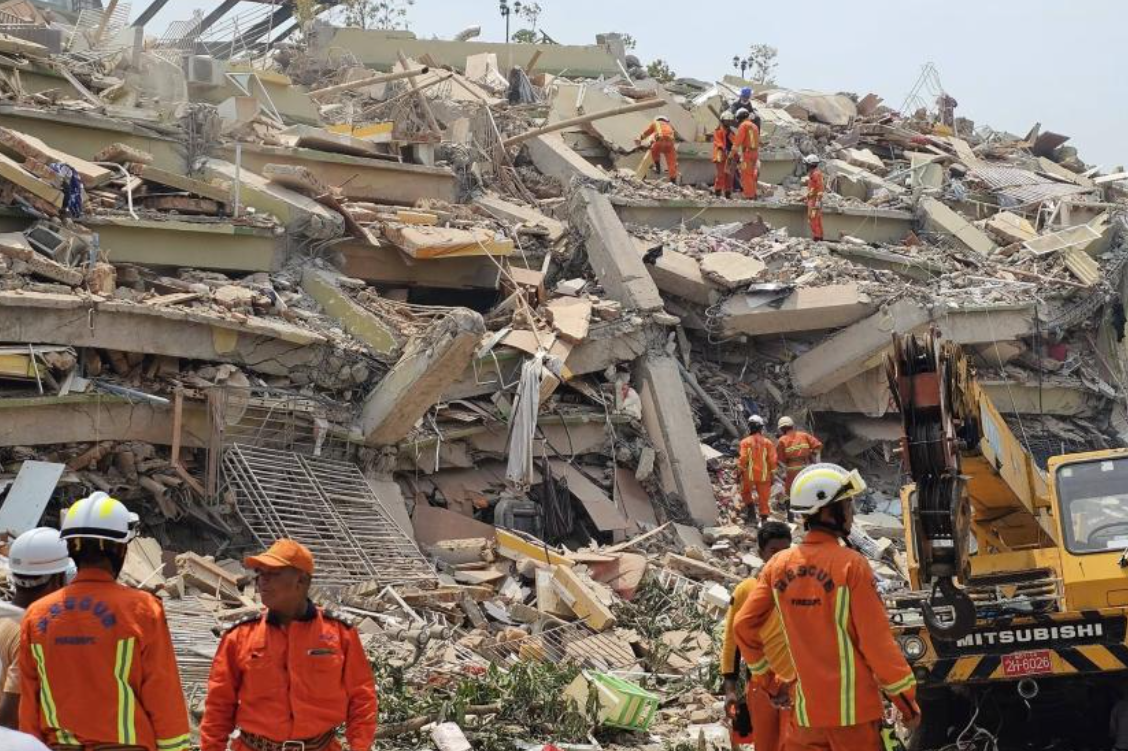
A Myanmar court has handed down a five-year prison sentence with hard labour to U Naing Htun Lin, owner of the Sky Villa Condominium in Mandalay, following the catastrophic collapse of the building during an earthquake that claimed more than 200 lives. The Aungmyaythazan Township Court delivered the verdict on June 23, marking a significant legal conclusion to one of the most devastating structural failures arising from the disaster.
The charges against U Naing Htun Lin were brought under Section 304-A of the Penal Code, which addresses causing death through negligence or recklessness. The investigation was conducted by the Special Investigation Department and initially filed with the No. (1) Area Police Station in Aungmyaythazan Township before proceeding through the court system. According to information from the township court, U Zaw Moe Aung, a staff officer from the Special Investigation Department, acted as the official plaintiff in the proceedings.
U Naing Htun Lin first appeared before the court on February 10 when charges were formally lodged against him. Initially, the defendant was granted bail pending trial, allowing him to maintain his freedom during the early stages of proceedings. However, this arrangement proved temporary. On March 17, the court made the decision to revoke his bail and remand him into custody, effectively imprisoning him while the trial continued. This shift in conditions suggested the court took the severity of the allegations with considerable gravity.
The Sky Villa building, an eleven-storey residential condominium positioned between 21st and 22nd Streets on 60th Street in Aungmyaythazan Township, stood as one of the most prominent casualties of the earthquake disaster in Mandalay. The building's total collapse resulted in the recovery of more than 200 bodies from the rubble, cementing its status as one of the deadliest single-structure failures the earthquake produced. The disaster raised profound questions about building standards, construction oversight, and corporate accountability in Myanmar's rapidly developing urban centres.
The connection between the building's construction and its catastrophic failure became central to legal proceedings. U Naing Htun Lin served as managing director of NTL Construction Company, the firm responsible for constructing the Sky Villa condominium. This dual role as both owner and construction company director placed him at the intersection of responsibility for both the project's execution and the structural integrity of the finished building. The conviction suggests the court determined that negligence or inadequate construction practices contributed materially to the collapse.
Following the tragedy and in apparent acknowledgment of responsibility, a delegation including Daw Thet Thet Khine, the wife of U Naing Htun Lin, organised three separate commemorative ceremonies at the monastery pavilion on 19th Street. During these events, the group formally extended apologies to the families of victims and distributed monetary compensation of 10 million kyats to the bereaved families of each deceased person. This gesture, while substantial, represented an attempt to address the human dimensions of a disaster that destroyed hundreds of families and left deep scars across Mandalay's community.
The legal process remains far from conclusive, however. Information from the Aungmyaythazan Township Court revealed that the Aungmyaythazan District Court has requested the complete case file for review under Criminal Revision Case No. 39Ka/2026. This development indicates higher-level judicial scrutiny of the original conviction and sentencing decision. Additionally, both the prosecution and defence have initiated separate appeals and revision proceedings concerning the verdict, suggesting neither side considers the matter settled.
The case reflects broader concerns about construction quality and safety standards in Myanmar. The earthquake exposed vulnerabilities in building infrastructure across Mandalay, with the Sky Villa collapse serving as the most visible symbol of potential lapses in construction standards, supervision, and adherence to safety protocols. For Southeast Asian readers, particularly those in earthquake-prone regions like Indonesia, the Philippines, and Thailand, the prosecution underscores growing judicial willingness to hold developers and construction firms accountable for structural failures resulting in mass casualties.
The sentencing also demonstrates Myanmar's legal system attempting to address corporate negligence in major disaster contexts. Under Section 304-A of the Penal Code, the conviction carries implications beyond this single case, potentially establishing precedents for how building collapse deaths are prosecuted and penalised. The five-year sentence with hard labour represents a measured but significant punishment, though observers in the construction industry and legal circles continue debating whether such penalties adequately deter future negligence or provide proportionate accountability for losses measured in hundreds of lives.
The ongoing appeal process means the final legal resolution remains uncertain. The involvement of Myanmar's district court in reviewing the township court decision suggests the case will receive continued scrutiny at higher judicial levels. Both appellants' determination to challenge the conviction and sentencing indicates this case will likely remain in the courts for some time, creating a prolonged period during which questions of responsibility, justice, and appropriate punishment for the disaster's human cost will continue reverberating through Myanmar's legal and public discourse.

