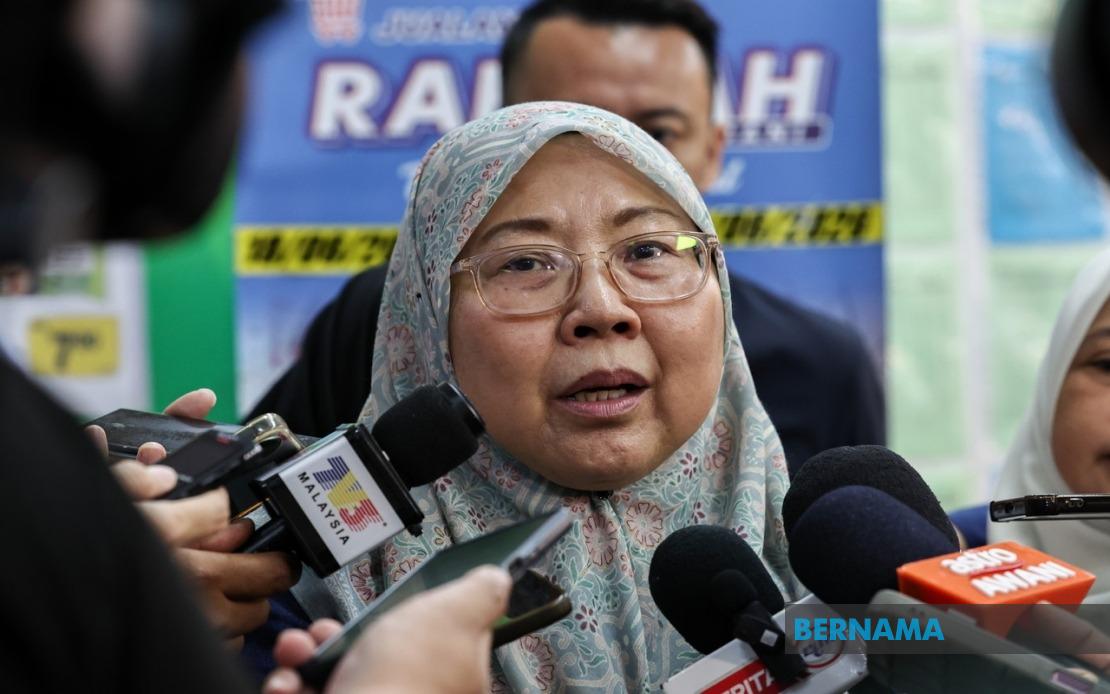
PKR's slate of candidates for the forthcoming state elections in Johor and Negeri Sembilan has reached 99 per cent completion, according to party secretary-general Datuk Dr Fuziah Salleh, with official announcements anticipated within the coming days. The party intends to field 20 candidates across Johor's contested seats and 16 in Negeri Sembilan, representing a significant commitment to both states as the Pakatan Harapan coalition prepares for crucial electoral contests that will reshape political dynamics in two strategic regions.
The candidate finalisation signals PKR's determination to strengthen its foothold in both states, particularly in Johor where the party currently holds a minority position in the state assembly. The carefully managed selection process reflects the party's recognition that these elections offer an opportunity to expand its representation, especially given the fragmented political landscape that emerged following the 2022 general elections. Negeri Sembilan presents a different scenario, where Pakatan Harapan currently commands a majority, making seat defence a strategic imperative alongside potential gains.
According to Fuziah, PKR's candidate strategy emphasises balance and diversity across generational lines. The party has committed to presenting what it describes as a blend of experienced incumbents alongside fresh political entrants, with deliberate inclusion of women candidates and younger representatives. This approach reflects broader trends within Malaysian political parties to appear more inclusive and responsive to younger voter demographics, though specific percentages of new faces and female candidates were withheld pending the formal announcement. The controlled disclosure of these details suggests PKR remains conscious of managing expectations and potential internal dissatisfaction from party members excluded from the final slate.
A lingering complication within Pakatan Harapan's Johor operations centres on the Puteri Wangsa constituency, where Amanah continues to dispute PKR's claim to the seat. Johor Amanah's position, articulated through vice chairman Dr Zuhan Zain, maintains that Puteri Wangsa should remain under Amanah's purview, rejecting PKR's assertion that the seat was merely loaned to MUDA during the 2022 state election and should now revert to PKR. Fuziah acknowledged the disagreement but indicated that coalition leadership at the highest echelon would ultimately adjudicate the matter, suggesting ongoing negotiations behind closed doors to preserve Pakatan Harapan's unity during the campaign period.
This seat dispute exemplifies the structural tensions that persist within the Pakatan Harapan coalition despite its formal unity. Such disagreements over territorial claims between component parties can undermine campaign momentum and create openings for opposition forces to exploit apparent internal discord. The decision to escalate resolution to top-tier leadership rather than settling matters at the technical committee level indicates the sensitivity surrounding seat allocation and the need to prevent festering grievances that might damage the coalition's electoral prospects.
PKR also faces internal discipline matters as it heads toward these elections. Party secretary-general Fuziah confirmed that the matter involving Subang MP Wong Chen, who had publicly challenged PKR to expel him following commencement of disciplinary proceedings, has been forwarded to the party's Disciplinary Board. Wong Chen's confrontational stance and apparent willingness to accept expulsion adds a complicated dimension to PKR's internal management during a period when party cohesion becomes particularly valuable. The timing of this disciplinary action, occurring as candidate lists are being finalised, underscores the party's need to maintain internal discipline while managing public perceptions of fairness and due process.
Johor's electoral schedule provides PKR with approximately three weeks to consolidate its campaign machinery following formal candidate announcements. The Election Commission has designated June 27 as nomination day, with polling scheduled for July 11, following the dissolution of the State Legislative Assembly on June 1. This compressed timeframe demands rapid organisational coordination, particularly given the need to mobilise voters across 20 contested constituencies. The Johor state assembly's 56-seat configuration means that Barisan Nasional's current 40-seat dominance remains formidable, though the fractured opposition vote between Pakatan Harapan, Perikatan Nasional, and MUDA creates theoretical openings for seat gains if campaigning is executed effectively.
Negeri Sembilan presents contrasting dynamics, with Pakatan Harapan operating from a position of strength as the current majority holder. The August 1 polling date, coupled with July 18 nomination and July 28 early voting dates, allows more extended campaign preparation than Johor's compressed schedule. Within the 36-seat assembly, Pakatan Harapan's current 17-seat majority must be defended against Barisan Nasional's 14 seats and Perikatan Nasional's five seats. The party's candidate selection here likely balances consolidation of support in currently held areas with strategic targeting of seats where opposition fragmentation might create openings.
PKR's approach to these dual elections reflects its positioning as the dominant force within Pakatan Harapan, willing to shoulder significant campaign responsibility across diverse state contexts. By contesting substantial numbers of seats in both Johor and Negeri Sembilan, the party demonstrates confidence in its organisational capacity and candidate quality, while simultaneously reinforcing its centrality within the broader coalition framework. However, the need to manage seat disputes with coalition partners and internal disciplinary proceedings simultaneously suggests that PKR faces multifaceted challenges extending beyond conventional campaign mechanics.
The broader context of these state elections assumes heightened importance given Malaysia's evolving political landscape since the 2022 general elections. State-level contests increasingly serve as laboratories for coalition viability and voter preference trajectories ahead of the next federal election cycle. Outcomes in Johor and Negeri Sembilan will provide early indicators regarding whether Pakatan Harapan can rebuild momentum in states where it historically struggled or currently faces formidable opposition machinery. PKR's willingness to field substantial candidate slates in both states signals confidence that the coalition remains capable of competitive campaigns, despite the organisational strains evident in its ongoing internal management challenges.