Pakatan Harapan has reaffirmed its unwavering commitment to respecting the constitutional framework governing Johor's leadership, pledging to uphold the Johor State Constitution 1895 and the Sultan of Johor's prerogative to appoint the Menteri Besar should the coalition secure a mandate in upcoming state elections. The declaration represents a deliberate positioning by the opposition coalition to sidestep controversy over executive appointments while maintaining focus on policy delivery and electoral gains in the crucial southern state.
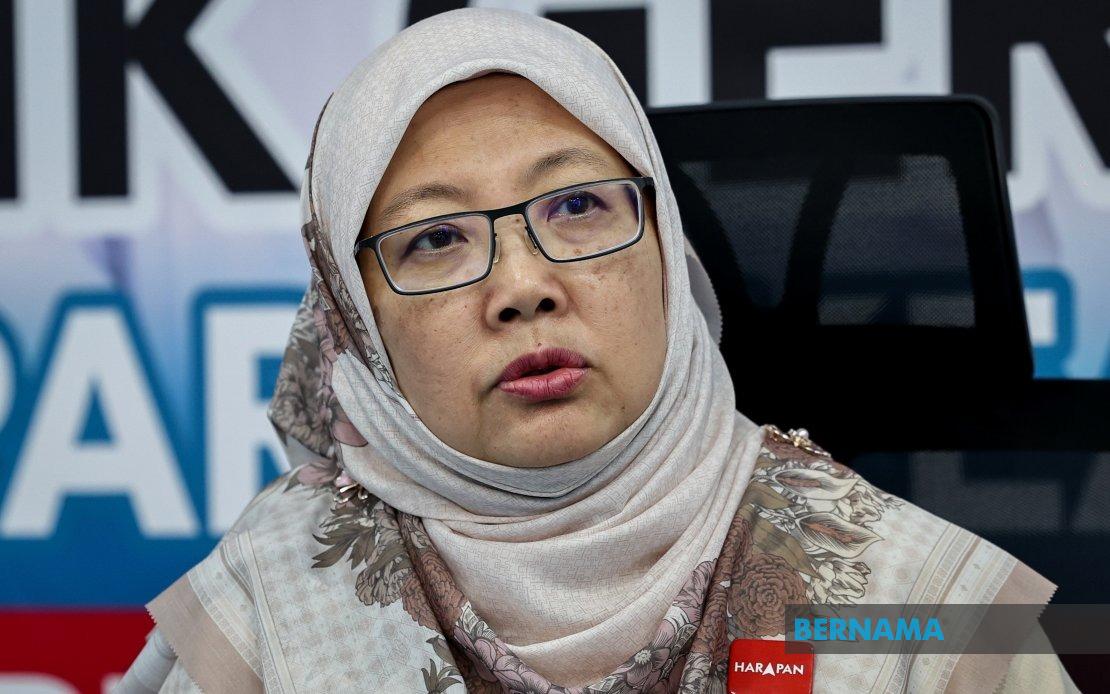
The commitment was articulated by Johor PKR chairman Datuk Seri Dr Zaliha Mustafa, who framed PH's approach as one centred on substance rather than personality politics. She emphasised that the coalition viewed the Menteri Besar position not as a campaigning focal point but as a consequence of electoral success, positioning PH as respectful of royal prerogatives and constitutional norms—a strategic messaging choice that acknowledges the deep cultural and constitutional significance of the sultanate in Malaysian governance.
Dr Zaliha's statement came in direct response to Johor's incumbent Menteri Besar Datuk Onn Hafiz Ghazi, who had publicly called on PH to declare its Menteri Besar candidate prior to the election. This demand reflects a broader political tension in Malaysian elections where coalitions face mounting pressure to provide transparency on leadership succession, yet doing so risks entangling campaigns in personality-driven narratives rather than policy discourse. By declining to name a candidate, PH essentially shifted the conversation from "who will lead" to "what will be delivered."
The coalition's emphasis on policy substance over executive appointments carries particular relevance for Malaysian voters increasingly fatigued by political theatrics. Dr Zaliha articulated this pivot clearly, stating that PH's priority lay in presenting concrete policies and offerings aimed at tangible improvements in living standards, job creation, and economic advancement. For Johor residents grappling with inflation, employment concerns, and development disparities between urban and rural zones, this messaging strategy attempts to reconnect electoral politics with material governance outcomes.
Inherent in PH's position is an assertion of depth within its leadership cadre. Dr Zaliha highlighted that the coalition possessed numerous qualified and experienced leaders capable of administering the state, suggesting that the specific identity of the Menteri Besar mattered less than the calibre of the administration itself. This framing serves multiple purposes: it projects confidence in organizational capacity, deflates the value of personalised leadership cults, and implicitly challenges the notion that electoral outcomes hinge on pre-election candidate announcements rather than broader policy platforms and voter aspirations.
Johor's political landscape remains heavily influenced by its unique constitutional position within Malaysia's federal framework. As a sultanate with defined prerogatives and a state constitution dating to 1895, Johor occupies a distinctive institutional space where royal authority intersects with democratic electoral processes. PH's decision to explicitly reaffirm the Sultan's appointment powers demonstrates acute awareness of this context and a desire to position the coalition as a constitutionally-conscious, stability-oriented force rather than one seeking to diminish royal influence or circumvent established protocols.
The timing of this statement also reflects the competitive electoral landscape in Johor, a state that has historically swung between ruling and opposition coalitions. For much of the post-2018 period, Johor remained a Barisan Nasional stronghold, yet demographic shifts, economic grievances, and changing voter preferences have made it increasingly contested terrain. PH's strategy of emphasizing constitutional propriety and policy focus rather than candidate-centric campaigning may resonate with voters seeking competent governance unburdened by the personal controversies that have periodically dominated Malaysian electoral cycles.
Moreover, the coalition's refusal to pre-announce a Menteri Besar candidate reflects practical political calculus. Premature designation could alienate other potential leaders within PH's Johor component parties—PKR, DAP, Amanah, and allied groups—each with aspirations to senior posts. By deferring the appointment to post-electoral negotiations and royal consultation, PH preserves internal cohesion and retains flexibility in coalition-building, should victory require compromise with partners or independent candidates.
For Malaysian federalism more broadly, this episode illustrates ongoing negotiations between democratic representation and constitutional monarchy. Unlike Westminster systems where executive leadership flows directly from electoral outcomes, Malaysia's framework permits royal discretion in appointing chief executives, provided the appointee commands legislative confidence. PH's explicit deference to this arrangement signals respect for constitutional pluralism and the layered governance structures that characterise the Malaysian system, even as the coalition contests for electoral power.
The people of Johor, according to Dr Zaliha, require clarity not on who will occupy the Menteri Besar's office but on the state's future trajectory and how successive administrations will safeguard their welfare. This framing pivots attention from institutional mechanics toward substantive outcomes—healthcare accessibility, educational quality, infrastructure investment, and economic opportunity. In a state where rural constituencies have periodically felt marginalized and urban centres grapple with congestion and affordability challenges, such policy-oriented messaging carries potential appeal across demographic lines.
The broader implications of PH's stance extend to how Malaysian opposition coalitions engage with constitutional conventions and electoral competition. By voluntarily emphasizing the Sultan's prerogatives rather than claiming to determine leadership outcomes, PH projects institutional deference and constitutional literacy. This positioning could prove electorally advantageous in Johor, where voter attachment to the sultanate runs deep and where perceptions of respect for royal authority influence political calculations.
Looking ahead, whether PH's strategy of deprioritizing the Menteri Besar candidacy in campaign messaging while emphasizing policy delivery proves electorally effective remains to be seen. The coalition gambles that voters will reward substantive focus on governance challenges over personality-driven political theatre. Simultaneously, it demonstrates how Malaysian electoral politics continue to navigate the intersection of democratic choice and constitutional monarchy, with implications extending far beyond Johor's borders.