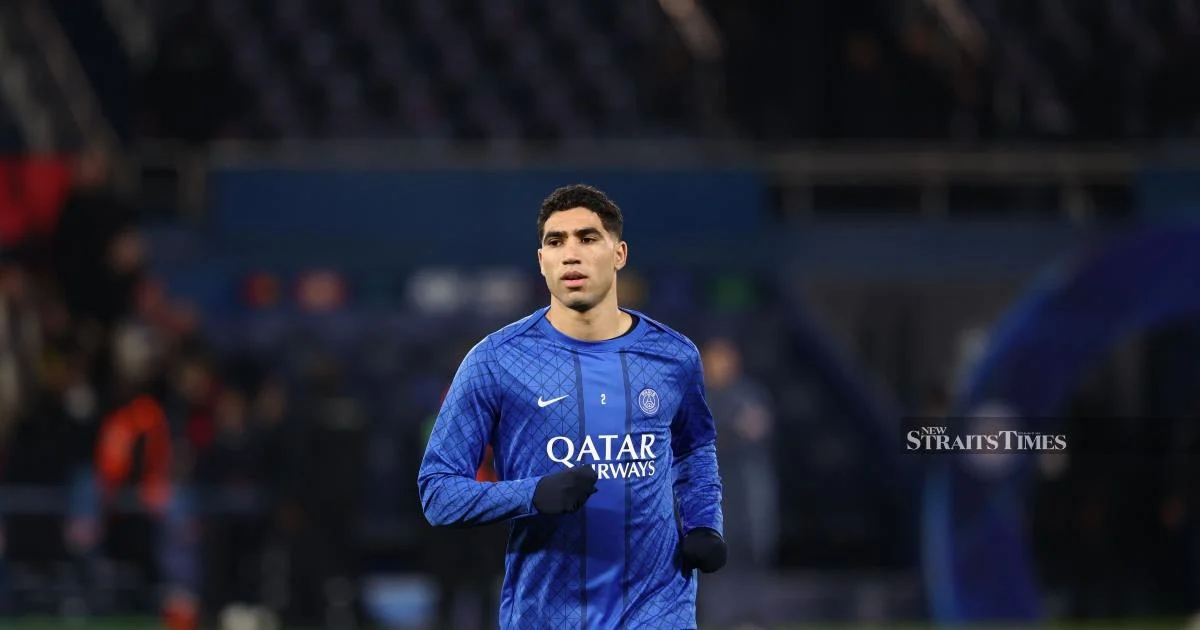
Morocco's internationally acclaimed defender Achraf Hakimi will stand trial in France after an appeals court in Versailles upheld the case against him on Friday, affirming that sufficient grounds exist to proceed with criminal prosecution on rape charges involving an alleged incident with a young woman.
The confirmation by the appellate court represents a decisive moment in a case that has attracted considerable attention both within football circles and beyond, given Hakimi's prominent status in professional sport. As a player who has represented some of Europe's elite clubs and featured prominently in international competitions, the case has raised broader questions about accountability and legal processes affecting high-profile athletes across the continent.
For Malaysian and Southeast Asian football enthusiasts, Hakimi's situation underscores the reality that even the most celebrated athletes remain subject to the same legal framework as ordinary citizens when allegations of serious criminal conduct emerge. The case has prompted discussions about the relationship between sporting achievement and personal conduct, themes that resonate across different cultural and sporting contexts in the region.
The judicial progression from preliminary investigation to appellate confirmation to trial demonstrates how French legal procedures operate in cases involving allegations of sexual violence. The appeals court's decision to confirm the trial indicates that investigating magistrates found credible evidence warranting prosecution, a threshold that must be met before such cases proceed to the next phase.
Hakimi, who has earned widespread recognition as one of Africa's premier defensive talents, represents Morocco on the international stage and has enjoyed a lucrative career at top-tier European clubs. His professional trajectory, marked by consistent high performance at major sporting institutions, has made him one of the continent's most recognizable players from the African continent.
The case highlights how allegations can emerge regardless of an athlete's professional accomplishments or public standing. For sporting organizations and fans alike, such situations present complex challenges in separating assessment of on-field performance from considerations of personal conduct and legal accountability off the pitch.
French sexual assault law has undergone significant evolution in recent years, reflecting broader societal conversations about consent, power dynamics, and institutional responses to such allegations. The proceedings against Hakimi occur within this evolving legal and social landscape, where courts are increasingly expected to thoroughly investigate and prosecute such claims.
The confirmation of trial proceedings does not constitute any finding of guilt or innocence. Rather, it signifies that judicial authorities have determined the case contains sufficient factual and legal elements to warrant presentation before a trial court, where both prosecution and defence will present their respective arguments and evidence.
Within professional football, high-profile legal cases involving players have periodically disrupted team operations, sponsorship arrangements, and public perception of clubs and leagues. Hakimi's situation is likely to have implications for the clubs involved in his employment as the legal process unfolds, potentially affecting contractual relationships and competitive considerations.
The case also intersects with broader discussions within European football about player conduct, disciplinary procedures within sporting organizations, and the relationship between professional sports governance and national legal systems. While football authorities have their own regulatory frameworks, ultimately serious criminal allegations fall within the purview of national courts and legal processes.
For supporters and observers across Southeast Asia who follow European football, the Hakimi case serves as a reminder that athletes, regardless of their sporting prowess or fan base, face consequences when serious allegations emerge. The judicial process will determine outcomes through evidence presentation and legal argument rather than through sporting achievement or media narrative.
As the case moves toward trial proceedings, the emphasis will shift from preliminary investigations to courtroom adjudication, where detailed examination of evidence and witness testimony will occur under the formal procedures of the French criminal justice system. The timeline, location, and specific procedures for the trial remain subject to further determination by judicial authorities.

