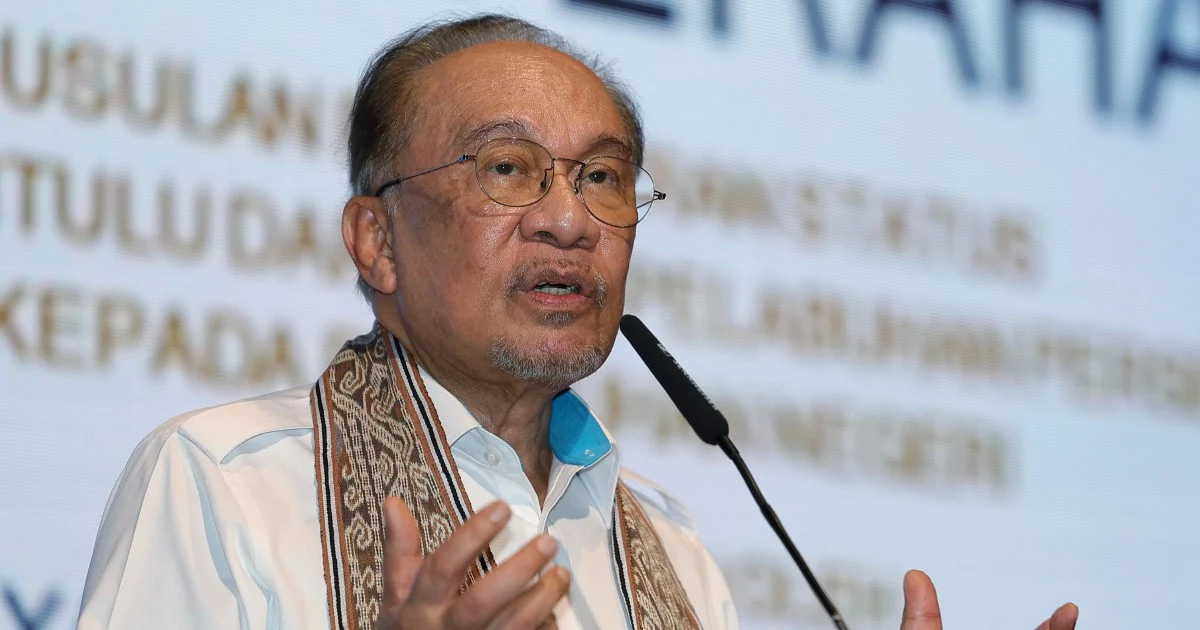
The long-running negotiation between Petronas and Petros, Sarawak's state oil company, is making headway, according to Prime Minister Datuk Seri Anwar Ibrahim, who provided the update during a visit to Kuching. The comments represent an encouraging signal in a relationship that has been characterised by territorial disputes and differing visions for energy resource management in the state.
The dialogue between Malaysia's national oil and gas corporation and the Sarawak state entity has undergone considerable strain in recent years as both organisations manoeuvre to assert their roles within the nation's hydrocarbon sector. Questions over operational authority, revenue sharing, and development rights have created friction that extends beyond mere corporate disagreements, touching on broader constitutional and federalism concerns between Kuala Lumpur and Kuching.
Anwar's remarks suggest that a collaborative pathway may be emerging from what had previously appeared to be an intractable standoff. The Prime Minister's optimistic framing indicates that both parties have found sufficient common ground to justify continued discussions at a high level, though specific details regarding the nature of the breakthrough remain undisclosed. Such diplomatic restraint is typical when negotiations are at sensitive junctures where premature disclosure of terms might reignite disagreements.
For Sarawak, the negotiations carry particular significance given the state's vast offshore petroleum reserves and its historical frustration over revenue allocation formulas that it considers disadvantageous. The state government has consistently advocated for greater autonomy in energy matters and a fairer proportion of earnings derived from its maritime resources. Any agreement that tilts toward Petros' interests could strengthen the state's economic position and financial independence.
Conversely, Petronas operates under pressure to maintain its status as the dominant player in Malaysia's oil and gas landscape while acknowledging the legitimate claims of state-level entities. The corporation faces the challenge of balancing national energy security strategies with regional developmental aspirations and the constitutional protections afforded to Sarawak and Sabah over their natural resources.
The commercial and political dimensions of these negotiations are deeply intertwined. Beyond questions of profit distribution, they involve complex issues such as exploration rights in disputed waters, the allocation of developmental blocks, technological partnerships, and participation in future liquefied natural gas ventures. Southeast Asia's energy transition and growing demand for cleaner hydrocarbon sources have also injected urgency into these discussions, as both entities seek to position themselves advantageously within evolving market dynamics.
For Malaysian investors and the broader business community, the resolution of Petronas-Petros tensions carries material implications. Clarity on operational jurisdictions and revenue frameworks would reduce uncertainty for multinational partners, supply chain participants, and infrastructure developers involved in Sarawak's energy sector. A structured agreement could also facilitate more efficient capital allocation and expedite pending projects that have been held in abeyance pending resolution of underlying governance questions.
Anwar's intervention in the matter underscores the significance which federal leadership attaches to harmonising relations between these two entities. The Prime Minister's diplomatic presence and positive messaging appear designed to underscore government commitment to finding workable solutions that respect both federal prerogatives and state rights. This high-level engagement suggests that the discussions have progressed beyond technical committees to encompass policy-level decision-making.
The timing of Anwar's comments during his Kuching visit also carries symbolic importance, demonstrating federal-state cooperation and suggesting that Sarawak's concerns are receiving serious consideration in Putrajaya. Such gestures matter considerably in federal systems where regional governments can feel marginalised or overlooked in national energy strategy deliberations.
While the exact trajectory of the negotiations and their ultimate outcome remain uncertain, the positive momentum Anwar described offers hope that a settlement addressing core grievances of both parties may eventually materialise. Any breakthrough could serve as a template for improving federalism within Malaysia's energy sector more broadly, potentially addressing similar tensions with other states and autonomous regions.
The business landscape surrounding Malaysian hydrocarbon development would be significantly altered by a successful Petronas-Petros agreement. Such a resolution could unlock previously stalled investments, improve regulatory clarity, and enhance Malaysia's competitive position in regional energy markets at a time when global energy transitions are reshaping entire industries and investment patterns.
%22%2F%3E%3C%2Fpattern%3E%3C%2Fdefs%3E%3Crect%20width%3D%22100%25%22%20height%3D%22100%25%22%20fill%3D%22url(%23ph4pwg6g)%22%2F%3E%3Crect%20width%3D%22100%25%22%20height%3D%22100%25%22%20fill%3D%22url(%23ph4pwg6p)%22%2F%3E%3Ctext%20x%3D%2250%25%22%20y%3D%2250%25%22%20text-anchor%3D%22middle%22%20dominant-baseline%3D%22central%22%20fill%3D%22rgba(255%2C255%2C255%2C0.95)%22%20font-family%3D%22Georgia%2C%20'Times%20New%20Roman'%2C%20serif%22%20font-weight%3D%22700%22%20font-size%3D%22226%22%20letter-spacing%3D%22-0.02em%22%3EPenang%3C%2Ftext%3E%3C%2Fsvg%3E)