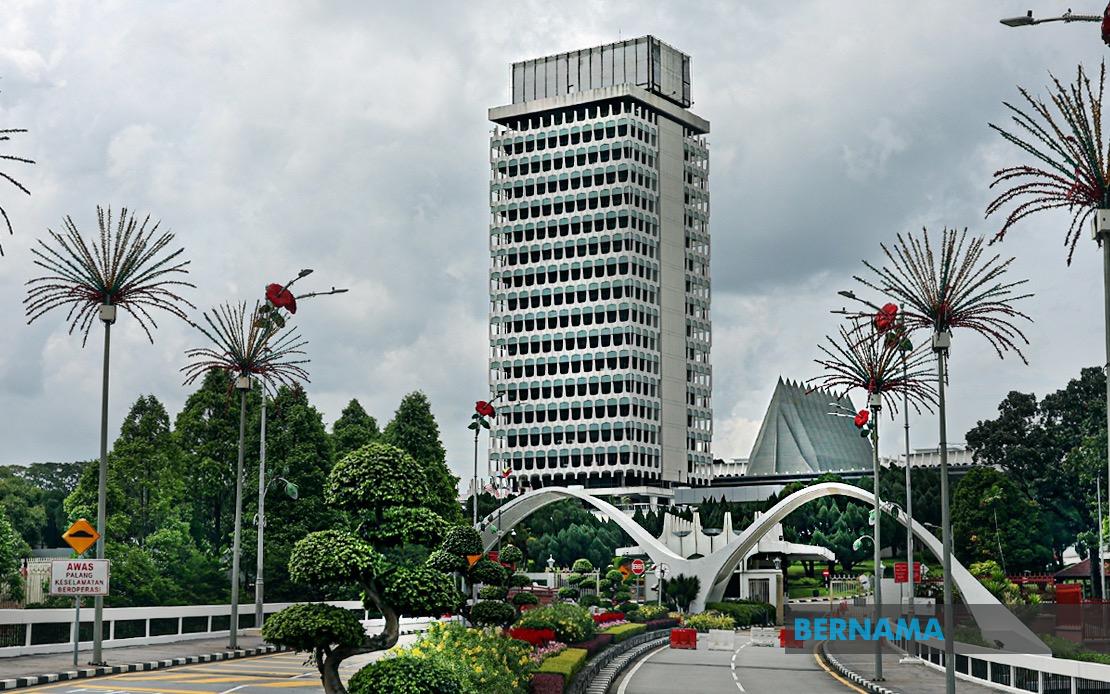
Malaysia's Parliament opened its latest sitting today with an ambitious legislative agenda spanning maritime trade vulnerabilities, religious affairs reform, and the regulation of emerging digital threats. The 16-day session, running until July 16, promises substantive debate on issues ranging from how global supply chain disruptions affect domestic inflation to the safeguarding of pilgrims undertaking the Islamic faith's most sacred journey.
The Strait of Hormuz occupies considerable strategic importance for Malaysian policymakers and economists. Through this chokepoint between Iran and Oman flows approximately one-third of the world's maritime oil trade, making it essential to the energy security and industrial competitiveness of Southeast Asian economies heavily dependent on stable fuel supplies. Datuk Dr Richard Rapu @ Aman anak Begri from GPS-Betong will probe the Economy Minister on the latest official assessment of how disruptions in this critical waterway have reverberated across local industries. His questioning will specifically target the transmission mechanisms through which geopolitical tensions translate into higher operating costs for Malaysian manufacturers and exporters, alongside the inflation implications recorded in the second quarter of 2026.
Beyond immediate trade impacts, the inquiry also touches on macroeconomic resilience under the 13th Malaysia Plan framework. Datuk Dr Rapu will seek clarification on what contingency mechanisms exist should global economic conditions deteriorate into prolonged recession, and whether current growth projections remain credible under stress scenarios. This line of questioning reflects concerns among economic policymakers that Malaysia's export-dependent economy remains vulnerable to external shocks, particularly when critical supply routes face disruption.
The haj pilgrimage presents Malaysia with distinct administrative and humanitarian challenges that parliament will address today. Onn Abu Bakar from PH-Batu Pahat has tabled a question to the Prime Minister concerning enhancements to the haj management system scheduled for 2027. The inquiry focuses on three interconnected dimensions: the financial burden shouldered by Malaysian pilgrims, the length of waiting periods that can span years for some aspirants, and the comprehensive health and welfare protections offered to citizens during their time in Saudi Arabia. As Muslim-majority Malaysia sends tens of thousands of pilgrims annually, the efficiency and safety of this system carries profound social significance beyond mere administrative concern.
Artificial intelligence governance has emerged as an urgent policy frontier, particularly as the technology's dual-use potential creates novel avenues for harm. Wong Shu Qi from PH-Kluang will interrogate the Digital Minister on whether the proposed Artificial Intelligence Governance Bill currently under drafting will explicitly criminalise specific misuses that pose acute risks to vulnerable populations. The bill's scope should encompass the synthetic generation of child sexual exploitation material through AI, identity spoofing techniques that weaponise deepfakes for fraud, and the non-consensual distribution of intimate imagery. Such questions reflect growing recognition across Southeast Asia that governance frameworks must anticipate technological malevolence rather than merely reacting after harm materialises.
Food security constitutes another critical dimension of today's parliamentary agenda. Datuk Dr Radzi Jidin from PN-Putrajaya will demand that the Agriculture and Food Security Minister articulate both existing and planned interventions addressing how instability in the Middle East compromises Malaysia's food supply chains. Given that Malaysia imports substantial quantities of agricultural commodities and processed foods from conflict-affected regions, the government's preparedness matters considerably for price stability and availability of essential goods for ordinary Malaysian households.
The legislative programme extends beyond oral questioning into formal bill consideration. The Cybercrime Bill 2026 will be tabled for parliament's examination, representing an effort to modernise criminal statutes governing digital offences in an environment where cyber threats have proliferated exponentially. Companion legislation amending the Road Transport Act 1987 signals the government's intention to refresh transportation regulations, though specific details regarding those amendments remain to be disclosed during parliamentary proceedings.
Today's parliamentary opening thus crystallises several overlapping challenges confronting Malaysian economic policymakers and legislators. From vulnerability to distant geopolitical events affecting maritime commerce, through the management of mass pilgrimage flows, to the governance of transformative technologies with dual-use potential, the range of issues reflects how comprehensively globalisation and technological change have redrawn the terrain of national governance. The parliament's examination of these matters over the coming weeks will signal whether Malaysia's institutional responses match the complexity and urgency of contemporary challenges.
%22%2F%3E%3C%2Fpattern%3E%3C%2Fdefs%3E%3Crect%20width%3D%22100%25%22%20height%3D%22100%25%22%20fill%3D%22url(%23ph4duqsg)%22%2F%3E%3Crect%20width%3D%22100%25%22%20height%3D%22100%25%22%20fill%3D%22url(%23ph4duqsp)%22%2F%3E%3Ctext%20x%3D%2250%25%22%20y%3D%2250%25%22%20text-anchor%3D%22middle%22%20dominant-baseline%3D%22central%22%20fill%3D%22rgba(255%2C255%2C255%2C0.95)%22%20font-family%3D%22Georgia%2C%20'Times%20New%20Roman'%2C%20serif%22%20font-weight%3D%22700%22%20font-size%3D%22151%22%20letter-spacing%3D%22-0.02em%22%3ESoutheast%3C%2Ftext%3E%3C%2Fsvg%3E)
%22%2F%3E%3C%2Fpattern%3E%3C%2Fdefs%3E%3Crect%20width%3D%22100%25%22%20height%3D%22100%25%22%20fill%3D%22url(%23pheczjg)%22%2F%3E%3Crect%20width%3D%22100%25%22%20height%3D%22100%25%22%20fill%3D%22url(%23pheczjp)%22%2F%3E%3Ctext%20x%3D%2250%25%22%20y%3D%2250%25%22%20text-anchor%3D%22middle%22%20dominant-baseline%3D%22central%22%20fill%3D%22rgba(255%2C255%2C255%2C0.95)%22%20font-family%3D%22Georgia%2C%20'Times%20New%20Roman'%2C%20serif%22%20font-weight%3D%22700%22%20font-size%3D%22136%22%20letter-spacing%3D%22-0.02em%22%3EBangladesh%3C%2Ftext%3E%3C%2Fsvg%3E)