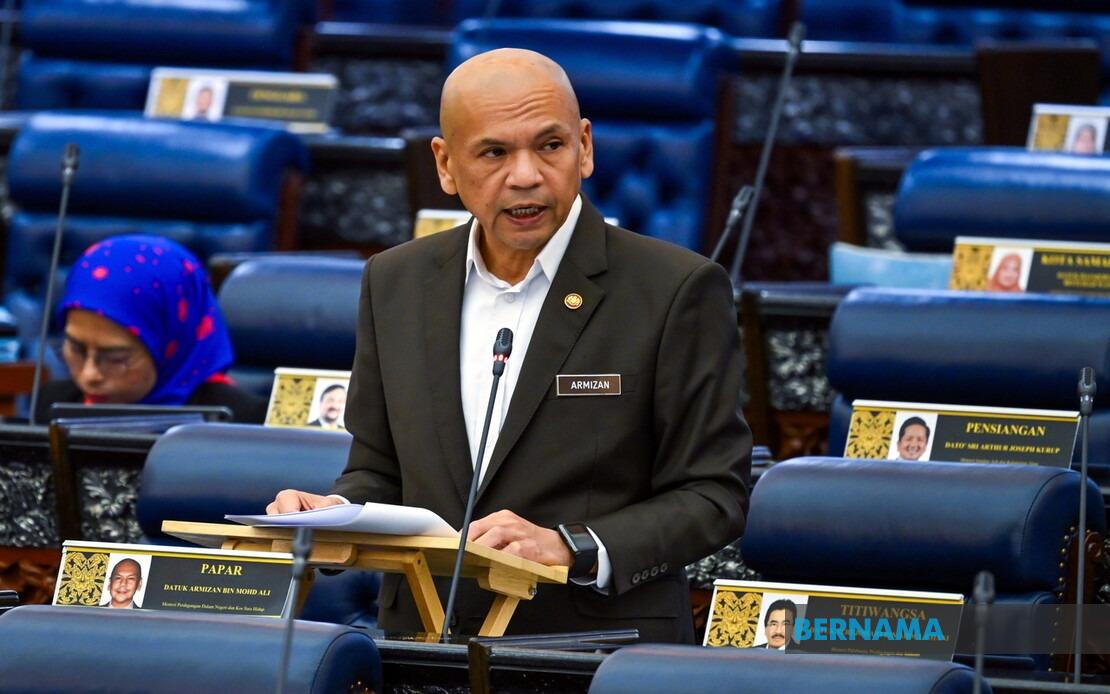
Parliament has given its backing to sweeping reforms aimed at arming the Malaysia Competition Commission with stronger tools to police anti-competitive behaviour across the economy. The Dewan Rakyat passed the Competition Commission (Amendment) Bill 2026 on July 6 through a voice vote, following debate from a dozen parliamentarians spanning government and opposition benches. The legislation introduces 34 substantive changes designed to modernise how the regulator operates in an environment where market manipulation tactics grow more complex each year.
Domestic Trade and Cost of Living Minister Datuk Armizan Mohd Ali framed the amendments as essential upgrades to Malaysia's competition enforcement framework, particularly as cartel activities become increasingly sophisticated. The existing Competition Act already addresses price fixing, market sharing, production control, bid rigging, and abuse of dominant market positions. Yet regulators have struggled to gather the intelligence needed to identify and prosecute such conduct effectively. The new bill specifically amplifies MyCC's authority to demand information during market reviews, a capability previously hindered by reluctance from government departments, state-owned enterprises, and private sector players to cooperate fully with investigations.
Central to the reform is an expansion of MyCC's investigative reach. Previously, the regulator could request information only in response to specific complaints or formal inquiries. Under the amended framework, MyCC gains the authority to conduct broad market reviews and compel disclosure from relevant parties to support these examinations. This shift addresses a critical gap: cartel members often exploit the difficulty of obtaining evidence from third parties, banking on the regulator's inability to piece together the full picture of collusive arrangements. By strengthening information-gathering powers within the context of systematic market analysis, the bill enables MyCC to adopt a more proactive, sector-wide approach rather than remaining reactive to individual complaints.
Another significant innovation involves creating a formal delegation framework under a new Section 17A. As MyCC expands its operations and tackles increasingly complex cases, the organisation must distribute responsibilities across its growing workforce. Without explicit legal provisions governing such delegation, the commission risked operational inefficiencies or legal challenges to decisions made by officers acting beyond strictly defined authority. The amendment clarifies the procedural and substantive boundaries within which MyCC leadership may delegate tasks, thereby stabilising the regulator's daily functions and bolstering the legal defensibility of enforcement actions.
Perhaps the most contentious aspect concerns MyCC's expanded power to impose financial penalties directly, without always requiring court intervention. Several parliamentarians, while acknowledging the practical benefits of streamlined enforcement, expressed caution about potential abuse. Chong Zhemin, the Kampar MP from Pakatan Harapan, championed the penalty powers but insisted that implementation must follow transparent, consistent guidelines to shield micro, small, and medium enterprises from disproportionate harm. His intervention underscores a legitimate policy tension: penalties must sting enough to deter large corporations from treating violations as a calculated business cost, yet they must also distinguish between deliberate cartel members and smaller firms that breach rules through ignorance rather than intent.
The philosophy behind penalty calibration carries profound implications for how Malaysia's market economy functions. If penalties remain modest relative to the profits gained through anti-competitive conduct, law-abiding competitors lose faith in the regulatory system, and market discipline erodes. Conversely, penalties that catch innocent players or overlook their circumstances breed resentment and compliance costs that smaller businesses struggle to bear. Chong's remarks reflect growing recognition across Southeast Asian competition agencies that enforcement must be both rigorous and proportionate to maintain legitimacy and effectiveness.
Regional disparity in competition enforcement emerged as another critical concern during parliamentary debate. Isnaraissah Munirah Majilis @ Fakharudy from Warisan highlighted the absence of dedicated MyCC capacity in Sabah, forcing residents and businesses in that state to navigate cartel and monopoly complaints through limited channels. Datuk Abdul Khalib Abdullah and Datuk Andi Muhammad Suryady Bandy echoed this complaint, pointing out that the Borneo region faces distinct competition challenges yet lacks localised enforcement infrastructure. The proliferation of cartels in sectors such as construction, shipping, and retail across Sabah and Sarawak underscores how centralised enforcement structures can inadvertently create enforcement gaps in less developed or geographically remote areas.
Establishing a MyCC branch in Sabah would represent a significant policy shift, acknowledging that effective competition law requires not just legal reform but geographic redistribution of regulatory capacity. Such a move carries budget implications and requires coordination with state authorities, yet the three MPs' consistent advocacy signals mounting political pressure to address regional inequality in market oversight. For Malaysian businesses competing in Sabah and Sarawak, speedier investigations and localised expertise could reduce vulnerability to unchecked cartels that currently exploit weak enforcement presence.
The passage of the bill reflects broader regional trends in strengthening competition frameworks. Indonesia, Thailand, and the Philippines have similarly expanded their respective competition regulators' powers in recent years, recognising that cross-border commerce and digital markets require more muscular enforcement. Malaysia's amendments position MyCC more competitively within the Association of Southeast Asian Nations enforcement landscape, yet implementation will determine whether these legal powers translate into tangible market benefits.
For businesses across Malaysia, the amendments signal heightened regulatory scrutiny of anti-competitive practices. Companies in oligopolistic or cartelised sectors—construction, telecommunications, aviation, retail—face greater risk that MyCC will uncover covert arrangements. The clarity provided by new delegation rules and expanded penalty authority means fewer procedural grounds for challenging enforcement decisions in court, potentially accelerating the path from investigation to sanction. This acceleration cuts both ways: determined violators face swifter consequences, but businesses must ensure their conduct withstands heightened scrutiny.
The parliamentary consensus around the bill, despite lingering concerns about proportionality and regional implementation, indicates recognition that Malaysia's competition framework requires updating to address modern market dynamics. Digital platforms, supply chain manipulation, and transnational cartels operate at speeds and scales that yesterday's regulatory tools struggle to handle. By granting MyCC broader investigative reach and clearer penalty authority, Parliament has essentially endorsed an evolution toward more assertive competition enforcement.
Implementation success hinges on several factors beyond legislative change. MyCC must recruit and train investigators capable of unraveling complex cartels while maintaining ethical standards and proportionate decision-making. Guidelines governing penalty imposition must balance deterrence with fairness, a task requiring consultation with business associations and legal experts. And the government must resource any expansion of MyCC presence into underserved regions like Sabah, transforming parliamentary intent into operational reality. The coming months will reveal whether the bill's ambitious amendments transform market dynamics or simply upgrade the technical machinery of an already-effective regulator.

