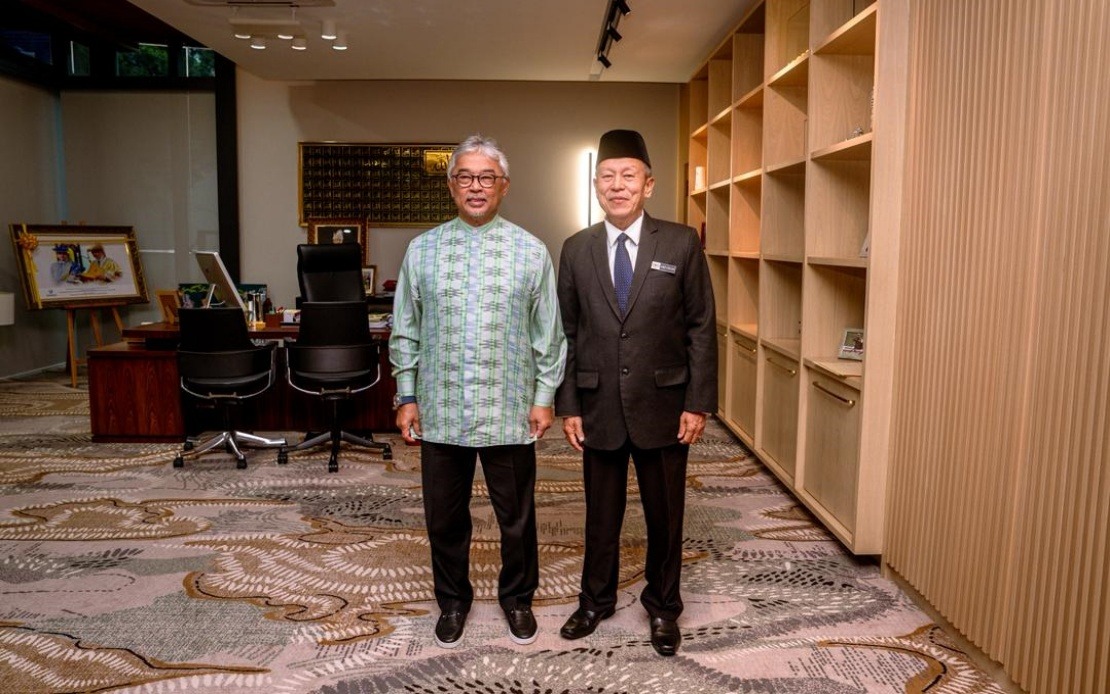
The Sultan of Pahang, Al-Sultan Abdullah Ri'ayatuddin Al-Mustafa Billah Shah, recently received the chief commissioner of the Malaysian Anti-Corruption Commission (MACC), Datuk Seri Abd Halim Aman, in a significant audience held at Shahzan House in Ampang. The one-hour meeting underscores the ongoing dialogue between Malaysia's institutional leadership and the country's principal anti-graft watchdog as both navigate contemporary governance challenges.
During the audience, the MACC leadership provided His Royal Highness with a comprehensive overview of the commission's recent operational developments and strategic priorities. This briefing reflects a broader institutional practice whereby the monarchy maintains close engagement with critical enforcement agencies, ensuring that the country's constitutional guardians remain informed about pivotal anti-corruption initiatives. The timing of such meetings often carries symbolic weight, signalling the Crown's investment in transparent and accountable governance structures.
Central to the discussion were measures aimed at reinforcing integrity standards across Malaysia's public administration. The MACC presented an array of initiatives designed to fortify ethical governance frameworks and strengthen institutional resistance to corrupt practices. These efforts encompass both preventative strategies and active enforcement mechanisms, reflecting the commission's dual mandate to investigate misconduct whilst promoting a culture of compliance among government agencies and officials.
The dialogue also addressed contemporary governance challenges and emerging corruption prevention strategies. By bringing these issues before the Sultan, the MACC leadership sought to highlight the complexities inherent in combating financial crime and institutional malfeasance in an increasingly sophisticated operating environment. Such conversations between the monarchy and enforcement bodies demonstrate how Malaysia's constitutional framework facilitates ongoing consultation on matters of national importance.
Particularly significant was the discussion of initiatives undertaken to restore and bolster public confidence in the MACC's enforcement work. Public trust remains fundamental to any anti-corruption agency's effectiveness, as widespread scepticism about institutional impartiality or competence inevitably undermines voluntary compliance and witness cooperation. The MACC's efforts to enhance transparency and demonstrate procedural fairness have become increasingly central to its organisational strategy, particularly amid evolving public expectations regarding accountability.
Datuk Seri Abd Halim's expressions of gratitude extended beyond protocol, reflecting a substantive appreciation for the Sultan's strategic support for anti-corruption operations. The MACC chief acknowledged not merely the audience itself but the broader backing that royal patronage provides for the commission's institutional standing. In Malaysia's constitutional framework, such support carries considerable practical significance, lending legitimacy and political insulation to the enforcement agency's investigative activities.
The commissioner further emphasised the importance of maintaining governance standards rooted in integrity and accountability principles. This articulation aligns the MACC with broader regional and international anti-corruption norms whilst anchoring these commitments within Malaysia's own constitutional values. The meeting thereby served to reinforce the narrative that combating corruption remains a shared institutional priority transcending bureaucratic silos.
From a broader institutional perspective, such engagements between the monarchy and enforcement agencies reflect Malaysia's constitutional commitment to separating and balancing governmental power. Regular consultation ensures that constitutional guardians maintain adequate visibility over enforcement agency operations whilst safeguarding agency independence from political interference. This delicate balance requires ongoing dialogue and mutual respect between institutions.
For the MACC specifically, royal acknowledgement of its anti-corruption mandate provides valuable symbolic capital as the organisation navigates complex investigations involving high-ranking officials and politically connected individuals. The visibility afforded by such audiences reinforces the agency's institutional legitimacy and can modestly enhance its resistance to external pressure or attempts to compromise investigative integrity.
The meeting also reflects broader regional dynamics wherein anti-corruption agencies across Southeast Asia increasingly seek to strengthen institutional relationships and demonstrate their continued operational effectiveness. As Malaysia positions itself as a regional governance leader, the visible commitment of its constitutional institutions to anti-corruption principles carries implications beyond domestic audiences, potentially shaping perceptions of Malaysia's institutional maturity.
Looking forward, such engagement patterns suggest an institutional recognition that combating corruption requires sustained cooperation across governmental structures rather than isolated enforcement efforts. The MACC's presentation of its work to the Sultan implicitly acknowledges that anti-corruption success depends upon broader institutional alignment and consistent political support for investigative independence.
The audience ultimately demonstrates how Malaysia's constitutional monarchy continues to fulfil consultative and oversight functions in contemporary governance. By maintaining active engagement with enforcement agencies, the Sultan signals ongoing commitment to institutional integrity whilst ensuring that constitutional safeguards remain operationally effective in an environment characterised by persistent challenges to public accountability and transparent administration.