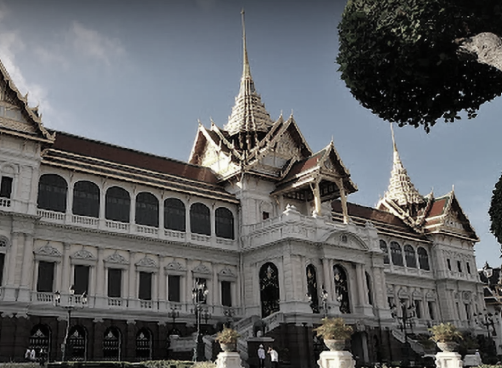
Thailand's Criminal Court has handed down an 18-month prison sentence to a 43-year-old man convicted of royal defamation for remarks he posted within a Facebook group centred on discussing the monarchy. The conviction represents the latest enforcement action under Thailand's contentious lese-majeste legislation, which continues to shape discourse around the royal institution throughout the kingdom.
The man's conviction stemmed from a comment made in the private Facebook group "Royalist Marketplace," which boasts a membership exceeding 2.2 million users. According to Noppol Achamas, information officer at the Thai Lawyers for Human Rights, the individual initially faced a three-year sentence before receiving a 50 per cent reduction in punishment due to his cooperation with the court. He was subsequently released on bail of 100,000 baht while his case proceeds to appeal.
Thailand's royal defamation statute represents one of the world's most stringent legal frameworks protecting a reigning family from public criticism. Under Article 112 of the Criminal Code, individuals convicted of insulting, defaming, or threatening the monarch, queen, heir, or regent may face imprisonment of up to 15 years per offence. Rights advocates and international observers have repeatedly characterised these provisions as instruments of political suppression rather than legitimate protections for institutional dignity.
The "Royalist Marketplace" group itself emerged as a significant cultural phenomenon during Thailand's contentious pro-democracy movement of 2020 and 2021. Founded by exiled academic and royal critic Pavin Chachavalpongpun, the group functioned as an unprecedented public forum where Thai citizens could openly discuss monarchical matters—a development that would have been unthinkable in earlier decades. The platform represented a deliberate challenge to longstanding cultural and legal boundaries surrounding monarchy discourse.
During this period, youth-led activists mobilised nationwide, demanding structural reforms to the monarchy and fundamental revision of the royal defamation law itself. Demonstrators challenged the legal framework's constitutional basis and appealed for alignment with international human rights standards. However, as prosecutions intensified and activists encountered mounting criminal charges, the movement gradually dissipated. Many organisers and participants found themselves entangled in legal proceedings that effectively neutralised their capacity for continued activism.
The enforcement pattern has been striking in its intensity. According to records maintained by the Thai Lawyers for Human Rights, a total of 291 individuals have faced charges under the royal insult statute since 2020 alone. This represents a dramatic acceleration compared to previous decades, suggesting either heightened sensitivity within prosecutorial and judicial institutions or a deliberate policy shift toward more aggressive enforcement. Among these cases, at least 17 prosecutions have targeted individuals specifically for statements made within the "Royalist Marketplace" group.
For Malaysian observers, Thailand's approach to monarchy discourse warrants careful consideration. Malaysia similarly maintains legal protections for its own royal institutions, though the enforcement framework differs substantively. Article 128 of Malaysia's Federal Constitution provides certain immunities to the Yang di-Pertuan Agong and state sultans, yet Malaysian courts have generally exercised greater restraint in prosecuting criticism compared to their Thai counterparts. The contrast illuminates varying regional approaches to balancing institutional dignity with democratic expression and freedom of speech.
The specific targeting of the "Royalist Marketplace" group demonstrates how authorities employ online surveillance and social media analysis as enforcement tools. The group's very existence as an explicit forum for monarchy discussion made its members statistically vulnerable to prosecution. Each participant's comments potentially constituted documentary evidence of alleged violations, creating an environment where legal risk attached to intellectual engagement itself.
This conviction will likely reinforce the chilling effect already present within Thai civil society regarding monarchy-related discourse. Citizens contemplating participation in discussions about royal institutions must now calculate the legal consequences of their words with acute precision. The 18-month sentence, while less severe than the original three-year determination, nonetheless carries significant weight as a deterrent to others considering similar expressions.
The case also illustrates how rigid legal structures interact with modern communication technologies. The lese-majeste law predates the internet age by decades, yet has been applied with considerable aggression to online speech. Thai authorities have effectively repurposed Cold War-era statutes designed for controlling print and broadcast media as instruments for policing digital discourse, extending their reach into private social media groups and personal communications.
International human rights organisations have consistently criticised Thailand's application of Article 112, characterising it as incompatible with obligations under the International Covenant on Civil and Political Rights. Diplomatic pressure from Western nations and multilateral bodies has produced minimal policy adjustment, suggesting deep institutional commitment to maintaining these legal protections.
Looking forward, the question of whether Thailand will moderate its enforcement approach remains unresolved. The persistence of prosecutions despite consistent international criticism suggests that domestic political considerations outweigh external pressure. For the broader region, Thailand's trajectory serves as a cautionary example of how protections for revered institutions can expand incrementally to constrain democratic participation and intellectual freedom when enforcement mechanisms operate without meaningful restraint.

%22%2F%3E%3C%2Fpattern%3E%3C%2Fdefs%3E%3Crect%20width%3D%22100%25%22%20height%3D%22100%25%22%20fill%3D%22url(%23ph30j3lg)%22%2F%3E%3Crect%20width%3D%22100%25%22%20height%3D%22100%25%22%20fill%3D%22url(%23ph30j3lp)%22%2F%3E%3Ctext%20x%3D%2250%25%22%20y%3D%2250%25%22%20text-anchor%3D%22middle%22%20dominant-baseline%3D%22central%22%20fill%3D%22rgba(255%2C255%2C255%2C0.95)%22%20font-family%3D%22Georgia%2C%20'Times%20New%20Roman'%2C%20serif%22%20font-weight%3D%22700%22%20font-size%3D%22320%22%20letter-spacing%3D%22-0.02em%22%3EKTMB%3C%2Ftext%3E%3C%2Fsvg%3E)
%22%2F%3E%3C%2Fpattern%3E%3C%2Fdefs%3E%3Crect%20width%3D%22100%25%22%20height%3D%22100%25%22%20fill%3D%22url(%23ph4o19hg)%22%2F%3E%3Crect%20width%3D%22100%25%22%20height%3D%22100%25%22%20fill%3D%22url(%23ph4o19hp)%22%2F%3E%3Ctext%20x%3D%2250%25%22%20y%3D%2250%25%22%20text-anchor%3D%22middle%22%20dominant-baseline%3D%22central%22%20fill%3D%22rgba(255%2C255%2C255%2C0.95)%22%20font-family%3D%22Georgia%2C%20'Times%20New%20Roman'%2C%20serif%22%20font-weight%3D%22700%22%20font-size%3D%22272%22%20letter-spacing%3D%22-0.02em%22%3EAnwar%3C%2Ftext%3E%3C%2Fsvg%3E)