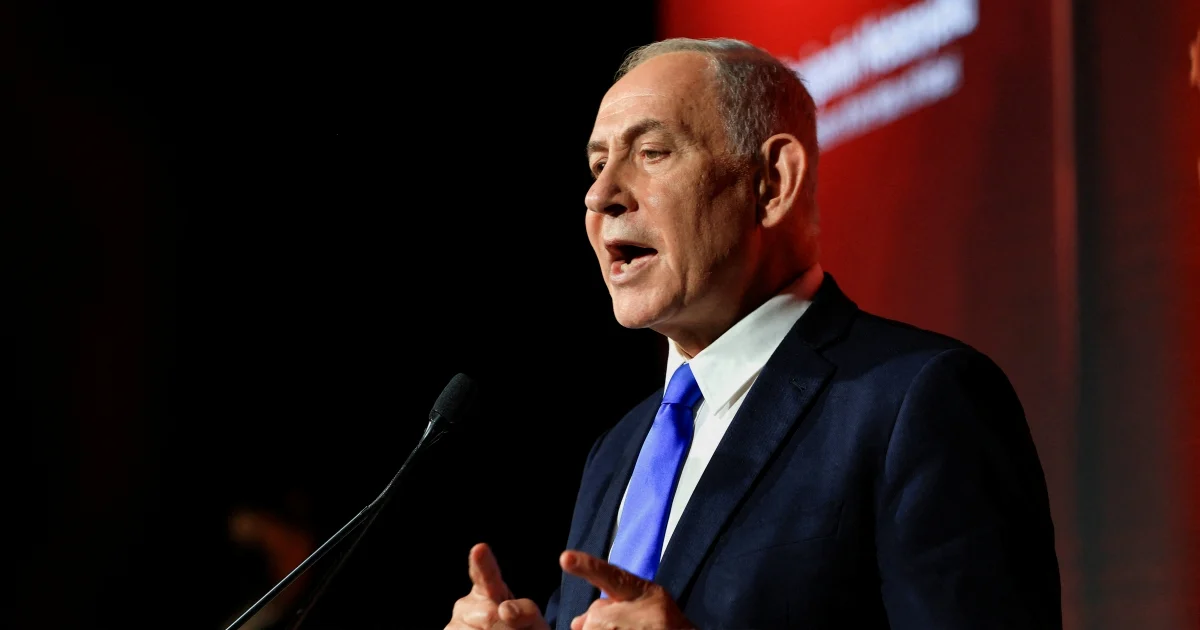
Israeli Prime Minister Benjamin Netanyahu announced on Sunday that his country's military forces stationed in southern Lebanon would stay in place for an indefinite period, marking a significant statement on the scope and duration of Israel's current military operations in the region. Speaking from Jerusalem, the Israeli leader linked the troop presence to operational requirements rather than a fixed timeline, suggesting that strategic assessments would determine when withdrawal might occur. This declaration comes amid escalating regional tensions and reflects Israel's approach to managing security concerns along its northern border.
The statements from Netanyahu carry particular weight given the sensitivity surrounding Israel's military interventions in neighbouring territories and the historical context of previous security operations. His emphasis on an open-ended deployment suggests Israeli planners are preparing for a potentially extended commitment to maintaining a security presence in southern Lebanon. This approach mirrors patterns seen in other Israeli military operations where initial interventions have evolved into prolonged security arrangements, fundamentally reshaping regional dynamics and civilian populations affected by such deployments.
Simultaneously, Netanyahu reiterated Israel's unwavering stance against Iran's nuclear development programme, underscoring what Israeli leadership views as an existential security concern. The dual messaging—addressing both immediate tactical concerns in Lebanon and broader strategic threats posed by Iranian nuclear capabilities—reflects Israel's approach to regional security as interconnected challenges requiring sustained attention. For Israeli policymakers, these issues represent complementary facets of a broader strategy to contain what they perceive as hostile forces in the Middle East.
The statement's implications ripple across Southeast Asia's geopolitical landscape, particularly among nations maintaining delicate diplomatic balances with multiple regional powers. Malaysia, as a significant Muslim-majority nation with substantial economic interests throughout the Middle East, faces complex diplomatic considerations when Israeli military actions dominate regional headlines. The prospect of extended Israeli military presence in Lebanon could further polarise international opinion and complicate the already intricate diplomatic efforts directed toward Middle Eastern stability and eventual Israeli-Palestinian reconciliation.
Lebanon's own deteriorating security situation provides context for understanding why Israel maintains military operations in the country's southern regions. The Lebanese state's limited capacity to enforce security across its entire territory, combined with the presence of Hezbollah and other armed groups, creates circumstances that Israeli military planners cite to justify continued operations. However, such justifications remain deeply contested internationally, with critics arguing that extended foreign military presence undermines Lebanese sovereignty and potentially exacerbates underlying instability rather than resolving it.
From a regional perspective, Netanyahu's declaration about indefinite troop presence sends signals that could influence other Middle Eastern actors' calculations regarding their own security postures. The United States, a key Israeli ally maintaining significant military commitments throughout the Middle East, faces questions about the extent to which it supports or constrains Israeli military operations in foreign territories. Similarly, Arab states pursuing various diplomatic initiatives or maintaining complex relationships with both Israel and Iran must assess how prolonged Israeli military presence in Lebanon affects their strategic interests and regional balance of power.
The nuclear dimension of Netanyahu's remarks deserves particular analysis, as Iranian nuclear development has become perhaps the single most contentious issue dividing Middle Eastern powers and affecting international diplomacy beyond the region. Israel has previously conducted military operations specifically targeting nuclear facilities, and Netanyahu's reaffirmation of Israel's determination to prevent Iranian nuclear advancement suggests that military options remain under active consideration. This maintains an elevated baseline of tension within the region and creates uncertainty for nations whose economies depend on stable energy supplies from the Persian Gulf.
For Malaysia and other Southeast Asian nations, these Middle Eastern developments carry practical implications for trade, investment, energy security, and the movement of Malaysian workers throughout the region. Extended military conflicts and regional instability can disrupt shipping lanes, affect oil prices, and create humanitarian emergencies requiring international responses. Malaysian policymakers must navigate these challenges while maintaining relationships with diverse regional and international partners with conflicting interests in Middle Eastern affairs.
The statement's framing of military deployment as indefinite rather than temporary reflects a broader shift in how military operations are conceptualised and justified in the contemporary Middle East. Rather than discrete military campaigns with defined endpoints, modern Israeli operations increasingly appear as ongoing security arrangements with shifting parameters. This evolution in military doctrine and terminology carries implications for how international law addresses occupation and foreign military presence, questions that remain contentious in international forums where Malaysian representatives participate.
Netanyahu's dual messaging about Lebanon and Iran suggests Israeli strategic planners view these challenges as mutually reinforcing. From this perspective, Iranian support for various Lebanese armed groups creates instability that ostensibly justifies Israeli military presence, which in turn may actually strengthen Iranian-aligned groups by validating their claims about Israeli threats. This circular dynamic potentially perpetuates rather than resolves underlying tensions, a consideration relevant to any diplomatic efforts aimed at achieving sustainable regional stability.
The international community's response to Netanyahu's declaration will likely shape subsequent regional developments and influence the diplomatic space available for conflict resolution efforts. Nations like Malaysia, which maintain non-aligned positions and seek to balance relationships across competing regional powers, must assess how to respond to such military declarations while upholding principles of international law and regional stability. The coming weeks will reveal whether Netanyahu's statement stimulates diplomatic initiatives aimed at establishing timelines and conditions for Israeli withdrawal, or whether the indefinite commitment calcifies into a de facto long-term arrangement that further entrenches regional divisions.
%22%2F%3E%3C%2Fpattern%3E%3C%2Fdefs%3E%3Crect%20width%3D%22100%25%22%20height%3D%22100%25%22%20fill%3D%22url(%23ph214srg)%22%2F%3E%3Crect%20width%3D%22100%25%22%20height%3D%22100%25%22%20fill%3D%22url(%23ph214srp)%22%2F%3E%3Ctext%20x%3D%2250%25%22%20y%3D%2250%25%22%20text-anchor%3D%22middle%22%20dominant-baseline%3D%22central%22%20fill%3D%22rgba(255%2C255%2C255%2C0.95)%22%20font-family%3D%22Georgia%2C%20'Times%20New%20Roman'%2C%20serif%22%20font-weight%3D%22700%22%20font-size%3D%22272%22%20letter-spacing%3D%22-0.02em%22%3EHeavy%3C%2Ftext%3E%3C%2Fsvg%3E)