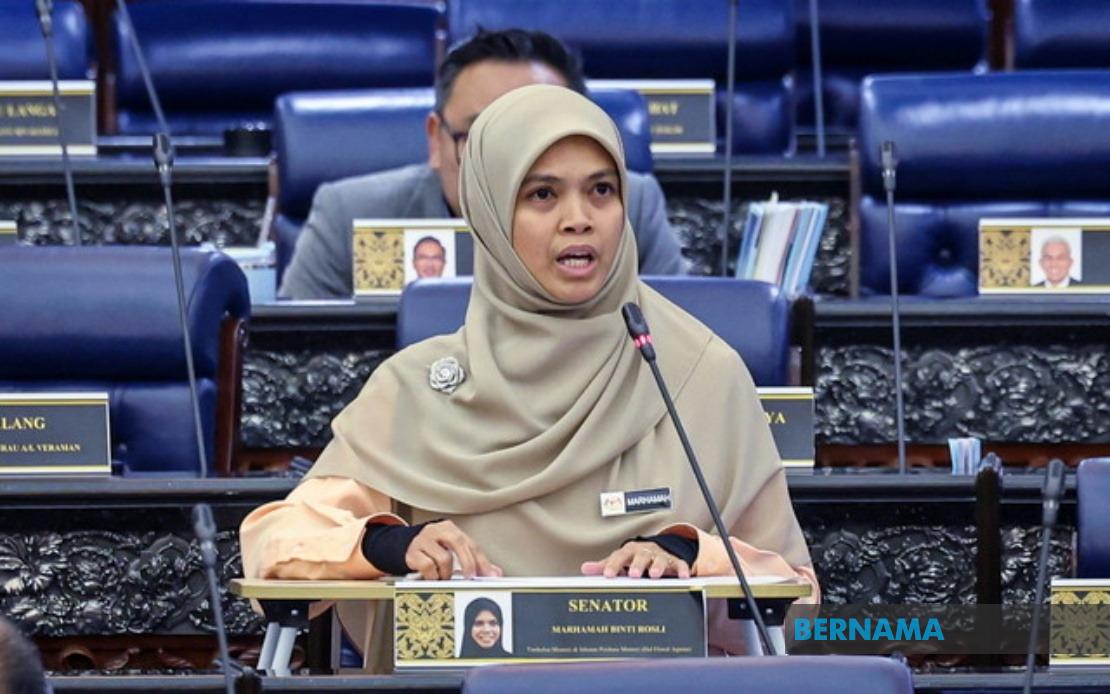
Malaysia is moving towards establishing a unified framework for Syariah lawyer accreditation that would allow practitioners to operate across state boundaries without undergoing repeated admission procedures. Deputy Minister in the Prime Minister's Department (Religious Affairs) Senator Marhamah Rosli announced that a proposal endorsed during the 2026 Syariah Legal Profession Convention will be presented at the National Council for Islamic Religious Affairs Malaysia (MKI) in the coming months, signalling a significant shift in how Islamic legal professionals navigate Malaysia's federal system.
The initiative addresses a long-standing fragmentation in Malaysia's Islamic legal profession. Currently, each state maintains independent jurisdiction over the admission and licensing of Syariah lawyers, creating a patchwork system where a practitioner licensed in Selangor cannot automatically appear in courts in Johor or Penang without fulfilling that state's separate requirements. This territorial approach, while rooted in constitutional federalism, has created substantial obstacles for a professional community that increasingly needs to serve clients across state lines in a modern, mobile economy.
Marhamah elaborated on the specific challenges facing the current system during her parliamentary response. Syariah lawyers contend with inconsistent qualification standards that vary from state to state, making it difficult to establish a common baseline for professional competence. Admission procedures differ significantly, with some states imposing stricter requirements than others, leading to uncertainty about which qualifications will be recognised elsewhere. Beyond these technical barriers, practitioners face repeated administrative and financial burdens whenever they seek to expand their practice into new jurisdictions, effectively raising the cost of doing business and limiting access to legal services in less wealthy states.
The absence of mutual recognition mechanisms compounds these difficulties. Unlike the civil law profession, where the Bar Council provides some national coordination, Syariah lawyers operate in relative isolation, with no established pathway for transferring credentials across borders. This fragmentation undermines the development of specialised expertise and prevents the most experienced practitioners from readily serving clients nationwide. For litigants in smaller or more rural states, this can mean limited access to Syariah lawyers with particular expertise in complex family law, inheritance, or commercial Islamic law matters.
The proposed framework would fundamentally alter this arrangement by allowing a Syariah lawyer admitted in one state to practise automatically in others, contingent on acceptance by state Islamic authorities. Such an approach would resemble mechanisms already in place for civil lawyers, though adapted to respect the unique constitutional position of Islam in Malaysia's federal structure. The government has indicated that any reform would proceed gradually and carefully, maintaining sensitivity towards state autonomy and the role of Malay Rulers as heads of Islam in their respective states—a constitutional principle that cannot be overridden without consensus.
Marhamah stressed that should the MKI endorse the proposal at its next session, the framework would undergo refinement before potentially being escalated to the Conference of Rulers for formal approval. This multi-stage consultation process reflects the complexity of federalism and religious governance in Malaysia. The MKI, comprising religious officials from all states, provides the appropriate forum for initial discussion, while the Rulers' Conference offers the ultimate constitutional blessing for any arrangement affecting Islamic legal jurisdiction. This deliberative approach, while potentially time-consuming, ensures broad buy-in from stakeholders whose cooperation would be essential for implementation.
The timing of this initiative reflects broader recognition within Malaysia's Islamic legal sector that piecemeal state-by-state regulation increasingly ill-serves a profession grappling with modern practice realities. The 2026 Syariah Legal Profession Convention's endorsement suggests that practitioners themselves view harmonisation as a priority. This grassroots support, combined with government backing, creates momentum for change, though implementation will depend on persuading state religious authorities that standardised admissions enhance rather than diminish their authority.
For Malaysia's wider legal system, harmonising Syariah lawyer admissions carries implications beyond convenience. A unified framework could elevate professional standards across all states by establishing baseline requirements applicable everywhere. It would also enhance access to Islamic legal services in underserved regions and create opportunities for specialist practitioners to develop expertise across a larger market. Furthermore, clearer, more transparent admission criteria could attract more qualified candidates to Syariah law, addressing long-standing concerns about whether the profession attracts sufficient talent relative to civil law.
The proposal also signals Malaysia's evolving approach to federal coordination in religious matters. Traditionally, state jealousness of Islamic jurisdiction has made nationwide harmonisation difficult. However, the recognition that modern legal practice requires interstate mobility suggests a subtle shift in attitudes. Religious authorities appear increasingly willing to consider coordinated approaches that preserve state autonomy while enabling professional mobility. This could set a precedent for similar reforms in other areas of Islamic administration.
Implementation challenges will undoubtedly emerge. States may resist if they perceive standardised admissions as diminishing their control over the Islamic legal profession. Concerns about ensuring comparable standards across different states' Islamic judicial systems could delay agreement on specific criteria. Furthermore, questions about which authority would ultimately oversee the unified framework—whether the MKI, individual states, or a new body—remain unresolved. The government's commitment to a phased, measured approach reflects awareness of these sensitivities.
For practising Syariah lawyers and aspiring entrants to the profession, this development offers cautious optimism. A successful framework could significantly reduce barriers to interstate practice, enabling more efficient service delivery and career development. However, until the MKI's decision and the Rulers' Conference input materialise, lawyers must continue navigating the current fragmented system. The proposal's advancement to the MKI represents progress, but substantial ground remains to be covered before Malaysia achieves a truly unified Syariah legal profession.

