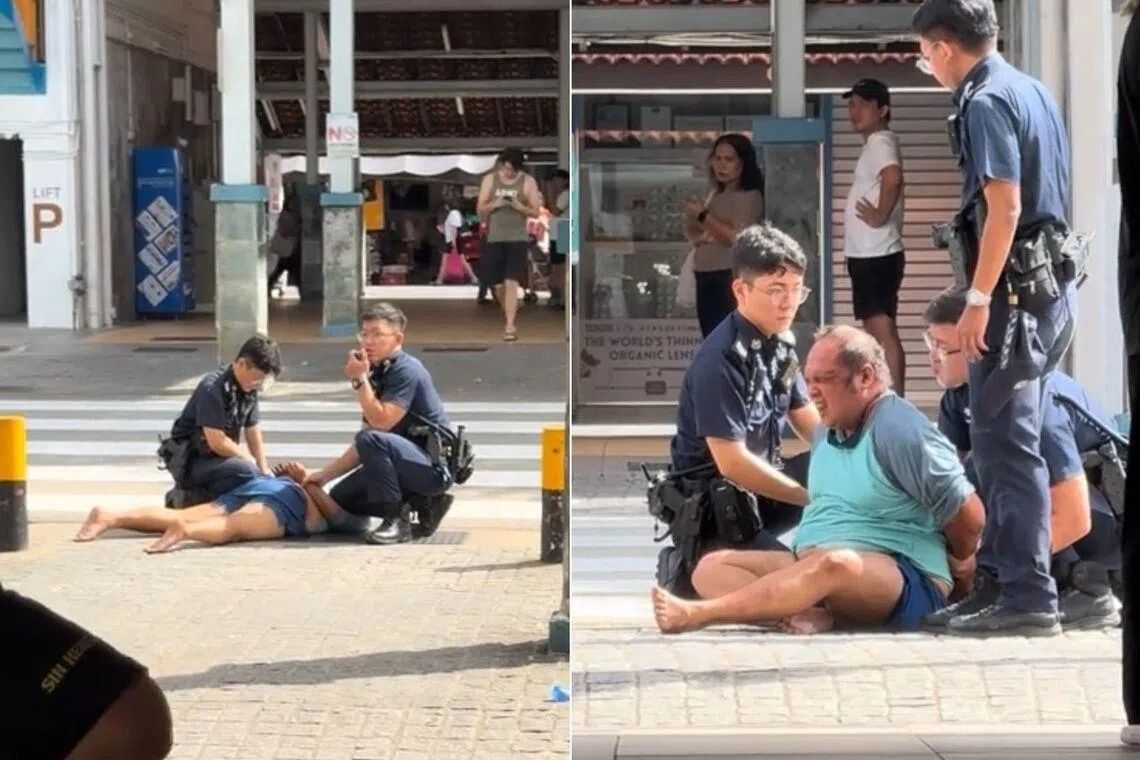
A man was arrested in Singapore's Toa Payoh estate on Sunday morning following allegations that he engaged in an obscene act and physically assaulted a police officer attempting to contain a public disturbance. The incident unfolded at Block 184 Toa Payoh Central around 9.45am when authorities received reports of a disruptive individual creating a commotion inside a local coffeeshop, prompting officers to dispatch personnel to the scene.
Upon arrival, police encountered the 36-year-old man who was allegedly responsible for the disturbance. As officers began the arrest procedure, the suspect allegedly struck a police officer in the face with his fist. The violent response appeared to escalate the situation, transforming what initially was a call regarding disruptive behaviour into a more serious matter involving resistance to law enforcement. The assault on the officer highlighted the unpredictable nature of frontline policing, where situations can rapidly deteriorate when members of the public become confrontational.
Social media documentation of the incident provided public visibility into the law enforcement response. Video content uploaded to TikTok by user Kee Wee Shang captured multiple angles of the police intervention. One recording showed two uniformed officers restraining a barefooted man on the ground during the height of the confrontation, illustrating the physical struggle that ensued as police worked to control the individual and prevent further disorder. Additional footage depicted a third officer present at the location, with the suspect later appearing handcuffed and being escorted away from the scene by the assembled contingent of officers.
The formal charges laid against the suspect encompassed two distinct offences reflecting the nature of his conduct. Police confirmed that the man faced allegations of committing an obscene act, which pertains to the initial disturbance that prompted the emergency call. Additionally, he was charged with voluntarily causing hurt to a public servant with the intention of deterring that person from performing their lawful duties. This second charge carries particular weight within Singapore's legal framework, as assaulting an officer performing official functions is treated as a serious transgression that undermines public order and the ability of law enforcement to operate safely.
The police officer who was struck during the arrest was a 19-year-old constable, representing the younger cohort within Singapore's police force. Despite absorbing a direct punch to the face, the officer sustained injuries classified as minor in nature. Nevertheless, the incident necessitated medical attention, and the injured officer was conveyed to hospital while remaining conscious and alert. The decision to transport him for evaluation reflected standard protocol in cases where officers sustain assault, ensuring comprehensive documentation and treatment of any injuries sustained in the line of duty.
For Malaysian readers and the broader Southeast Asian region, this incident underscores ongoing challenges that law enforcement agencies across the region face when responding to public disturbances. The escalation from a simple report of disruptive behaviour to a violent altercation illustrates how quickly situations involving individuals in apparent psychological distress or under the influence of substances can become volatile. Singapore's police force, recognised internationally for its professionalism and efficiency, nonetheless confronts situations where de-escalation attempts are met with physical resistance, a problem not unique to the island nation but reflective of broader societal pressures affecting public safety across the region.
The viral nature of the TikTok documentation raises important questions about the intersection of social media, public accountability, and police operations. While video evidence provides transparency and creates a public record of law enforcement conduct, it also risks inflaming community sentiment or compromising ongoing investigations before facts are fully established. Singapore's police have maintained that investigations into the incident remain ongoing, suggesting that the full circumstances and any potential aggravating or mitigating factors are still being examined by authorities.
The incident also touches on questions regarding mental health response and de-escalation training, topics increasingly central to policing discussions throughout the developed world. Officers responding to reports of public disturbances must often make rapid assessments regarding whether an individual is experiencing psychological crisis, substance intoxication, or deliberate misconduct, with limited information available at the moment of dispatch. The physical confrontation that ensued suggests that either the officer's initial approach was perceived as threatening by the suspect, or the individual was simply determined to resist lawful arrest, creating a dangerous dynamic for all involved.
Police investigations proceeding in parallel with the formal charges will likely examine whether any additional factors contributed to the incident, including whether the suspect had prior police contact, whether substances were involved, or whether the initial disturbance had any triggering circumstances. These investigative details, once made public through court proceedings, may provide deeper insight into the incident's origins and potentially inform discussions about resource allocation and training protocols within law enforcement agencies not just in Singapore but throughout the region.

