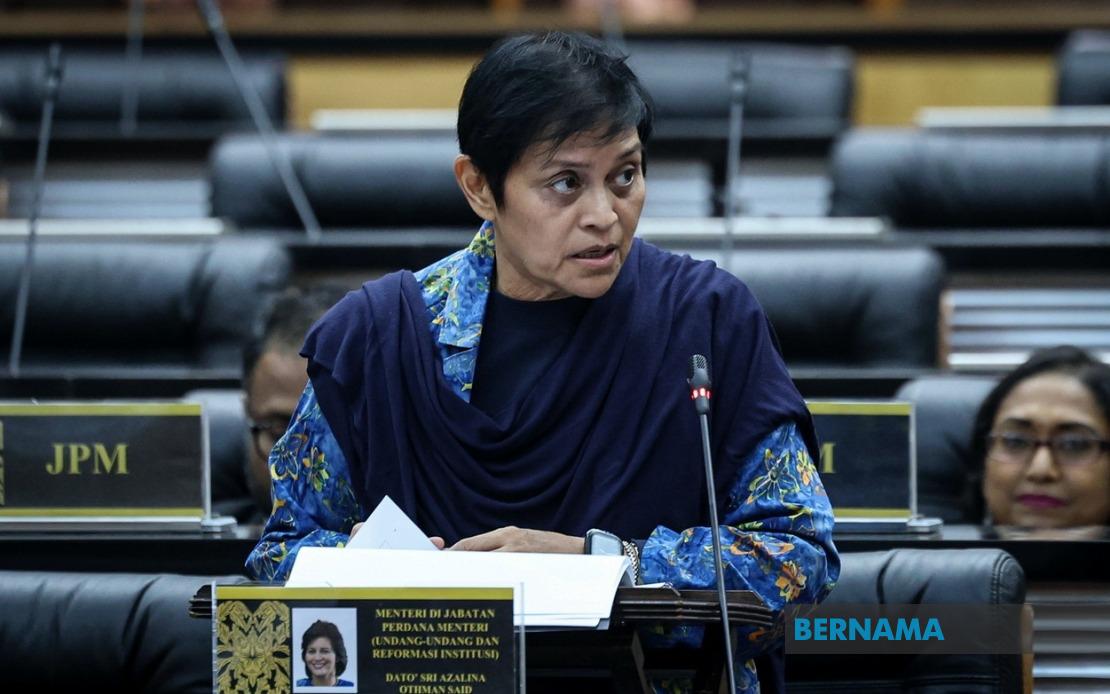
The Malaysian Parliament moved forward on its commitment to judicial integrity and witness safety on July 13 when the Witness Protection (Amendment) Bill 2026 received its first reading in the Dewan Rakyat. Piloted by Datuk Seri Azalina Othman Said, the Minister in the Prime Minister's Department responsible for Law and Institutional Reform, the legislation signals an evolution in how Malaysia's criminal justice system protects those who testify against powerful interests. The Bill is slated for second reading during the current parliamentary sitting, accelerating its passage through the legislative process and indicating government priority for these reforms.
At its core, the amendment addresses a critical gap in Malaysia's existing witness protection architecture by recognising that vulnerable populations require tailored access to safeguards. The Witness Protection Act 2009, the foundational statute governing these protections, becomes more inclusive under the proposed changes. Specifically, Clause 2 amends the original Act to permit parents and legal guardians to lodge applications for programme admission on behalf of witnesses who cannot independently exercise legal rights. This expansion extends coverage to minors beneath eighteen years of age and persons deemed legally incapacitated—categories whose exposure to intimidation, threats, or retaliation often exceeds that of adult witnesses yet who previously faced bureaucratic obstacles to protection.
The amendment recognises a harsh reality within Malaysia's criminal justice sphere: witnesses, particularly those in organised crime, corruption, or violence cases, face genuine physical and psychological danger. Child witnesses and cognitively impaired persons are especially vulnerable, yet existing procedural frameworks sometimes treated their protection as secondary to formal application requirements. By empowering guardians to act on their behalf, the Bill removes administrative friction that could have left vulnerable individuals unprotected during critical periods when threats are most acute.
Equally significant is the introduction of written agreements between the government and programme participants, formalised through new Sections 10A and 10B of the 2009 Act. These contractual instruments establish clear, documented terms governing the nature of protection, the participant's obligations, and the scope of assistance provided. Such formalisation offers several advantages: it creates transparency about what witnesses can expect, establishes mutual accountability, and provides a legal foundation should disputes arise regarding the adequacy or withdrawal of protections. The requirement that agreements be executed before a designated officer introduces an independent witness to the arrangement, further bolstering institutional safeguards.
Critically, the Bill recognises that witness protection extends beyond physical security to encompassing psychological and emotional wellbeing. Clause 4 amends the 2009 Act to explicitly incorporate psychological assistance, including counselling services, as an entitlement within the witness protection programme. This expansion acknowledges decades of international evidence demonstrating that testifying in high-stakes criminal cases—particularly those involving violence, organised crime, or corruption—inflicts lasting trauma. Malaysian witnesses in such proceedings have historically received limited mental health support despite carrying the psychological burden of their testimony and its consequences. The amendment thus brings Malaysian practice into alignment with Commonwealth jurisdictions and established international standards, recognising that sustainable witness cooperation requires holistic support.
The backdrop to these reforms reflects Malaysia's broader journey in strengthening the rule of law and institutional integrity. High-profile prosecutions in recent years have hinged on witness testimony, yet concerns about witness intimidation and inadequate protections have periodically surfaced. The government's decision to comprehensively revise the witness protection regime signals acknowledgment that judicial credibility depends not merely on judges and prosecutors, but equally on creating conditions where ordinary citizens can discharge their civic duty to testify without fear. Without such assurance, corruption, organised crime, and serious violence can flourish in the shadows.
For Malaysian readers, the Bill's implications are far-reaching. Victims of crime and their families who might consider coming forward now have statutory assurance that protections are more robustly available. Prosecutors handling complex cases gain additional tools to secure cooperation from reluctant but essential witnesses. The courts benefit from testimony uncoloured by witness fear or coercion. In practical terms, this means cases involving organised crime syndicates, human trafficking networks, or high-level corruption—categories where witness intimidation has historically been most prevalent—may proceed with greater confidence that key evidence will be forthcoming and reliable.
The Bill's provisions also reflect lessons learned from the implementation of the original 2009 Act. Nearly two decades of operational experience revealed gaps: the absence of formal agreements created ambiguity; the omission of psychological support left trauma unaddressed; the inability of guardians to protect minors proved indefensible. Rather than introducing wholesale replacement, the amendment strategy targets specific weaknesses while preserving the institutional machinery already in place. This measured approach respects the considerable investment already made in building a witness protection infrastructure while enhancing its responsiveness.
From a regional perspective, Malaysia's refinement of witness protection standards contributes to ASEAN's collective capacity to address transnational crime and corruption. Witness protection regimes in the region vary significantly in comprehensiveness and resources, and Malaysia's advancement sets a precedent. As organised crime becomes increasingly sophisticated and cross-border in character, the ability to protect witnesses in one jurisdiction becomes essential to combating criminal enterprises operating across the region. Thailand, Indonesia, and the Philippines face similar challenges, and Malaysia's experience informs regional best practice development.
The transition provisions embedded in Section 10B deserve attention, as they acknowledge that reforms must operate fairly across cohorts. Existing agreements between programme participants and the government remain valid and enforceable under the amended Act, ensuring that individuals already in the programme are not disadvantaged by the law's enhancement. This principle of fairness—that legal reforms should not retroactively diminish protections—reinforces public confidence that the government honours its obligations to those who have already sacrificed to testify.
Looking ahead, the second reading and subsequent committee stage will likely produce debate around implementation details: How will psychological assistance be delivered? What standards govern the agreements' terms? How will the government resource expanded protections across all states? These questions, while technical, carry profound importance for the Bill's practical effectiveness. A superbly written statute that lacks funding or institutional capacity to implement its provisions becomes merely aspirational.
Ultimately, the Witness Protection (Amendment) Bill 2026 represents an investment in Malaysia's democratic institutions and the proposition that ordinary citizens have both a right and a responsibility to participate in justice. By fortifying protections for vulnerable witnesses, formalising government obligations, and acknowledging psychological dimensions of witness trauma, the Bill articulates a commitment to the proposition that justice cannot flourish when witnesses fear the consequences of truth-telling. For Malaysia, that is a principle worth codifying and implementing with vigour.

