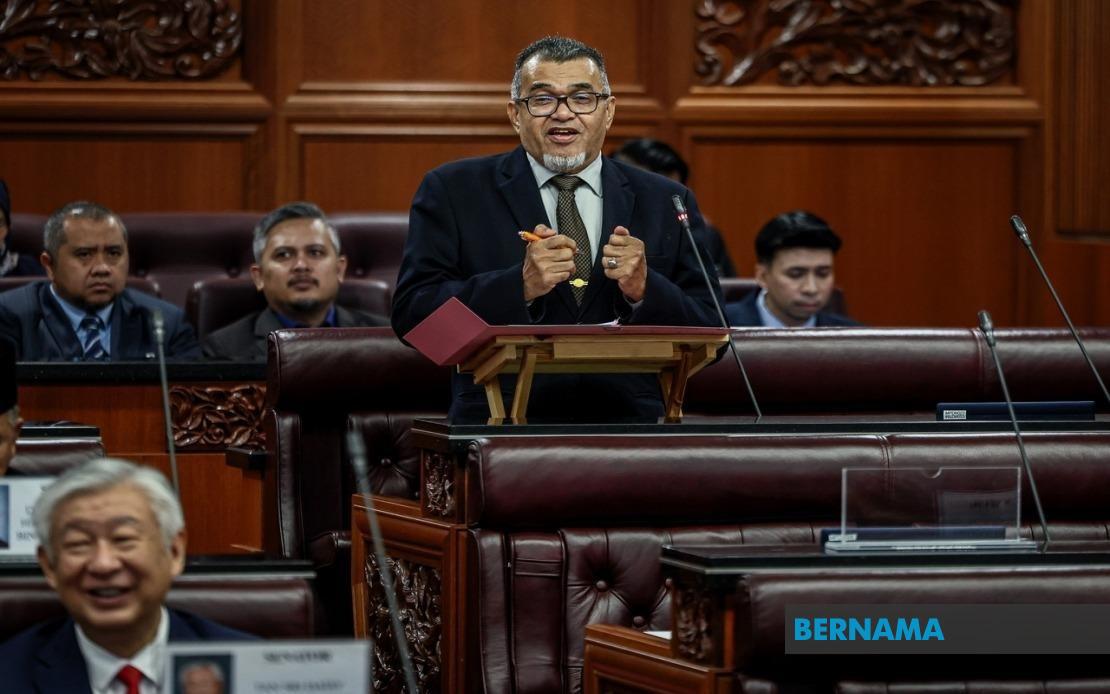
The government is moving swiftly to strengthen legal deterrents against the growing menace of railway cable theft, with Deputy Transport Minister Datuk Hasbi Habibollah announcing plans to dramatically escalate penalties for perpetrators. Speaking during a parliamentary question-and-answer session at Dewan Negara, Hasbi revealed that amendments to the rail transport law are being finalised, with the proposed penalty jumping from the current RM1,000 ceiling to RM100,000 for each offence. The legislative change is expected to be tabled before Parliament during the next scheduled session, potentially becoming law by the end of the year.
The urgency underpinning this legislative overhaul reflects the scale of the problem confronting Malaysia's transportation infrastructure. Across the nation's rail network—encompassing Keretapi Tanah Melayu Berhad (KTMB), Prasarana Malaysia Berhad, and the East Coast Rail Link project—cable thieves have inflicted RM50 million in cumulative losses. These are not merely financial figures; they represent disruptions to commuters, delays to essential freight movements, and setbacks to critical infrastructure projects. The severity of the financial impact underscores why government officials consider existing penalties inadequate for the damage caused and operational hardship endured by rail operators.
The East Coast Rail Link has proven particularly vulnerable to organised cable theft despite still being in its construction phase. The ECRL has recorded 71 cable theft incidents with estimated losses totalling RM4.06 million, while an additional 13 cases involving damage to equipment and materials resulted in RM0.69 million in losses, bringing the project's total exposure to RM4.75 million. Because the ECRL has not yet commenced passenger operations, these thefts pose no direct disruption to travellers—but they do threaten the project's carefully calibrated implementation schedule. Installation work, testing procedures, system commissioning, and operational preparations all face potential delays if cable theft continues unchecked, effectively postponing the benefits that this multi-billion ringgit infrastructure investment is designed to deliver to the East Coast.
The legislative response must be understood within the broader context of Malaysia's modernisation ambitions. The ECRL represents a strategic investment with implications extending far beyond railway engineering; it underpins regional economic integration, connects isolated communities to urban centres, and reinforces Malaysia's positioning within broader Asian transport corridors. When thieves target these assets, they are directly hampering the nation's development trajectory and stranding investments that could otherwise generate economic returns.
However, Hasbi and his ministry recognise that legislation alone cannot solve this multifaceted problem. The government is simultaneously deploying technological and ground-level security measures to create a comprehensive response. A network of 1,146 closed-circuit television cameras is being installed along railway lines stretching from Johor northward throughout the peninsula. These cameras serve both as deterrents and as investigative tools, creating a surveillance backbone that makes theft riskier and prosecution easier. The presence of video evidence transforms cable theft from a crime easily attributed to unknown perpetrators into one with documented visual records that can support successful criminal prosecutions.
On the ground, KTMB has acquired 20 scrambler motorcycles deployed to the Auxiliary Police force, enabling rapid-response patrols that can cover railway corridors more efficiently than foot-based security. Operating 24 hours daily, these mobile units can respond quickly to suspicious activities and create visible deterrence through their continuous presence. The motorcycles represent a strategic upgrade from traditional patrol methods, allowing security personnel to cover longer distances and reach incident sites faster.
Complementing these hardware and personnel investments, the government has also implemented physical security infrastructure improvements. High-security manholes along railway lines are being sealed to prevent easy access to vulnerable cable runs, while sniffer dogs—the K9 units—have been deployed for detection and prevention. These canine security assets add another layer of unpredictability to the security environment, making theft operations more dangerous and more likely to be discovered. The multi-pronged approach reflects sophisticated understanding that security cannot rely on any single mechanism; effective protection requires technological surveillance, trained personnel, physical barriers, and legislative consequences working in concert.
For Malaysian commuters and businesses reliant on rail transport, these measures carry immediate relevance. Train delays caused by cable theft disrupt daily routines, increase logistics costs, and undermine confidence in public transportation reliability. The higher penalties, coupled with enhanced surveillance and patrols, should gradually improve service reliability by making theft a far less attractive criminal venture. Would-be thieves now face not only the prospect of substantially larger fines but also cameras, patrols, and physical barriers that reduce their likelihood of success.
The timing of these announcements also reflects political recognition of public frustration with recurring disruptions. Media coverage of cable theft incidents and subsequent service cancellations has made this a visible public issue, transforming it from a technical operational challenge into a governance matter. By announcing these legislative and enforcement responses, the government signals responsiveness to citizen concerns and demonstrates commitment to protecting public assets.
Moreover, Malaysia's efforts to combat railway infrastructure theft carry implications for regional transport development. As Southeast Asian nations invest in rail connectivity—from Thailand's rail expansion to Indonesia's Java high-speed line—the challenge of protecting these assets remains constant. Malaysia's comprehensive approach combining legal penalties, surveillance technology, and ground security offers a potential model that other regional nations might study and adapt to their contexts.
The transition from RM1,000 to RM100,000 fines represents a fundamental recalibration of legal deterrence, signalling that the state views systematic cable theft as a serious crime deserving proportionate punishment. If the amendments pass as expected, Malaysia will join countries that impose substantial penalties on infrastructure sabotage, recognising that modern rail systems constitute critical national assets warranting protection equivalent to other strategic infrastructure. The comprehensive security architecture now being implemented—law, technology, personnel, and physical barriers—reflects a matured understanding that protecting public assets requires integrated, sustained effort rather than reliance on any single mechanism.

