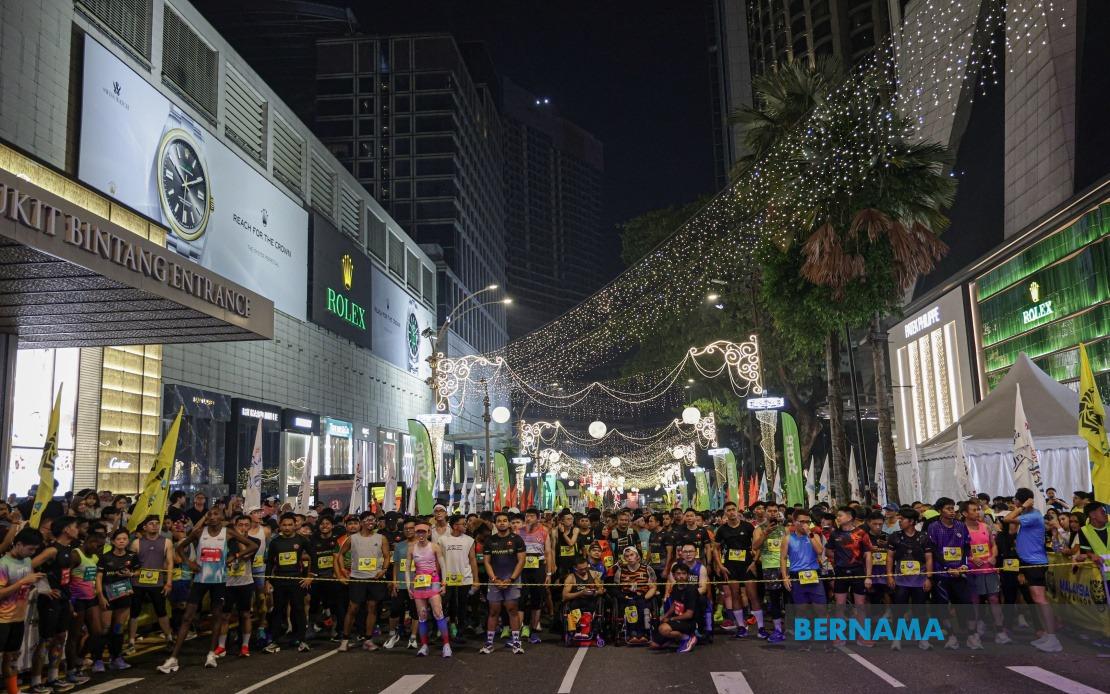
The Malaysia Marathon 2026 commenced just after midnight in a spectacular display of national spirit, with Minister of Tourism, Arts and Culture Datuk Seri Tiong King Sing overseeing the ceremonial flag-off near Pavilion Kuala Lumpur. The event drew 25,000 participants—combining both seasoned athletes and recreational runners—across four distinct race categories, positioning itself as a landmark fixture in Malaysia's National Day calendar as the country marked its 69th independence anniversary.
The elite Full Marathon discipline began at 12:30 am on August 30, with 2,000 competitors tackling the grueling 42-kilometer route. This was followed at 2:00 am by the Half Marathon category, which attracted 8,000 participants covering 21 kilometres. The staggered start times reflect organisers' intent to manage the flow of tens of thousands of athletes through Kuala Lumpur's urban landscape during the early morning hours, minimising disruption whilst maintaining the spectacle's intensity.
The race structure extends beyond serious distance running, demonstrating efforts to make the event inclusive. A 10-kilometre category scheduled for 3:30 am drew 5,000 entrants, while a 5-kilometre Fun Run at 7:30 am provided an accessible entry point for 10,000 families and casual fitness enthusiasts. This tiered approach reflects a broader trend in Malaysian sports events to cater to varied fitness levels and demographics, encouraging broader community participation in national celebrations.
A particularly innovative element distinguishes this edition from previous marathons: the finishing line has been relocated to the Kuala Lumpur City Centre precinct, departing from tradition by abandoning the historical Dataran Merdeka venue. This shift carries symbolic weight, as KLCC represents contemporary Malaysia's economic dynamism and global aspirations, whereas Dataran Merdeka embodies national heritage. The choice subtly signals a blending of tradition with modernity in how Malaysia celebrates its identity.
The race route itself incorporates substantial topographical challenges designed to test competitors' endurance and determination. Full Marathon participants face a demanding 900-meter elevation gain as they traverse the Ampang-Kuala Lumpur Elevated Highway, an urban expressway that typically handles vehicular traffic. This choice transforms a familiar commuter route into a symbolic pathway of national achievement, converting everyday infrastructure into a stage for athletic accomplishment.
Perhaps most strikingly, the 10-kilometre category will feature an HONOR-made humanoid robot competing alongside international runners from nations including Japan and Nigeria. This technological element injects a futuristic dimension into the proceedings, positioning Malaysia as an early adopter of cutting-edge innovations within sporting contexts. The presence of international participants underscores the event's growing regional and global profile, transforming what might otherwise be a domestic observance into a genuinely cosmopolitan gathering.
The logistical footprint required to accommodate such scale has necessitated comprehensive traffic management across central Kuala Lumpur. Kuala Lumpur Police have implemented phased road closures and diversions commencing overnight and extending through the following afternoon, affecting major arterials including Jalan Bukit Bintang, Jalan Ampang, Jalan Sultan Ismail, and Jalan Raja Chulan. Both the AKLEH and SUKE elevated highways—critical commuting corridors—require temporary restrictions, underscoring the event's substantial operational complexity and the significant resources devoted to facilitating its execution.
The marathon's international credentials carry considerable weight. World Athletics, the global governing body for track and field competition, has granted formal recognition to the Malaysia Marathon 2026, conferring legitimacy and prestige that attracts serious competitors and elevates Malaysia's standing within the international athletics calendar. This endorsement suggests the event meets stringent standards for course measurement, safety protocols, and administrative excellence.
The timing of the marathon—tethered explicitly to National Day festivities—reflects a strategic integration of sporting achievement with patriotic commemoration. Rather than treating athletics as separate from national observance, Malaysian organisers have positioned the marathon as a participatory expression of national identity. The 25,000 runners, drawn from Malaysia and abroad, collectively embody the inclusive, aspirational values the nation seeks to project on its independence anniversary.
For local event management and tourism authorities, the marathon represents an opportunity to showcase Kuala Lumpur's capacity to host world-class sporting infrastructure while generating positive media coverage and economic activity. The concentration of international participants, spectators, and media attention around National Day potentially extends Malaysia's global visibility and reinforces its positioning as a dynamic Southeast Asian hub capable of delivering large-scale events with professional execution.
The Malaysia Marathon 2026 ultimately demonstrates how sporting events can serve multiple functions simultaneously: fostering community engagement, celebrating national identity, showcasing technological innovation, and attracting international recognition. By integrating distance running into National Day ceremonies, Malaysia has created a platform where athletic endeavour and patriotic expression become intertwined, offering participants a memorable way to contribute to and experience their nation's anniversary.

