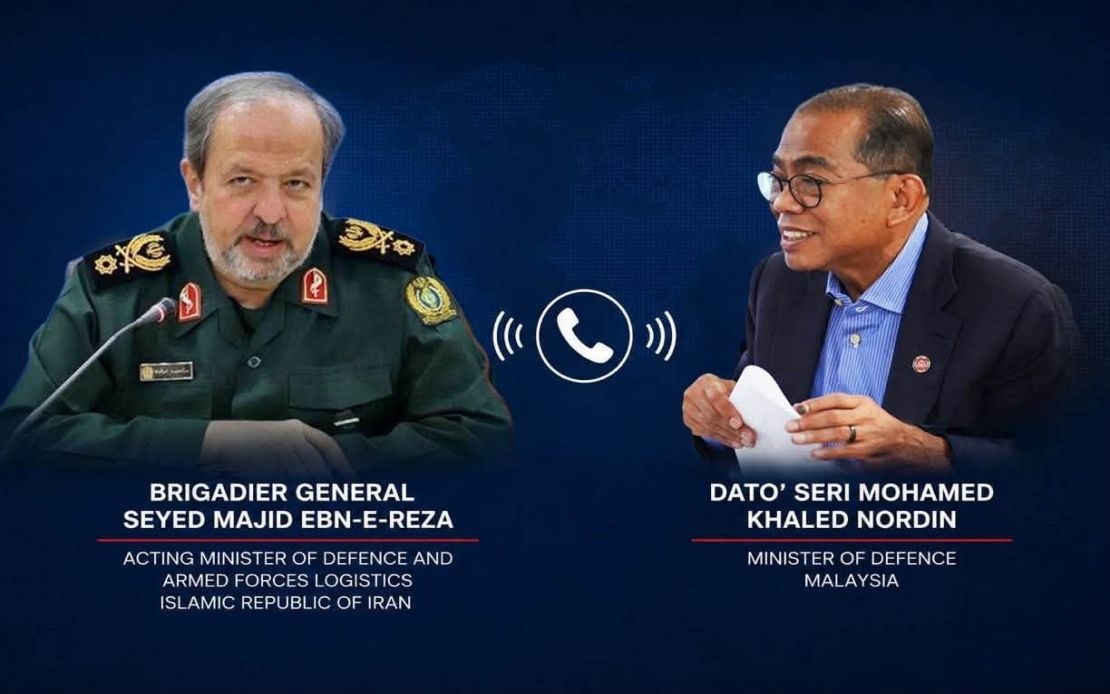
Malaysia has signalled its readiness to deepen defence relations with Iran through a structured cooperation framework, marking an incremental step in the two nations' strategic engagement. Defence Minister Datuk Seri Mohamed Khaled Nordin communicated this intention during a recent telephone discussion with Iran's Acting Minister of Defence and Armed Forces Logistics, Brigadier General Seyed Majid Ebn-e-Reza, underscoring Kuala Lumpur's commitment to leveraging what it describes as the historically close ties between the two countries. The overture reflects Malaysia's diplomatic approach to expanding its defence partnerships across diverse geopolitical contexts, particularly with nations in the Middle East where Kuala Lumpur has maintained balanced engagement.
Central to Malaysia's push is the proposed completion of a formal Memorandum of Understanding on defence cooperation, which both nations are working to finalise. Such an instrument would provide institutional scaffolding for defence exchanges and military-to-military cooperation, moving the relationship beyond ad-hoc interactions into a structured bilateral framework. For Malaysia, which operates within a complex regional security environment and maintains defence partnerships with both Western and non-aligned nations, the formalisation of defence ties with Iran represents an expansion of its strategic options. The MoU could encompass areas such as personnel exchanges, training initiatives, technological cooperation, and coordination on maritime security matters—domains where both nations have demonstrated distinct capabilities.
A particularly significant element of Malaysia's outreach concerns Iran's anticipated participation in the 2025 Langkawi International Maritime and Aerospace Exhibition, Asia's premier defence and aerospace showcase. The Defence Minister's explicit welcome of Iranian involvement in LIMA signals Kuala Lumpur's intent to utilise the biennial exhibition as a diplomatic and commercial platform for advancing bilateral defence relationships. LIMA serves not merely as a trade venue but as a geopolitical barometer, with a nation's participation reflecting both its regional standing and its relationship with the host country. By facilitating Iranian presence at LIMA, Malaysia is positioning itself as an open and inclusive venue for defence dialogue, potentially attracting broader participation from the Middle Eastern region.
Malaysia's overture to Iran also carries humanitarian and diplomatic dimensions beyond purely defence considerations. Defence Minister Mohamed Khaled extended official condolences regarding the deaths of Iranian military personnel, security forces, and civilians resulting from conflict in West Asia, acknowledging the human costs of regional volatility. This compassionate framing demonstrates Malaysia's recognition of the broader humanitarian context surrounding its defence partnership discussions and positions Kuala Lumpur as a nation sensitive to regional suffering. Such messaging is significant for a Muslim-majority country navigating the complexities of the Israeli-Palestinian conflict and broader West Asian tensions, where expressing solidarity with affected populations carries both moral weight and diplomatic meaning.
Underscoring Malaysia's engagement is an explicit commitment to diplomatic resolution and regional stability. The Defence Minister reiterated Malaysia's hope that ceasefires would be sustained and that dialogue and negotiated settlements would continue to receive space and support in regional peace efforts. This framing places Malaysia within the camp of nations advocating for diplomatic de-escalation and multilateral dialogue, consistent with its traditional foreign policy emphasis on peaceful resolution of disputes. For Malaysia, supporting Iran's participation in LIMA and pursuing defence cooperation does not contradict its broader commitment to regional peace—rather, engagement with diverse players is presented as a mechanism for maintaining dialogue and reducing isolation.
The maritime security dimension of Malaysia's approach deserves particular attention. The Defence Minister specifically commended Iran's cooperation and treatment in facilitating safe passage of vessels during the West Asian conflict, highlighting the critical importance of maintaining secure shipping lanes through contested waters. Malaysia's emphasis on the security of maritime routes, particularly the Strait of Hormuz, reflects the country's acute dependence on global trade and freedom of navigation. As a nation whose economic prosperity depends substantially on unimpeded maritime commerce through the Strait of Malacca and beyond, Malaysia has a direct stake in ensuring stability in the Hormuz passage, a critical choke point for global energy flows. Cooperation with Iran on maritime security coordination could yield mutual benefits in preventing disruptions to shipping and maintaining commercial stability.
Malaysia's acknowledgment of Iran's indigenously developed defence capabilities reflects a broader respect for technological advancement and military modernisation among developing nations. By recognising Iran's resilience and self-sufficiency in defence technology, Malaysia subtly affirms a model of strategic autonomy that resonates with its own foreign policy preferences. This framing also positions Iran as a sophisticated defence actor rather than merely a nation facing international sanctions, thereby normalising higher-level defence engagement with Tehran. For Malaysian policymakers, supporting Iran's technological advancement and defence autonomy aligns with the broader principle of respecting nations' rights to develop their own security capacities independent of great power constraints.
The timing of Malaysia's defence overtures toward Iran occurs within a broader context of Malaysian foreign policy diversification and the country's effort to maintain equidistant relationships across competing geopolitical blocs. As great power competition intensifies and regional conflicts complicate international alignments, Malaysia continues its traditional practice of avoiding rigid bloc alignment while expanding partnerships across ideological and strategic divides. Defence cooperation with Iran represents one element of this multi-vector engagement strategy. Simultaneously, Malaysia maintains robust defence partnerships with the United States, Japan, Australia, and other Western nations, demonstrating its commitment to what it characterises as principled, non-aligned diplomacy.
From a regional Southeast Asian perspective, Malaysia's approach toward Iran carries implications for how ASEAN members navigate defence diplomacy in an era of intensifying geopolitical competition and Middle Eastern crises. Malaysian initiatives may establish precedent for how regional nations balance engagement with multiple external powers while maintaining focus on their immediate security concerns. The expansion of defence ties with Iran, coupled with continued partnerships elsewhere, exemplifies a pragmatic diplomatic model where nations seek to benefit from multiple relationships rather than constraining themselves through exclusive alignments. This approach, rooted in Malaysia's longstanding doctrine of strategic flexibility, offers a template that other Southeast Asian nations might consider as they construct their own defence partnerships.
The proposed MoU between Malaysia and Iran, once finalised, will provide tangible evidence of deepening bilateral commitment. Such formal agreements typically establish regular consultation mechanisms, joint working groups, and frameworks for coordinating military activities. These institutional structures, while potentially modest in scope, create channels for sustained dialogue and reduce misunderstandings. For Malaysia, institutionalising defence cooperation with Iran through the MoU represents a calculated investment in long-term stability and predictability in its relationship with a significant West Asian power. The agreement would complement Malaysia's broader network of defence partnerships and contribute to the country's larger objective of maintaining balanced engagement across diverse geopolitical contexts.

