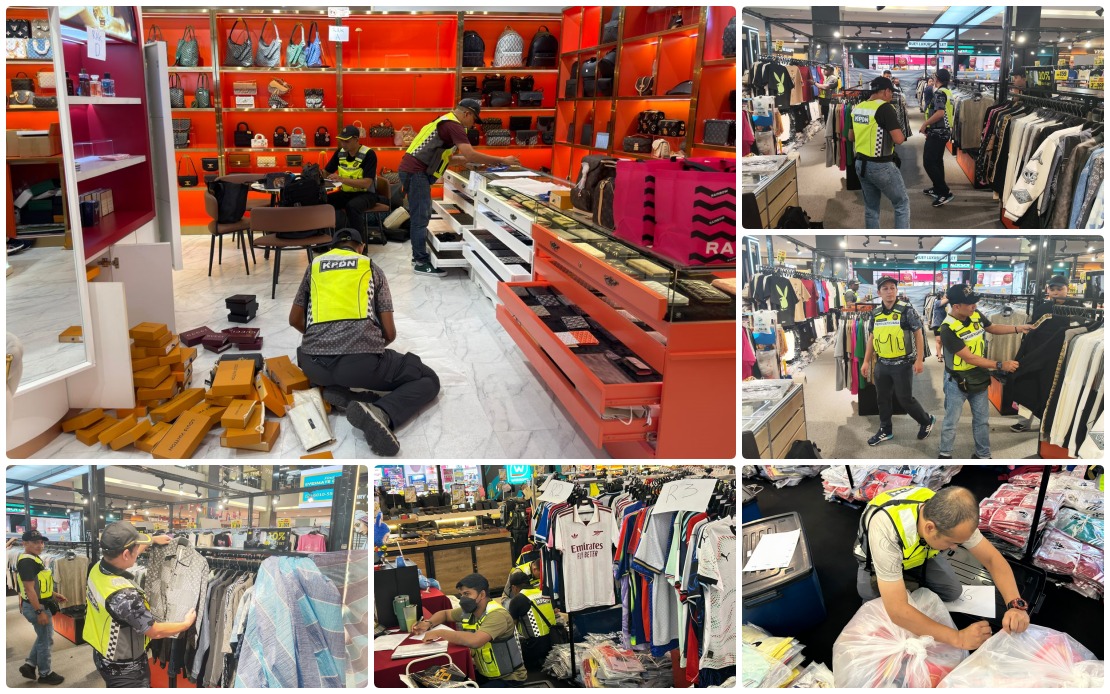
Malaysia's enforcement authorities have struck a significant blow against the illegal counterfeit goods trade, with the Ministry of Domestic Trade and Cost of Living (KPDN) executing coordinated raids that resulted in the seizure of RM600,000 worth of suspected fake branded merchandise from three separate locations in Johor Bahru on June 15. The operation represents an intensified crackdown on intellectual property infringement in the state, which has emerged as a persistent hub for counterfeit distribution networks targeting consumers across Southeast Asia.
Datuk Azman Adam, the enforcement director-general of KPDN, outlined the scope of the operation, explaining that the agency's Putrajaya Enforcement Division had systematically targeted premises that were openly displaying and selling products bearing counterfeit trademarks without authorisation from legitimate brand owners. The investigation revealed a troubling distribution model in which the operators were not merely retail sellers but appeared to function as central suppliers, moving inventory through major supermarket chains and potentially distributing stock to downstream traders across multiple locations.
The one-month intelligence gathering period that preceded the raids demonstrates KPDN's evolving approach to combating counterfeiting, moving beyond reactive enforcement towards proactive investigation of supply chains. This investigative methodology is particularly significant for regional enforcement efforts, as it identifies and disrupts the wholesale distribution apparatus rather than simply removing products from the shelves of end retailers. The goods confiscated encompassed a diverse range of high-value items including clothing, handbags, wallets, belts, and perfumes, all bearing fraudulent trademark applications that would have commanded premium prices had they been genuine.
The legal framework guiding this enforcement action stems from Section 102(1)(c) of the Trademark Act 2019, which specifically criminalises the possession, custody, or control of counterfeit goods for the purpose of trading. This statutory provision represents Malaysia's commitment to protecting intellectual property rights and safeguarding consumers from deceptive commercial practices. The breadth of this legislation is comprehensive, targeting not merely the manufacture of counterfeits but the entire distribution chain, from warehousing to retail sale.
Authorities detained four individuals connected to the operation, including the premises owner and caretaker, signalling KPDN's determination to pursue personal accountability alongside asset seizure. This multi-dimensional enforcement strategy recognises that disrupting supply requires both removing inventory and disrupting the human networks that manage these illegal operations. The detentions enable investigators to map out the broader architecture of the counterfeit distribution system, potentially leading to upstream manufacturer identification and downstream retailer investigations.
The penalties prescribed under the Trademark Act carry substantial deterrent weight, particularly the escalating punishment structure that distinguishes between first and subsequent offences. Individual offenders face maximum fines of RM10,000 per counterfeit item or imprisonment up to three years for initial violations, with penalties doubling to RM20,000 per item and five years imprisonment for repeat offences. This tiered approach incentivises compliance among first-time violators while severely penalising recidivist offenders who view initial fines as mere business costs.
Corporate entities face even steeper consequences, confronting maximum fines of RM15,000 per item for first offences escalating to RM30,000 per item for subsequent violations. For operations like the Johor network, these corporate penalties could accumulate to astronomical sums given the RM600,000 seizure value, creating genuine financial exposure that extends beyond individual culpability. This framework reflects Malaysia's recognition that counterfeit operations frequently operate through corporate structures designed to shield personal liability and facilitating owner rotation when enforcement pressure mounts.
The implications of this enforcement action extend beyond immediate local consequences, resonating across ASEAN supply chains where Malaysian ports and distribution hubs serve as transshipment points for regional commerce. Counterfeit goods operations often exploit regulatory gaps between jurisdictions, and disrupting domestic distribution networks raises the transaction costs for organised counterfeiting syndicates attempting to move products through the region. The seizure signals to transnational criminal networks that Malaysia is actively monitoring supermarket channels and sophisticated distribution apparatus, not merely policing street vendors.
Consumer protection represents a critical but often overlooked dimension of this enforcement priority. Counterfeit merchandise, particularly perfumes and personal care items, frequently incorporates substandard or harmful components, posing direct health risks to unsuspecting purchasers who believe they are purchasing genuine products at supermarket locations. The placement of counterfeits within legitimate retail channels, rather than informal markets, dramatically increases consumer exposure and undermines trust in branded distribution systems. KPDN's targeting of supermarket-based counterfeit operations thus addresses both intellectual property infringement and public health dimensions of the illicit trade.
Datuk Azman Adam's public commitment to continued enforcement intensity and refusal to accommodate trademark infringement reflects institutional recognition that counterfeiting represents an existential challenge to Malaysian retail ecosystems and brand sector competitiveness. The ministry's willingness to invest month-long intelligence operations and deploy multijurisdictional enforcement resources indicates a strategic pivot towards sustained, systematic campaign against organised counterfeiting networks rather than episodic enforcement actions. This sustained approach potentially yields diminishing returns for counterfeit operators, raising the permanent cost of Malaysian market participation and incentivising relocation to jurisdictions with weaker enforcement capacity.