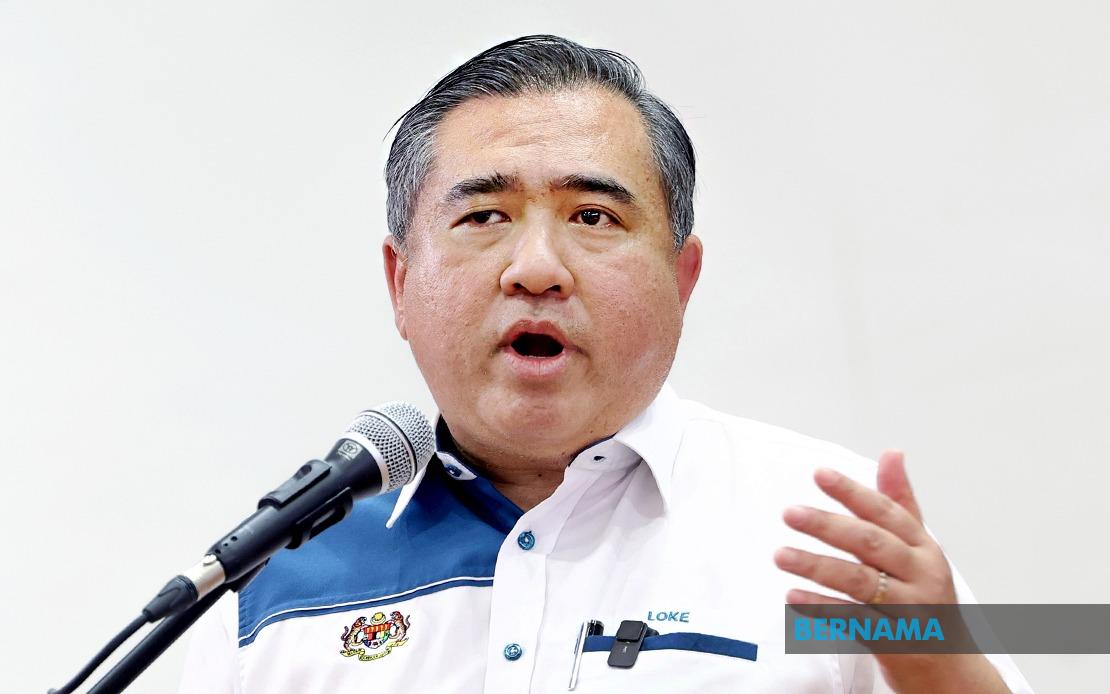
The Ministry of Transport has mandated the Road Transport Department to take action against campaign riders captured on video breaching helmet regulations during the ongoing Johor state election. Transport Minister Anthony Loke announced the enforcement directive on Wednesday, emphasizing that the department would pursue legal proceedings against violators from any political organization, including members of his own Pakatan Harapan coalition.
Loke's statement arrives in response to social media footage showing several Pakatan Harapan campaign workers, among them from the Democratic Action Party, riding motorcycles without protective headgear during election-related activities in the state. The minister stressed that such lapses in road safety compliance warrant corrective action, irrespective of the political identity or allegiance of those involved in the infractions.
The transport portfolio holder underscored that his approach to enforcing motorcycle safety standards remains consistent and unwavering across different electoral cycles. He recalled that approximately six years earlier, during the Slim by-election campaign, he had raised comparable concerns regarding Barisan Nasional figures engaging in campaign activities on two-wheelers. At that time, he had articulated a clear distinction: while motorcycling for political purposes is entirely permissible, all riders must comply with mandatory helmet-wearing requirements and model responsible behaviour for the general public.
Loke's principled stance reflects broader concerns about setting appropriate standards for public conduct, particularly when political figures and campaign operatives are in the spotlight. Election periods often generate heightened media scrutiny and public attention, making the actions of campaign workers especially visible and potentially influential on public attitudes toward legal compliance. When politicians and their representatives are perceived to disregard traffic regulations, it can undermine broader road safety messaging and suggest that such laws are selectively enforced.
The minister articulated his commitment to impartial application of the law with particular clarity, stating that he would not grant preferential treatment to his campaign colleagues despite holding the position of DAP secretary-general. This declaration carries weight in the Malaysian context, where accusations of political bias in enforcement have periodically surfaced. By publicly announcing that the Road Transport Department would pursue members of his own organization with the same vigour as opposition figures, Loke positioned himself as committed to institutional integrity and equal protection under the law.
Road safety legislation in Malaysia does not differentiate between political affiliations or social status; the regulations apply uniformly to all road users. Helmet-wearing for motorcyclists represents a fundamental safety requirement, backed by extensive research demonstrating significant reductions in head injury severity and mortality rates in accident scenarios. When public figures, particularly those engaged in high-visibility campaign activities, are observed circumventing these requirements, it potentially signals that compliance is discretionary rather than mandatory.
The enforcement action also reflects evolving standards around electoral conduct and public responsibility. Modern election campaigns increasingly occur in digital spaces where viral videos can rapidly amplify messages—both intended and unintended—to mass audiences. A single image of campaign workers flouting traffic laws can circulate widely and undermine confidence in political institutions' commitment to lawful behaviour. By moving decisively to address violations, the transport ministry signals that electoral activities do not exempt participants from ordinary legal obligations.
For Malaysian road safety advocates, the incident underscores persistent challenges in achieving universal helmet compliance among motorcycle riders. Despite decades of regulation, non-compliance rates remain significant in various demographic and geographic segments. Campaign periods, where large groups of riders mobilize for political purposes, present both challenges and opportunities for enforcement and public education efforts.
The announcement carries implications for how political parties organize campaign activities moving forward. Campaign managers across the political spectrum will likely heighten attention to ensuring participants comply with road regulations, aware that violations can be documented, publicized, and become the subject of enforcement action. This may contribute incrementally to improved compliance rates during election periods, when public visibility is highest.
Loke's firm stance also addresses a recurring tension in Malaysian politics: the expectation that leadership demonstrates commitment to rule of law and institutional fairness. Political leaders who enforce regulations selectively face credibility challenges and provide ammunition to critics questioning institutional impartiality. By explicitly committing to prosecute members of his own party, Loke positioned the Transport Ministry as an institution committed to neutral application of legal obligations.
The timing of the directive, during an active state election campaign, ensures maximum visibility and communicates clearly to all political organizations that road safety enforcement will continue uninterrupted regardless of electoral activity. This consistency in regulatory enforcement, maintained across different electoral cycles and different political actors, contributes to public confidence that institutions function according to established rules rather than political convenience.
Moving forward, this enforcement action may become a reference point for assessing how Malaysian authorities balance electoral freedoms with public safety obligations. It demonstrates that participation in campaign activities does not confer exemptions from traffic laws, a principle that, if consistently applied across all parties and election cycles, can strengthen both road safety outcomes and institutional credibility.

