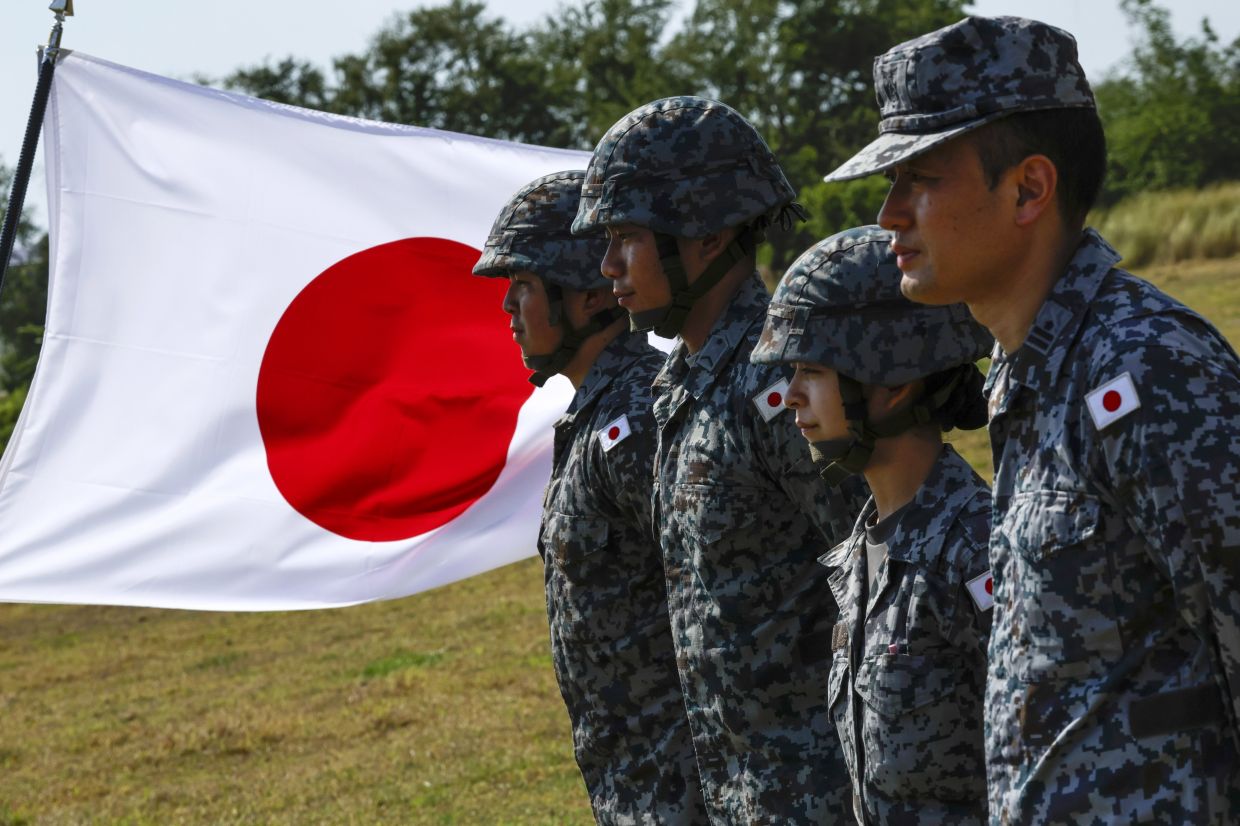
Japan has emerged as an increasingly assertive architect of regional security architecture, using a combination of military partnerships, development aid, and strategic infrastructure projects to counter China's expanding military influence across the Indo-Pacific. Speaking at Singapore's major security forum in May, Defence Minister Koizumi underscored Tokyo's commitment to reshaping the regional balance, particularly after organisers cancelled a session that would have given Beijing a platform to present its vision for Asia-Pacific security cooperation. This seemingly minor logistical decision reflected broader tensions over who will shape the region's future security arrangements.
Japan's defensive posture has become increasingly visible as it grapples with two parallel anxieties: China's accelerating military modernisation and uncertainty about America's long-term commitment to the region. The unusually publicised meeting between Koizumi and US Defence Secretary Pete Hegseth, designed to project American-Japanese solidarity, inadvertently exposed Tokyo's deeper concern—that the traditional security guarantee underpinning Japanese strategy may be weakening. This perception has intensified under the Trump administration, which has pressured allies including Japan and South Korea to significantly increase defence spending while simultaneously imposing tariffs on strategic partners like India, raising questions about Washington's reliability as a long-term security anchor.
In response to these shifting dynamics, Tokyo has begun pursuing capabilities traditionally associated with major military powers. Japanese officials have publicly discussed constructing nuclear-powered attack submarines, a step that would fundamentally challenge the country's decades-old nuclear taboo and signal a dramatic recalibration of its security posture. Beyond such headline-grabbing proposals, Japan has systematically expanded a network of bilateral security arrangements with nations from New Zealand to the Philippines, with Koizumi celebrating the deployment of an upgraded Mogami-class frigate to Wellington as evidence of deepening defence cooperation in the South Pacific.
Yet Tokyo's strategy extends far beyond traditional military alliances. Rather than simply mirroring American efforts to contain China through explicit military containment, analysts increasingly view Japan's approach as more sophisticated—a multilayered framework that combines defence assistance, economic partnerships, and infrastructure development to offer Indo-Pacific nations genuine alternatives to forced alignment with either Beijing or Washington. This represents a deliberate departure from earlier approaches, reflecting Tokyo's recognition that many Southeast Asian and Pacific Island nations prioritise economic development and resilience over abstract security principles, making them wary of being drawn into great-power competition.
Japan articulated this strategic evolution through Prime Minister Sanae Takaichi's updated Free and Open Indo-Pacific framework announced in May, which shifted away from Shinzo Abe's 2016 emphasis on abstract principles like rule of law toward concrete, practical instruments. The recalibrated approach prioritises three tangible deliverables: undersea cables that provide digital and communication backbone, energy supply chain security, and enhanced maritime domain awareness—benefits that appeal directly to regional governments facing immediate economic and security challenges. This pragmatism reflects Tokyo's understanding that ideology matters less than demonstrating capacity to solve real problems facing Indo-Pacific nations.
Central to this strategy is Japan's Overseas Security Assistance programme, which circumvented traditional development aid restrictions preventing military support. The programme represents an elegant institutional solution to a political problem: Japan's Overseas Development Assistance framework traditionally prohibited direct military assistance, yet regional maritime security required precisely such support. By creating a separate legal channel specifically designed to transfer defence capabilities, Tokyo transformed development partnerships into strategic tools without violating existing commitments. Since its inception just three years ago, the programme has expanded from four participating countries receiving 2 billion yen to twelve nations sharing 18.1 billion yen in assistance, including advanced radar systems and maritime surveillance drones.
Infrastructure investment serves dual purposes within Tokyo's emerging strategy. When Japan finances ports, airports, and undersea cables in partner nations, these projects simultaneously advance developmental objectives and create military-capable infrastructure that coastguards and defence forces can leverage. This approach proves politically palatable for recipient governments, which can justify cooperation with Japan as development-driven rather than military alignment. The infrastructure also gradually locks partner nations into Japanese-led security arrangements, as ports built with Japanese financing become natural hubs for Japanese naval vessels and maritime security operations, while undersea cables provide intelligence advantages to Japanese and allied forces.
The strategic calculation underlying Japan's approach reflects recognition of its own structural limitations relative to China. While Japan possesses advanced military technology and significant financial resources, it cannot match China's scale or spending power across the entire region. Consequently, Tokyo pursues what analysts describe as quantitative competition through coalition-building—achieving regional military advantage not through overwhelming Japanese strength but through coordinated capabilities distributed across multiple partners. This strategy deliberately avoids the explicit anti-China branding that would trigger backlash from nations seeking to maintain equidistant relationships with both powers, instead framing initiatives around positive concepts like connectivity and development.
Tokyo's April decision to lift its longstanding ban on lethal weapons exports significantly accelerated this strategic pivot. Japan can now export defence equipment to 17 countries, including six ASEAN members—the Philippines, Malaysia, Indonesia, Vietnam, Thailand, and Singapore—fundamentally expanding Tokyo's role in regional defence markets. Within weeks, Japan and Indonesia commenced discussions regarding potential export of Japanese Asagiri-class destroyers, demonstrating the immediate translation of policy into concrete procurement arrangements. For Japan's defence industrial base, this represents a crucial opportunity; defence equipment sold to regional partners provides proving grounds for Japanese military technology while simultaneously expanding Japan's influence in international defence markets and creating technological dependencies that reinforce strategic partnerships.
Beyond traditional military dimensions, Japan launched the US$10 billion Power Asia initiative in April to address energy security challenges, particularly regarding potential disruptions to Strait of Hormuz shipping affecting Indo-Pacific energy supplies. This programme exemplifies Tokyo's integrated approach—simultaneously addressing genuine regional vulnerabilities while positioning Japan as an indispensable security provider capable of solving problems beyond military means. The initiative appeals to nations concerned about energy resilience without requiring explicit anti-China positioning, as energy security benefits all Indo-Pacific nations regardless of their broader geopolitical alignments.
Experts observing Japan's strategic evolution emphasise the deliberate avoidance of counterproductive confrontation. Stephen Nagy, a professor at the International Christian University in Tokyo, characterises Japan's driver as fundamentally defensive: hedging against potential US unreliability while ensuring sea lanes remain open and smaller nations retain autonomy against coercive pressure. This framing carefully avoids explicit China containment rhetoric that might alienate partners, instead focusing on universal principles like freedom of navigation and economic opportunity. Similarly, observers from the Observer Research Foundation note that Japan's holistic approach integrates security and development in ways that respect recipient nations' actual priorities rather than imposing predetermined alliance structures.
Yet Japan's strategy confronts persistent challenges. Smaller nations remain suspicious of security partnerships that might entangle them in great-power competition, particularly given their economic dependence on China. Japan must therefore continually demonstrate that cooperation enhances their autonomy and economic prospects rather than constraining them. Additionally, the sheer scale of Chinese investment and presence across the region means that Japanese efforts, however sophisticated, represent counterweights rather than transformative alternatives. Tokyo cannot offer the same financial incentives as Beijing, forcing reliance on technological superiority, institutional reliability, and the appeal of non-coercive partnerships to justify sustained engagement with regional partners seeking maximum flexibility in their great-power relationships.

