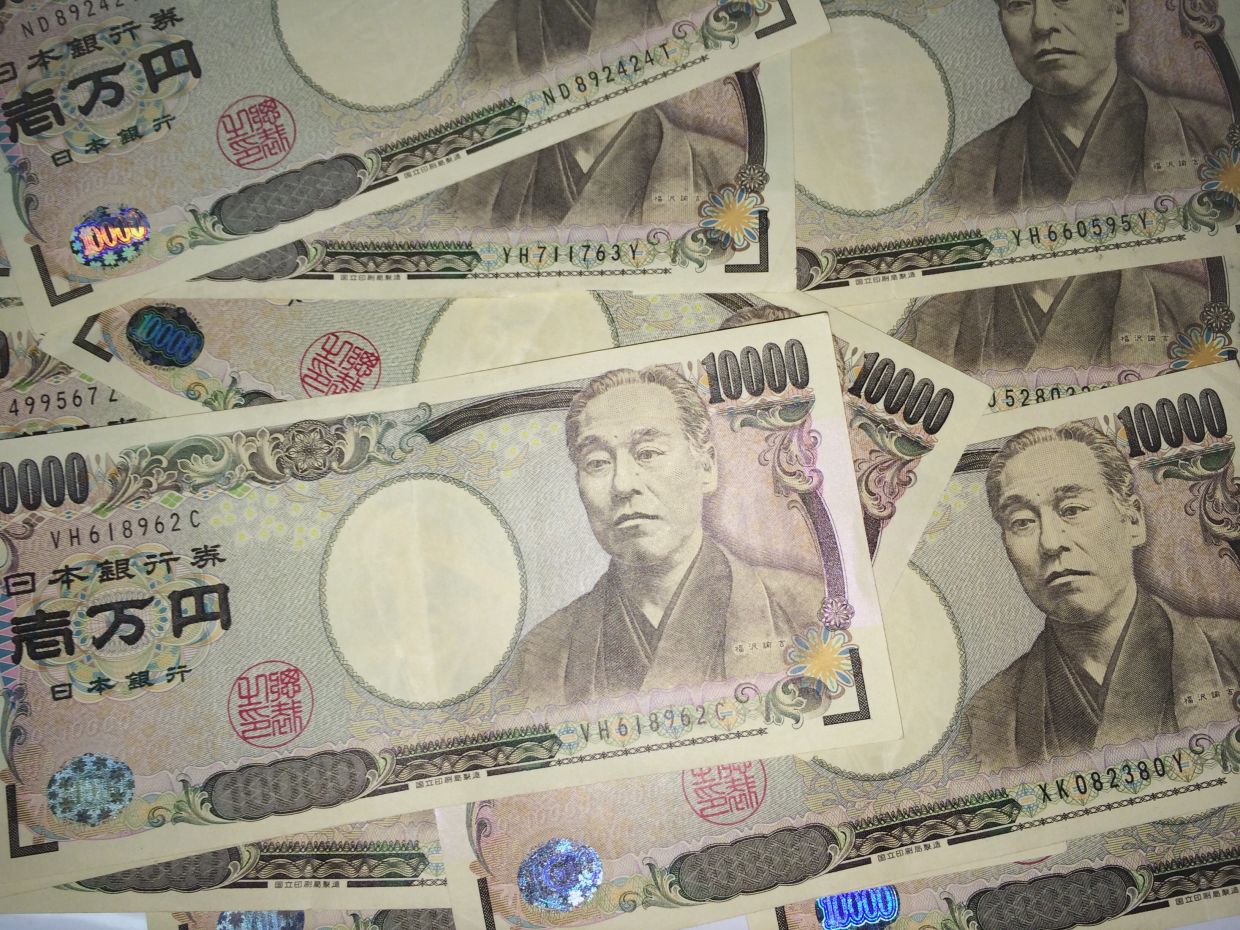
The Japanese yen is trading near its weakest levels in four decades, testing the resolve of policymakers in Tokyo despite their recent efforts to stabilize the currency. On Friday, the yen held at 161.205 against the U.S. dollar, a marginal gain of 0.1% after plunging to a two-year low the previous day. The currency's persistent weakness has become a flashpoint for financial markets across Asia, with investors closely monitoring whether Tokyo will deploy fresh measures to defend it against further deterioration.
The yen's inability to recover even after significant policy moves underscores the deeper structural challenges facing Japan's economy. The Bank of Japan had raised interest rates to a 31-year high just last week, a move designed to make holding yen-denominated assets more attractive and thereby support the currency. Additionally, the Ministry of Finance had already conducted dollar-selling intervention earlier this year in an attempt to stem the slide. Yet these measures have produced limited tangible results, suggesting that technical factors and broader market sentiment may be overriding conventional monetary policy signals.
Several catalysts have failed to provide meaningful support. A U.S.-Iran peace deal signed earlier in the week initially sparked hopes that reduced geopolitical tension would steady financial markets and support riskier currencies, but the yen remained unmoved. Shipping in the Strait of Hormuz has returned to normal operations following the agreement, yet this development has not translated into meaningful currency stabilization. Most other currency pairs were largely stable during Friday's Asian session, with thin liquidity due to holidays in the United States and across much of the Asian region preventing aggressive price movements.
Market analysts point to concerns surrounding the spending plans of Prime Minister Sanae Takaichi as a significant headwind for the yen. Uncertainty about Japan's fiscal direction has eroded investor confidence in the currency, with traders questioning whether the government can sustain a stable macroeconomic environment. This loss of confidence appears to weigh more heavily on foreign exchange markets than the positive signals sent by interest rate increases or direct intervention efforts. The reputational damage from failed interventions could also be constraining future policy effectiveness, as markets may increasingly discount the credibility of official sector efforts.
According to Tony Sycamore, market analyst at IG in Sydney, the Ministry of Finance is likely preparing to defend the 161.95 level if the yen weakens further. Drawing on recent experience, Sycamore estimates that Tokyo deployed approximately ¥11.7 trillion in firepower during April and May interventions. However, he notes a troubling calculation: using similar ammunition to defend 161.95 would represent roughly 11 to 12 percent of Japan's total foreign exchange reserves over a relatively short timeframe, with minimal visible impact on the exchange rate. This arithmetic illustrates the challenge facing policymakers—the scale of intervention required to effectively defend the yen may become unsustainable if deployed repeatedly.
The structural inflation picture complicates the Bank of Japan's policy calculus. Japan's core inflation remained below the central bank's 2 percent target for the fourth consecutive month in May, despite geopolitical tensions in the Middle East driving up raw material costs globally. Government fuel price subsidies have effectively insulated Japanese consumers from energy cost passthrough, keeping core inflation subdued. However, Capital Economics analysts project that as these subsidies eventually wind down and higher energy costs filter through to utilities and other goods and services, inflation could accelerate to approximately 3.5 percent by early 2027.
Minutes from the Bank of Japan's April meeting, released on Friday, revealed that some board members advocated for more aggressive rate increases if Middle East tensions persist. The underlying concern is that rapid monetary tightening later may become necessary to prevent underlying inflation from overshooting the 2 percent target. Bank of Japan Deputy Governor Ryozo Himino reinforced this hawkish sentiment on Friday, stating that the central bank remains committed to raising rates while monitoring the risk of inflation exceeding its target. This messaging suggests that future rate increments remain on the table, even as the immediate impact on the yen appears limited.
Beyond Japan, currency markets remained largely subdued. The U.S. dollar index, which measures the greenback's strength against a basket of six major currencies, held steady at 100.81 after climbing 0.5 percent to a one-year high on Thursday. The British pound was flat at $1.3205 following the Bank of England's decision to maintain interest rates at 3.75 percent. The central bank judged that hiking rates would be premature given lingering uncertainty about inflation dynamics. Political developments in the United Kingdom may also be contributing to cautious sentiment; traders are monitoring a by-election in Greater Manchester involving Mayor Andy Burnham, whose potential victory could trigger a leadership challenge to Prime Minister Keir Starmer within the ruling Labour Party.
The Australian dollar slipped 0.1 percent to $0.7011, while the New Zealand dollar remained unchanged at $0.5756. Cryptocurrency markets showed modest weakness, with Bitcoin declining 0.2 percent to $62,868.18 and Ether holding flat at $1,708.98. The relative stability in these alternative assets suggests that broader risk sentiment, while cautious, has not shifted dramatically despite currency market turbulence.
For Malaysian and Southeast Asian observers, the yen's weakness carries important implications. A persistently weak yen makes Japanese exports more competitive in regional markets, potentially pressuring domestic manufacturers in Malaysia, Thailand, and Vietnam. Tourism flows could also shift as Japanese travelers may become more price-sensitive, affecting hospitality sectors across Southeast Asia. Conversely, regional central banks may face upward pressure on their own currencies if the yen continues to weaken, complicating their own monetary policy calculations. The question of whether Japan's policymakers can successfully stabilize the yen without exhausting their reserves will likely influence regional financial stability and competitive dynamics for months to come.
%22%2F%3E%3C%2Fpattern%3E%3C%2Fdefs%3E%3Crect%20width%3D%22100%25%22%20height%3D%22100%25%22%20fill%3D%22url(%23ph5sioag)%22%2F%3E%3Crect%20width%3D%22100%25%22%20height%3D%22100%25%22%20fill%3D%22url(%23ph5sioap)%22%2F%3E%3Ctext%20x%3D%2250%25%22%20y%3D%2250%25%22%20text-anchor%3D%22middle%22%20dominant-baseline%3D%22central%22%20fill%3D%22rgba(255%2C255%2C255%2C0.95)%22%20font-family%3D%22Georgia%2C%20'Times%20New%20Roman'%2C%20serif%22%20font-weight%3D%22700%22%20font-size%3D%22272%22%20letter-spacing%3D%22-0.02em%22%3EAnwar%3C%2Ftext%3E%3C%2Fsvg%3E)