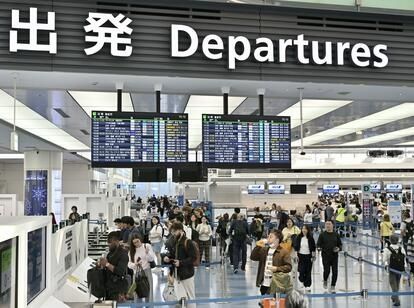
Japan has implemented a significant shake-up of its tourism and travel fees, tripling the departure tax on travellers leaving the country to 3,000 yen per person and dramatically raising the cost for foreign nationals seeking entry visas, in a move that underscores the government's struggle to manage an unprecedented tourism boom. The changes, which came into effect on Wednesday July 1, reflect Tokyo's shift towards using financial mechanisms to address the strain that millions of international visitors have placed on popular destinations and infrastructure across the archipelago.
The departure tax hike from 1,000 yen represents one of the most visible changes for outbound travellers. Collected at the point of ticket purchase by airlines, cruise operators and travel agencies, the three-fold increase will generate substantially more revenue for government coffers. The Japan Tourism Agency expects the international tourist tax, as it is officially known, to raise approximately 130 billion yen in the fiscal year ending March 2027, more than double the 49 billion yen collected in the previous fiscal period.
Foreign visitors seeking to enter Japan will face considerably steeper visa costs under the new regime. Single-entry visas have jumped to 15,000 yen, while multiple-entry visas now cost 30,000 yen—a five-fold increase that marks the first revision to visa fees in nearly half a century, since 1978. Foreign Minister Toshimitsu Motegi framed the increase as a necessary adjustment to account for inflation and the weakening of the yen against major currencies, while asserting that the rise is unlikely to deter significant numbers of prospective visitors in the near term.
The fee restructuring positions Japan's visa charges more competitively within the Group of Seven, countries where Japanese visa costs had historically been notably lower than international peers. This adjustment brings Japan into greater alignment with the fee structures of other major developed economies, though officials maintained that the increase reflects economic realities rather than a deliberate policy shift to restrict tourism.
The government's strategy extends beyond revenue generation to address the practical challenges of managing tourism concentration. Money from the expanded departure tax will fund targeted interventions at overcrowded attractions, including the creation of designated viewing zones at popular photography locations that have become flashpoints for congestion. These measures acknowledge that uncontrolled visitor flows have created bottlenecks at iconic sites, frustrating both tourists and local residents.
Beyond managing hotspots, the revenue will finance broader dispersal strategies aimed at redirecting international visitors toward regional destinations outside the Tokyo and Kyoto corridors. Infrastructure projects include converting local railway networks into tourist attractions and renovating station buildings in secondary cities, designed to cultivate alternative tourism circuits that distribute visitor spending and activity more equitably across the country. This represents a conscious effort to build tourism capacity in underutilised areas rather than simply capping overall visitor numbers.
Recognising the political sensitivity of increased travel costs, Tokyo simultaneously moved to offset the burden on its own citizens by reducing passport application fees. The fee for a ten-year passport dropped substantially from 16,300 yen to 9,300 yen when applied through conventional channels such as passport centres, while five-year passports for those under eighteen were standardised at 4,800 yen. Further incentives emerged for applicants utilising online application systems, which received additional discounts bringing ten-year passports to 8,900 yen and five-year options to 4,400 yen.
These passport fee reductions pursue a separate policy objective beyond tourism management: expanding Japan's passport ownership rate, which has languished below the levels seen in other wealthy nations. By reducing financial barriers to obtaining travel documents, the government seeks to encourage greater international mobility among Japanese citizens, a demographic indicator that officials view as important for cultural exchange and economic engagement.
The departure tax framework itself contains several exemptions designed to minimise disruption to specific traveller categories. Passengers transiting through Japan with stays of less than twenty-four hours, alongside children under two years old, remain exempt from the levy. Those who purchased tickets before the implementation date paid the original 1,000 yen rate, providing a transition period for advance bookings.
For regional economies and businesses, the departure tax increase arrives at a critical juncture. Malaysia, Thailand, and other Southeast Asian nations that serve as major sources of Japanese outbound travellers will likely experience modest price increases for their citizens booking round-trip tickets. Simultaneously, the rising visa costs for foreign nationals entering Japan could modestly impact regional tourism operators who package Japan holidays, though Foreign Minister Motegi's assessment suggests major disruptions appear unlikely given the underlying demand for Japanese destinations.
The policy adjustment reveals Japan's determination to sustain high tourism volumes while addressing quality-of-life concerns in congested areas and building long-term tourism infrastructure. Rather than implementing restrictive quotas or destination-specific limitations, Tokyo has opted for graduated pricing mechanisms and regional investment strategies that theoretically allow the market to self-correct while generating resources for mitigation efforts. Whether this approach successfully balances tourism growth with livability concerns will become clearer over the coming fiscal year as new revenue streams fund regional initiatives and visitor experience improvements.

