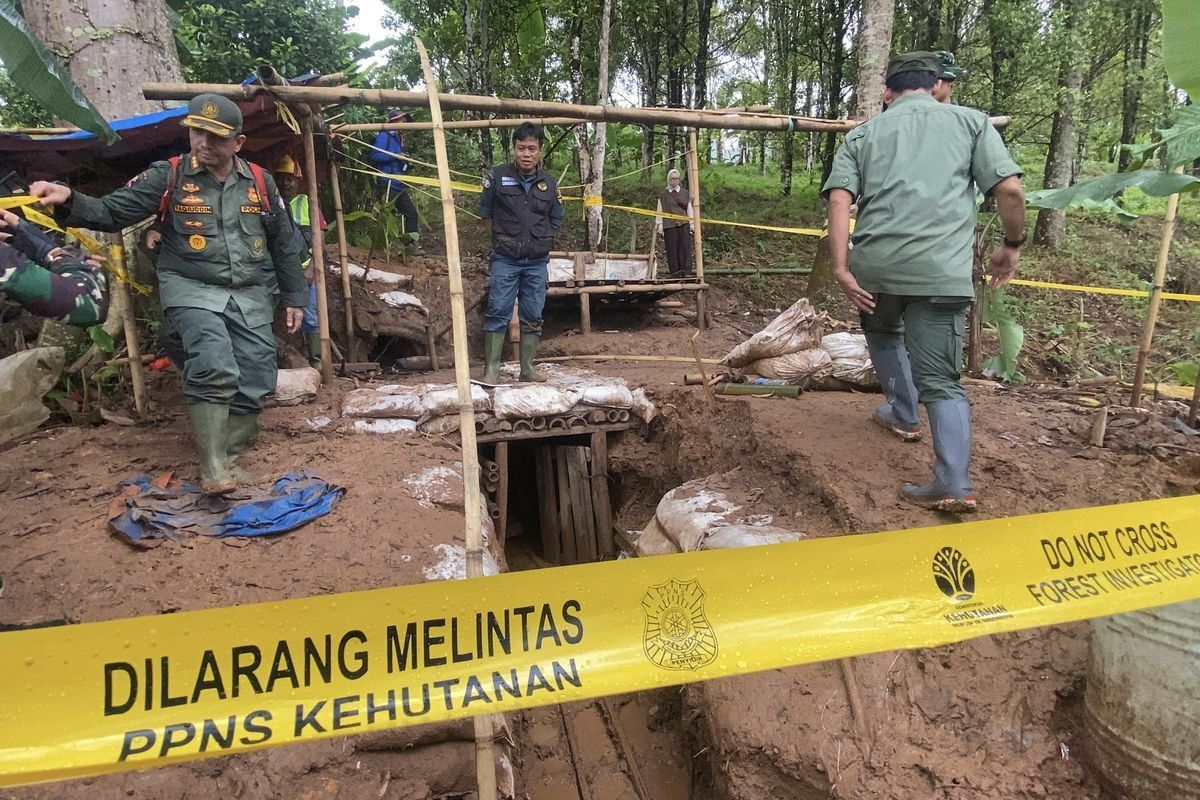
Indonesia's energy ministry has taken formal action against 24 foreign nationals accused of operating illegal gold mines in the Maluku region, marking another crackdown on clandestine mineral extraction that continues to plague the Southeast Asian nation. Energy ministry spokesman Jeffri Huwae announced the charges on Thursday, signalling intensified government efforts to combat unauthorised mining ventures that drain state resources and damage the environment.
The operation under investigation centred on the Gunung Botak area of Maluku, where authorities allege the suspects constructed an entire infrastructure network designed to facilitate extraction and processing of gold without proper licensing or oversight. According to ministry statements, the illegal enterprise encompassed construction of access roads, processing facilities, and supporting structures—indicating a sophisticated operation rather than opportunistic small-scale digging. Such comprehensive development suggests coordination among multiple parties and potentially significant financial investment in the venture.
Indonesia's legal framework provides substantial penalties for those caught engaging in unauthorised mining. Convictions related to these charges could result in maximum prison sentences of five years, establishing meaningful consequences intended to deter future violations. The severity of potential sentences underscores how seriously authorities view the systematic nature of illegal mining operations that undermine Indonesia's mineral resource management and deprive the government of legitimate revenue.
The nationality breakdown of those charged remains unclear, as the energy ministry declined to publicly disclose the suspects' countries of origin or provide details about the composition of the criminal enterprise. This lack of transparency leaves open questions about whether a single nation dominated the operation or whether it involved coordination among nationals from multiple countries. Similarly, the ministry has not disclosed the volume of gold allegedly extracted or the market value of materials involved, details that would illuminate the scale and profitability of the venture.
State news agency Antara reported last month that investigation authorities had detained 24 individuals believed to be Chinese nationals working in the Gunung Botak vicinity under sponsorship arrangements with a locally registered company called PT Harmoni Alam Manise. This corporate structure suggests the operation may have exploited Indonesia's business registration system, leveraging a local entity as a front for foreign-led extraction activities that would otherwise lack legitimacy under Indonesian mining regulations.
The current status of suspects shows a troubling enforcement gap that complicates Indonesia's ability to prosecute the case comprehensively. Of the 24 foreign nationals charged, only 12 remain in custody and available for prosecution in Indonesian courts. The remaining 12 suspects have fled the country or otherwise placed themselves beyond Jakarta's jurisdiction, potentially returning to their home nations where extradition requests may encounter diplomatic obstacles or jurisdictional limitations. This dispersal across borders illustrates a significant vulnerability in Indonesia's capacity to maintain control over personnel involved in transnational illegal mining networks.
Beyond the foreign nationals, Indonesian authorities have also named two domestic individuals as criminal suspects in connection with the operation. These local actors likely played crucial facilitation roles, potentially providing the legal and logistical infrastructure necessary for foreign entities to operate within Indonesia. Understanding these intermediaries' involvement is essential for dismantling the networks that enable illegal mining, as such operations depend critically on well-placed local partners who navigate bureaucratic systems and provide cover through legitimate business entities.
Illegal mining involving foreign workers has emerged as a persistent challenge across Indonesia's vast archipelago and diverse resource regions. The Southeast Asian nation's geographic expanse, maritime boundaries, and patchwork of regulations create enforcement difficulties that criminal enterprises routinely exploit. Beyond Maluku, authorities have documented similar cases in other resource-rich regions, indicating a systematic pattern rather than isolated incidents.
The Papua region, Indonesia's easternmost area, has experienced comparable foreign involvement in clandestine extraction. Police in Papua's Senggi district arrested four Chinese nationals engaged in illegal mining operations during the previous year, demonstrating that such activities extend across multiple geographic zones and continue despite enforcement efforts. These recurring cases suggest that foreign mining enterprises view the risks as manageable and the profit potential as sufficiently attractive to warrant repeated attempts despite legal consequences and enforcement actions.
For Malaysia and other Southeast Asian nations, Indonesia's struggle against illegal mining carries important implications. The region shares similar geological characteristics and mineral wealth that attract transnational criminal networks. Cross-border coordination of such enterprises means that organised groups operating in one country may establish operations across the region, creating interconnected challenges requiring coordinated responses. Malaysia's own mining sectors, both formal and vulnerable to infiltration, must monitor how international illegal mining networks operate and adapt to enforce detection systems accordingly.
The Maluku case illustrates fundamental vulnerabilities in resource governance across Southeast Asia. Inadequate border controls, insufficient coordination between mining regulators and law enforcement agencies, and the involvement of seemingly legitimate local companies as fronts for foreign operations all create pathways for illegal extraction. Addressing these vulnerabilities demands not only individual case prosecution but also systemic improvements in regulatory oversight, inter-agency coordination, and international cooperation to track and apprehend suspects who flee across borders.
Indonesia's energy ministry must now navigate complex prosecutorial challenges with half the suspects beyond reach, while also addressing systemic factors that enabled the operation to develop and function for an extended period before detection. The case underscores how even coordinated enforcement actions can only partially dismantle illegal mining networks when transnational dimensions allow key perpetrators to escape accountability by leaving the jurisdiction.

