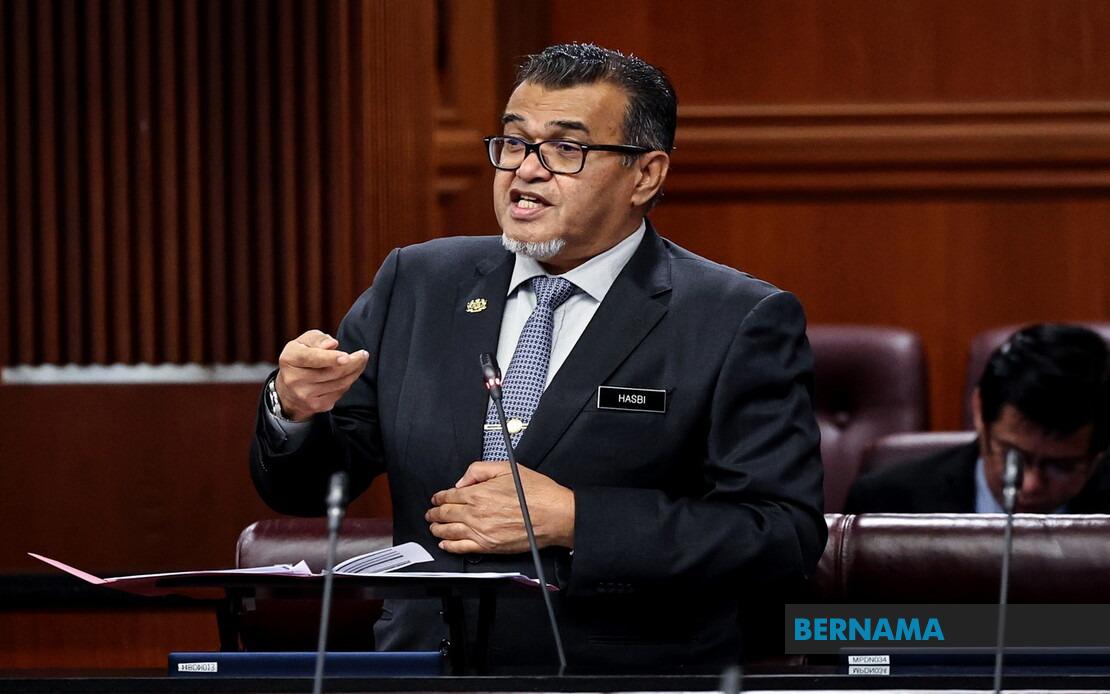
The Malaysian government is moving swiftly to close significant legal loopholes that have left railway infrastructure vulnerable to organised theft and vandalism. Deputy Transport Minister Datuk Hasbi Habibollah informed the Dewan Rakyat that officials are wrapping up amendments to legislation designed to crack down on crimes targeting railway assets, with planned parliamentary debate expected before year-end. The initiative represents a recognition that existing legal frameworks have become inadequate for addressing the scale and sophistication of railway-related criminal activity.
The current legislative gaps are stark. Under prevailing statutes, simple trespassing on railway property carries only minimal financial penalties ranging from RM500 to RM1,000—a sum that bears little deterrent value when weighed against the potential profits from cable theft. Recognising this imbalance, the government's reform package will substantially elevate penalties for offenders, with particular emphasis on cases involving security-sensitive materials. Cable theft has emerged as an especially acute problem because stolen materials can be quickly converted to cash through scrap metal markets, creating a lucrative pipeline for criminal networks.
The scale of the problem demands urgent legislative attention. Over the past three years, railway operators recorded 393 separate cable theft incidents nationwide, resulting in the loss of 19,756 metres of cabling worth approximately RM16.3 million in total losses. These figures represent not merely financial drain but operational disruption affecting millions of commuters who depend on reliable rail services. The cumulative impact extends beyond immediate losses; repeated incidents force maintenance costs higher and compromise service reliability, ultimately eroding public confidence in the rail network.
Datuk Wira Dr Ku Abdul Rahman Ku Ismail, member for Kubang Pasu, raised the matter during parliamentary question time, prompting the government's detailed explanation of its multi-pronged response. The initiative acknowledges that legislative reform alone cannot solve the problem; simultaneous operational and enforcement enhancements must accompany legal changes. Hasbi outlined how the government is strengthening partnerships with the Royal Malaysian Police to create comprehensive anti-theft operations that extend beyond the railway corridor itself.
A crucial dimension of the government's strategy targets the downstream market for stolen materials. Officials are actively engaging with scrap metal operators and dealers to create resistance to purchasing railway cables known or suspected to be stolen goods. This supply-chain intervention aims to disrupt the economic incentive structure that motivates theft in the first place. By making it difficult for thieves to rapidly liquidate stolen materials, authorities hope to reduce the attraction of railway crime relative to other criminal enterprises. Such market-focused enforcement represents sophisticated criminal justice thinking that recognises most thefts occur because immediate cash conversion is possible.
Technological deployment forms another substantial pillar of the defensive strategy. The Railway Assets Corporation has installed 1,146 closed-circuit television systems utilising artificial intelligence capabilities across identified high-risk locations, representing an investment of RM14 million. These systems go beyond traditional CCTV by incorporating machine learning algorithms capable of detecting suspicious behaviour patterns, alerting security personnel to potential incidents in real time rather than requiring post-incident review. Placement in high-risk zones maximises the protective value of this considerable capital expenditure.
Unmanned aerial vehicles now supplement ground-based surveillance, particularly in terrain or locations difficult to access through conventional patrol methods. Drone monitoring extends protective coverage to remote sections of railway corridors where cable theft has historically occurred with relative impunity. The integration of aerial surveillance into regular security operations represents a meaningful modernisation of railway protection approaches that long relied exclusively on foot and vehicle patrols.
Keretapi Tanah Melayu Berhad has received approval to acquire 20 scrambler motorcycles for its Auxiliary Police contingent, enabling faster response times to reported incidents and enhanced presence in risky sections of the network. Motorcycles provide superior manoeuvrability through congested areas and rough terrain compared to standard patrol vehicles, allowing enforcement personnel to reach incident locations more rapidly. The visible presence of mobile security forces also serves as a psychological deterrent to potential offenders.
The multifaceted approach reflects recognition that railway security requires layered defences combining legal penalties, active enforcement, technological surveillance, and community engagement with downstream markets. Hasbi's parliamentary statements indicate government determination to elevate railway protection to a priority issue, partly reflecting broader concerns about critical infrastructure vulnerability across Malaysia. The timing of these reforms coincides with increased attention to supply chain security and asset protection across Southeast Asian economies experiencing rapid industrial development and infrastructure expansion.
Implementation challenges remain significant. Effective scrap metal market regulation requires sustained coordination between railway authorities, police, local governments, and private sector dealers across the entire country. Maintaining sophisticated AI-powered CCTV systems demands technical expertise and consistent funding. Most fundamentally, legislative amendments require parliamentary passage and subsequent enforcement at sufficient scale to generate meaningful deterrent effects. However, the government's demonstrated commitment to comprehensive railway protection suggests realistic prospects for meaningful improvement in security outcomes during the coming years.

