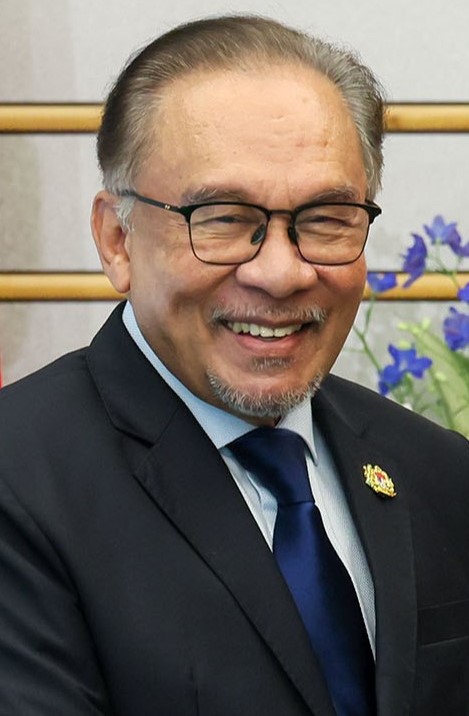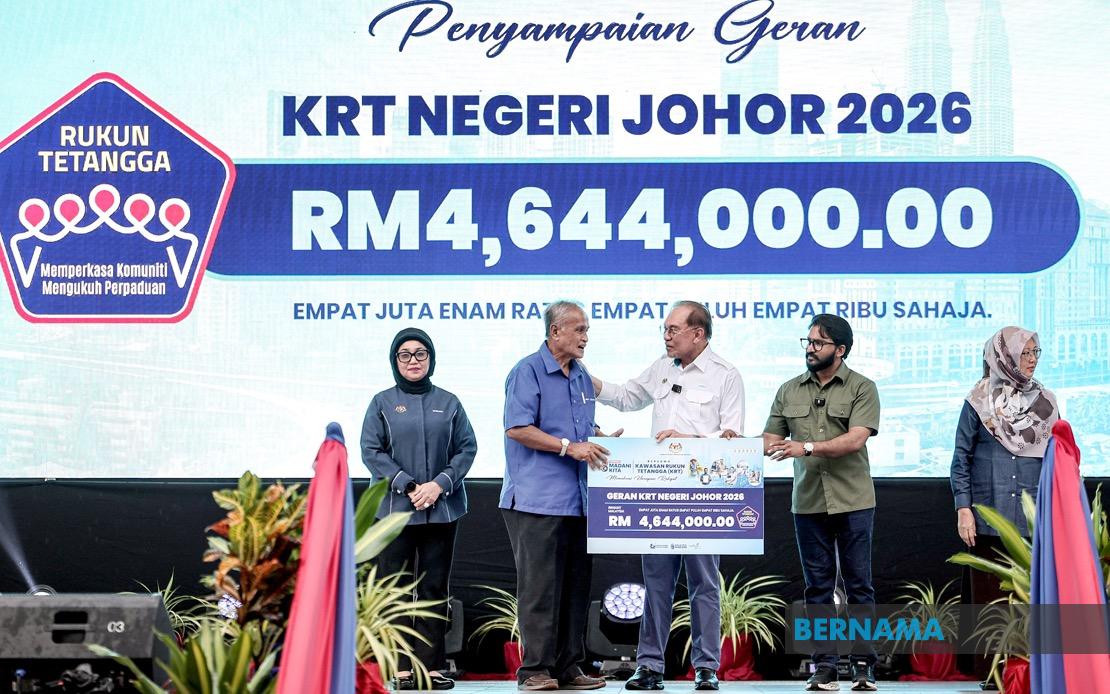
Prime Minister Datuk Seri Anwar Ibrahim has given his approval for the government to raise annual grants distributed to Neighbourhood Watch Areas (KRT) across the country from RM6,000 to RM10,000, with the enhanced funding to commence on January 1, 2027. The decision marks a significant policy shift in community policing support, addressing a long-standing grievance among grassroots security organisations that have operated on stagnant budgets despite rising operational costs and responsibilities.
The Prime Minister made the announcement while visiting Segamat in Johor, where he participated in the MADANI KITA Programme focused on strengthening community engagement with KRT representatives. Anwar's decision reflects recognition that the previous allocation had remained static for a full decade, a period during which inflation and the expanding scope of KRT activities had made the original RM6,000 grant increasingly insufficient for maintaining neighbourhood security operations and community welfare programmes.
In his remarks, Anwar emphasised that the KRT system plays a critical role in addressing grassroots challenges by serving as a vital link between communities and government departments responsible for security and welfare provision. The increase represents not merely a budgetary adjustment but a policy statement about the government's commitment to empowering community-based security initiatives that depend on voluntary coordination and local knowledge to address neighbourhood issues effectively. By boosting resources, the administration signals confidence in KRT's capacity to expand its community engagement work beyond traditional security concerns.
The Prime Minister tied the funding decision to his broader vision of maintaining Malaysia's foundational strength, which he characterised as residing in the nation's ability to preserve communal harmony across its diverse racial and religious communities. Anwar stressed that Malaysia's multi-racial and multi-religious character, maintained since independence, should not become a source of societal division but rather a celebrated national asset. This framing positions KRT funding within a larger governance narrative about unity and social cohesion, suggesting that well-resourced neighbourhood structures contribute to the consensus-building essential for Malaysia's stability.
During the same Segamat event, the Prime Minister announced additional allocations targeting infrastructure improvements in other community institutions. A sum of RM3.205 million was earmarked for immediate distribution to support sixteen basic infrastructure rehabilitation projects at Islamic educational facilities throughout Johor. These initiatives encompass repairs and upgrades at religious schools, madrasahs, study centres, and tahfiz institutions operating in multiple districts including Batu Pahat, Muar, and Segamat itself, indicating a geographically spread approach to supporting Islamic education infrastructure.
The religious education allocation demonstrates the government's strategy of addressing facility deficiencies at multiple institutional levels serving Malay-Muslim communities. By prioritising repairs at these institutions, the MADANI administration aims to provide students with improved learning conditions while simultaneously signalling government support for Islamic educational advancement. This complements the broader development agenda while also responding to grassroots concerns about educational infrastructure quality in suburban and semi-rural areas of Johor.
Parallel to these community and education initiatives, Anwar approved an immediate RM1.0 million allocation for critical and urgent repair work at Royal Malaysian Police (PDRM) quarters in Johor. The decision underscores government attention to welfare provisions for security personnel, framing facility improvements as integral to maintaining police morale and operational effectiveness. The Prime Minister linked this investment directly to the state's responsibility to ensure security personnel work in conditions that reflect their contribution to national peace and security.
The three-pronged announcement in Segamat reveals a coordinated approach to community development spanning grassroots security volunteers, Islamic educational institutions, and uniformed police services. Each allocation addresses distinct constituencies while reflecting shared governance priorities: strengthening institutional capacity at the community level, supporting religious education infrastructure, and enhancing conditions for law enforcement. This clustering of initiatives within a single event maximises political messaging about comprehensive government responsiveness to ground-level needs.
For Malaysian policymakers and community leaders, the KRT funding increase carries implications for neighbourhood-level governance architecture. As grassroots security organisations receive enhanced financial resources, their expanded capacity may enable greater involvement in community programmes beyond traditional security functions, including social welfare coordination and civic engagement activities. The timing of the announcement, with disbursement scheduled for January 2027, provides nine months for KRT structures nationwide to plan utilisation of the increased allocation.
The decision also reflects broader discussions about inflation-adjusted budgeting for long-standing community programmes. The decade-long freeze on KRT grants had effectively reduced their real purchasing power as operational costs, from administrative expenses to equipment maintenance, increased substantially. By addressing this accumulated underfunding through a substantial percentage increase, the government attempts to restore KRT capacity to levels proportionate to contemporary operational requirements.
Regionally, Malaysia's approach to KRT funding sits within a broader Southeast Asian context of community policing and neighbourhood security arrangements. Countries throughout the region maintain various community-based security initiatives, and adequate resourcing of such structures influences their effectiveness in addressing local safety concerns and facilitating government-community cooperation. Malaysia's decision to prioritise KRT funding signals recognition that sustainable community security depends on institutional support beyond voluntary labour alone.
The announcement occurs amid ongoing government efforts to strengthen local governance mechanisms and community participation in national development. By increasing KRT resources, the administration positions neighbourhood organisations as integral partners in achieving policy objectives related to security, social cohesion, and community welfare. This approach acknowledges that governance effectiveness at the grassroots level requires investing in the institutions through which communities organise themselves and engage with government services.
As implementation approaches, attention will focus on how KRT organisations utilise the increased allocations and whether enhanced funding translates into expanded community programmes and improved neighbourhood conditions. The RM10,000 annual grant represents a 67 percent increase from the previous level, a substantial boost that reflects genuine policy priority commitment rather than symbolic adjustment. Success in translating this financial increase into tangible community benefits will influence assessments of whether the funding decision effectively addresses long-standing KRT capacity constraints.