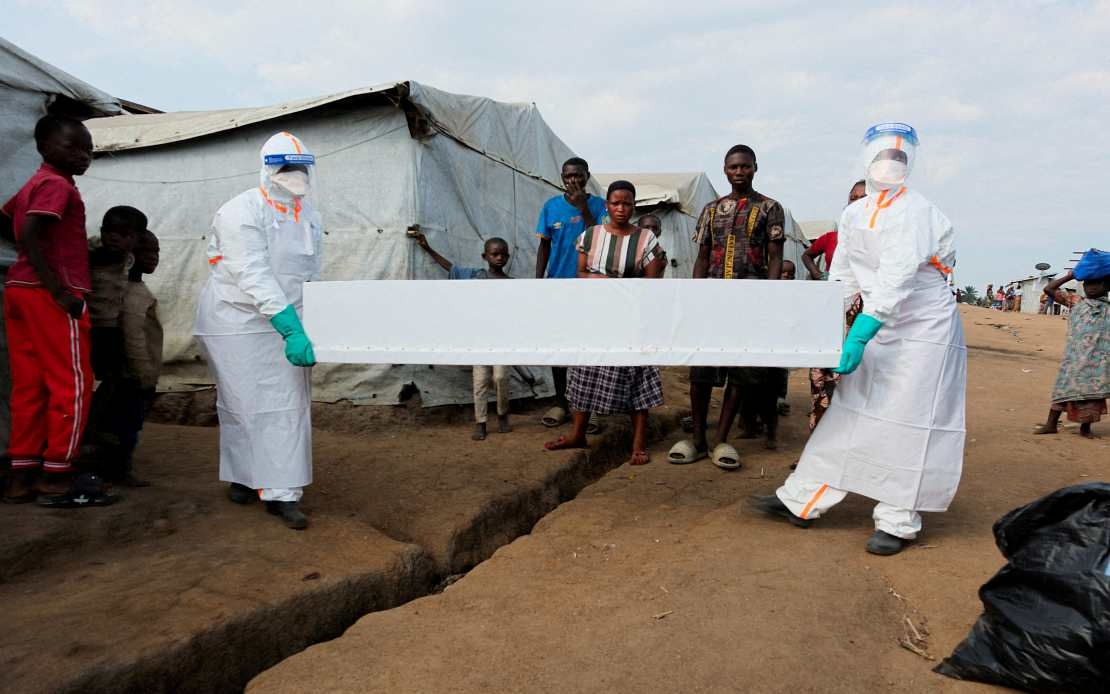
The Democratic Republic of Congo is grappling with a worsening Ebola crisis that has now exceeded 1,000 confirmed cases, marking a significant escalation in what authorities initially hoped would remain a contained emergency. As of late June, health officials recorded 1,003 confirmed infections alongside 254 fatalities, translating to a mortality rate of 25.3 per cent since the outbreak was declared on May 15. The figures underscore the persistent challenge facing health workers and government agencies attempting to contain transmission across affected provinces.
The geographical distribution of cases remains concentrated in three provinces: Ituri, North Kivu, and South Kivu, regions already destabilised by armed conflict and humanitarian crises. This fragile context complicates outbreak response efforts, as insecurity frequently disrupts vaccination campaigns, contact tracing operations, and clinical care delivery. Health Minister Roger Kamba acknowledged that while recovery numbers have improved, the rate of follow-up contact tracing has declined, a troubling indicator that community engagement may be wavering or that security concerns are limiting access to at-risk populations.
Though the trajectory appears alarming, authorities have identified some encouraging developments within the broader response. At least 100 patients have recovered and been discharged, suggesting that medical interventions remain effective when cases receive timely treatment. However, the number of hospitalised and isolated patients—365 individuals—indicates significant ongoing transmission and a heavy burden on medical infrastructure already strained by competing health emergencies and resource constraints throughout the Democratic Republic of Congo.
The Africa Centres for Disease Control and Prevention sounded an urgent warning, suggesting that failure to rapidly suppress transmission could result in an outbreak surpassing the catastrophic 2014–2016 West African epidemic, which claimed over 11,000 lives across Guinea, Liberia, and Sierra Leone. That comparison carries profound implications for the entire Central African region, as demonstrated transmission networks could potentially reach neighbouring countries where health systems are similarly fragile and cross-border movement remains difficult to monitor.
A critical discovery emerged from collaborative laboratory work undertaken by scientists from Uganda's Department of National Health Laboratory and Diagnostic Services and the Democratic Republic of Congo's Institute of National Biomedical Research. The strain responsible for the current outbreak has been identified as Ebola Bundibugyo, a variant associated with novel wildlife spillover events rather than reactivation of previous, contained outbreaks. This finding eliminates speculation that hidden transmission chains might have perpetuated the virus undetected for months, though it underscores the persistent zoonotic threat posed by wildlife reservoirs in Central African ecosystems.
The identification of a new spillover mechanism raises uncomfortable questions about potential recurrence. Unlike scenarios where a single source outbreak exhausts itself through response measures, wildlife-originated transmission introduces the possibility of repeated introductions if human-animal contact patterns remain unchanged. Environmental degradation, expanded hunting practices, and habitat encroachment in forested regions all amplify exposure risk, creating conditions favourable for continued spillover events across the wider region.
Malaysian and Southeast Asian policymakers should recognise this outbreak as a reminder of pandemic preparedness vulnerabilities affecting developing nations globally. The Democratic Republic of Congo's experience demonstrates how conflict, poverty, and weak institutional capacity interact to amplify disease outbreak severity. Disrupted surveillance networks, insufficient laboratory capacity, and limited vaccine stocks characterise the health emergency infrastructure across much of sub-Saharan Africa, challenges that regional bodies and international donors have struggled to adequately address despite decades of warnings.
Response teams continue conducting active investigations and epidemiological surveillance throughout affected areas, with intensified efforts in community communication, diagnosis protocols, and clinical case management. Health authorities emphasise that sustained intervention remains essential to preventing exponential growth, though maintaining momentum in security-compromised settings presents formidable logistical and personnel challenges. The psychological burden on healthcare workers and contact tracers operating in remote, insecure regions cannot be understated.
For Southeast Asia specifically, the outbreak reinforces importance of maintaining robust border health surveillance and stockpiling essential protective equipment and vaccines. While direct transmission risk remains limited given geographical distance and existing detection infrastructure at entry points, the precedent of Ebola's rapid international spread during West African outbreaks necessitates vigilance. Regional cooperation frameworks and mutual aid agreements could prove invaluable should unexpected cases emerge.
The Democratic Republic of Congo's health ministry stated that response efforts will persist across all affected provinces, prioritising both transmission reduction and community trust restoration. Success depends fundamentally on whether authorities can maintain security corridors for health operations, sustain healthcare worker safety and morale, and overcome community hesitation that sometimes accompanies outbreak responses in conflict zones. The coming weeks will prove decisive in determining whether cases plateau or accelerate further.
%22%2F%3E%3C%2Fpattern%3E%3C%2Fdefs%3E%3Crect%20width%3D%22100%25%22%20height%3D%22100%25%22%20fill%3D%22url(%23ph25mefg)%22%2F%3E%3Crect%20width%3D%22100%25%22%20height%3D%22100%25%22%20fill%3D%22url(%23ph25mefp)%22%2F%3E%3Ctext%20x%3D%2250%25%22%20y%3D%2250%25%22%20text-anchor%3D%22middle%22%20dominant-baseline%3D%22central%22%20fill%3D%22rgba(255%2C255%2C255%2C0.95)%22%20font-family%3D%22Georgia%2C%20'Times%20New%20Roman'%2C%20serif%22%20font-weight%3D%22700%22%20font-size%3D%22226%22%20letter-spacing%3D%22-0.02em%22%3ESultan%3C%2Ftext%3E%3C%2Fsvg%3E)
%22%2F%3E%3C%2Fpattern%3E%3C%2Fdefs%3E%3Crect%20width%3D%22100%25%22%20height%3D%22100%25%22%20fill%3D%22url(%23ph17rgmg)%22%2F%3E%3Crect%20width%3D%22100%25%22%20height%3D%22100%25%22%20fill%3D%22url(%23ph17rgmp)%22%2F%3E%3Ctext%20x%3D%2250%25%22%20y%3D%2250%25%22%20text-anchor%3D%22middle%22%20dominant-baseline%3D%22central%22%20fill%3D%22rgba(255%2C255%2C255%2C0.95)%22%20font-family%3D%22Georgia%2C%20'Times%20New%20Roman'%2C%20serif%22%20font-weight%3D%22700%22%20font-size%3D%22320%22%20letter-spacing%3D%22-0.02em%22%3EPM%3C%2Ftext%3E%3C%2Fsvg%3E)