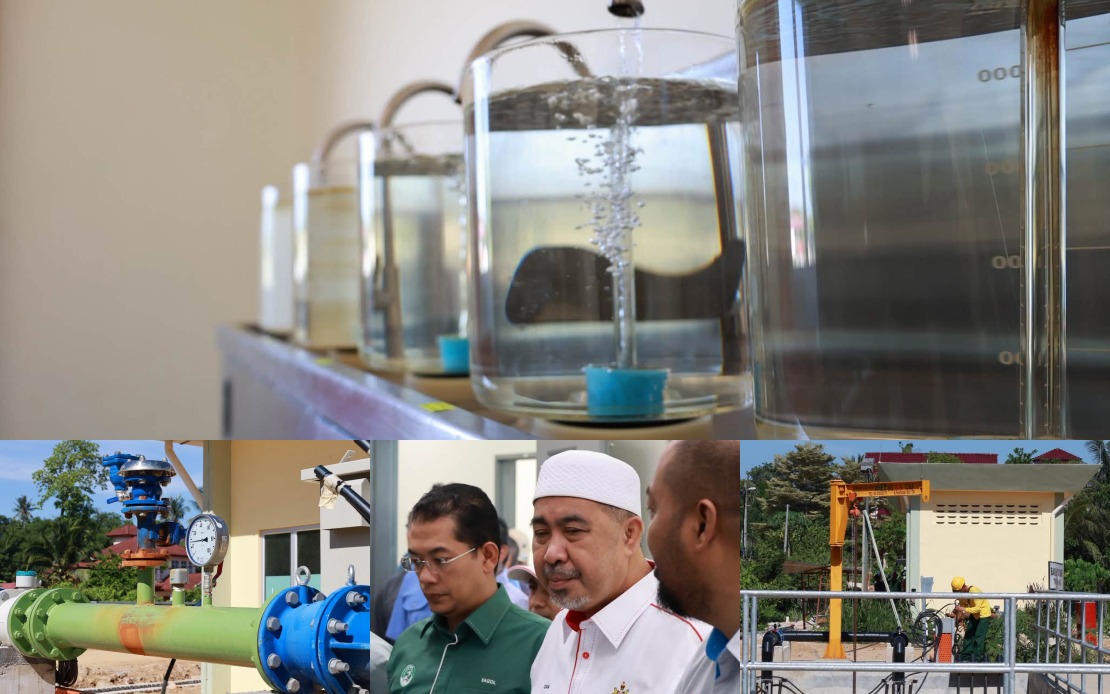
Kelantan's water infrastructure is about to receive a significant boost with the imminent launch of the Chicha 2 Water Treatment Plant in Pasir Hor, expected to commence operations in September. The facility, which has reached 97 per cent completion of its RM54.98 million construction programme that began in 2024, represents a major step forward in addressing the state's long-standing water supply challenges. According to Datuk Dr Izani Husin, the state Public Works, Infrastructure, Water and Rural Development Committee chairman, the new plant will directly benefit more than 13,000 consumers across Pasir Hor, Telipot, Kota Seribong, Mulong and Tunjong through substantially improved access to quality treated water.
The Chicha 2 WTP has been designed with a production capacity of 20 million litres per day, a scale that reflects careful planning to meet current and near-term demand in the targeted service areas. The plant's most distinctive feature is its reliance on groundwater sourced from 100-metre-deep excavations, supplemented by an advanced aeration system that ensures the water meets high quality standards before distribution to households and businesses. This approach to water sourcing and treatment offers Kelantan an alternative to surface water vulnerabilities, particularly important during seasonal variations and drought conditions that periodically affect the state.
One of the immediate impacts of the Chicha 2 WTP's opening will be the reactivation of approximately 10,000 dormant consumer accounts in the service area. These inactive accounts typically represent households and small businesses that lack reliable water supply and have consequently ceased paying for the service. Reconnecting these consumers not only restores essential services to affected communities but also expands the revenue base for water authorities, creating a virtuous cycle that improves the financial sustainability of local water services. The psychological and practical implications for residents who have endured intermittent or absent water supply are substantial, affecting everything from basic hygiene to commercial operations.
The aeration-based water treatment method employed at Chicha 2 represents a technological milestone for Kelantan. This marks the first installation of such a system in the state and has attracted attention from water utility planners as a potentially replicable model for future facilities. Aeration systems work by introducing air into water to remove dissolved gases and oxidise contaminants, a proven technique that requires less chemical intervention than conventional treatment methods. The successful implementation here provides a testbed for expanding this approach to other planned treatment facilities, potentially reducing reliance on chemical-intensive processes and lowering operational costs over time.
Beyond the immediate benefits of Chicha 2, state officials have articulated an ambitious broader vision for resolving Kelantan's water supply crisis. Dr Izani indicated that comprehensive solutions are anticipated by 2030 through the coordinated implementation of multiple major infrastructure projects alongside construction of additional water treatment plants throughout the state. This timeline represents a realistic but extended timeframe for addressing systemic water supply problems that have accumulated over decades. The phased approach reflects budgetary constraints and the practical challenges of executing large-scale infrastructure work across a geographically dispersed state.
The non-revenue water (NRW) rate remains a critical metric in evaluating Kelantan's water sector performance, currently exceeding 50 per cent. This extraordinarily high figure means that more than half of treated water never reaches paying customers, representing both a financial loss and a critical inefficiency. The primary culprits are familiar across the region: ageing and corroded pipe networks, underground pipe failures that go undetected until water pressure drops significantly, and damaged or malfunctioning water meters that fail to register consumption. These problems are not unique to Kelantan but their severity here reflects years of deferred maintenance and infrastructure investment.
Addressing the NRW challenge requires systematic replacement of pipe infrastructure, implementation of advanced leak detection systems, and regular maintenance protocols that many cash-strapped utilities struggle to maintain. The state government's recognition of this issue and commitment to reducing NRW through ongoing projects demonstrates an understanding that new treatment capacity alone cannot solve water supply problems if distribution infrastructure remains compromised. Consumers in the five areas served by Chicha 2 will benefit from newly built distribution networks that should perform more efficiently than legacy systems elsewhere in Kelantan.
For Malaysian readers, particularly those in other states facing similar water supply challenges, the Chicha 2 project offers instructive insights into both the promise and limitations of incremental infrastructure development. The timeline from project commencement in 2024 to expected operations in September represents roughly an eighteen-month construction period for a facility of this scale, a reasonable pace but also indicative of the lengthy development cycles required for major water infrastructure. States like Selangor, Perak, and Johor have grappled with comparable challenges, and the Kelantan experience demonstrates that technological solutions, while valuable, must be accompanied by systematic network rehabilitation and demand management.
The broader Southeast Asian context is relevant here, as water supply deficits affect major population centres across Thailand, the Philippines, Vietnam and Indonesia. Rapid urbanisation and climate variability have strained water infrastructure throughout the region, making solutions like groundwater-based treatment plants with advanced aeration systems increasingly important. However, groundwater depletion itself poses long-term risks if not managed sustainably, suggesting that Chicha 2's approach must be balanced with conservation measures and surface water management strategies.
State officials' request for public patience as water supply improvements roll out reflects the complex reality of infrastructure transformation in a relatively resource-constrained context. Kelantan's commitment to resolving water issues by 2030, while extending a decade into the future, demonstrates official recognition of the problem's magnitude. For residents of Pasir Hor, Telipot, Kota Seribong, Mulong and Tunjong, the September opening of Chicha 2 marks a tangible improvement that will be measured in functional taps and restored consumer connections rather than abstract policy commitments. Success with this facility will provide both practical experience and political momentum for advancing the subsequent phases of Kelantan's water infrastructure modernisation programme.

