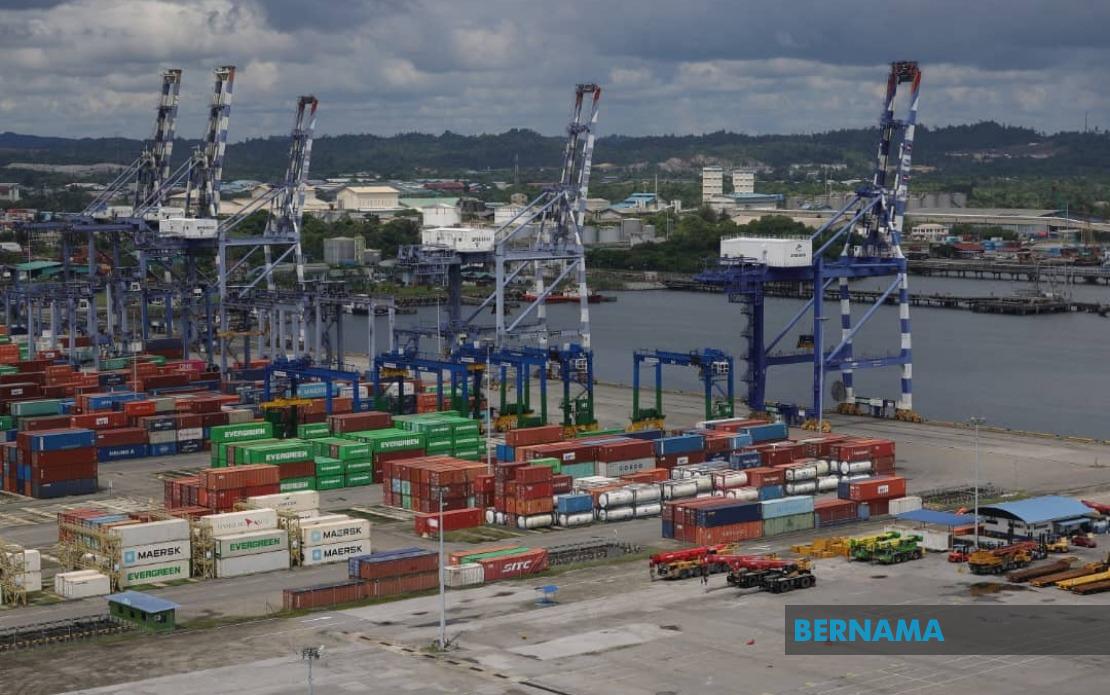
The regulatory authority governing Bintulu Port has been formally transferred to Sarawak's state administration in what officials describe as a defining moment in the implementation of the Malaysia Agreement 1963 (MA63). Datuk Mustapha Sakmud, Minister in the Prime Minister's Department overseeing Sabah and Sarawak affairs, characterised the handover as recognition of Sarawak's foundational role in Malaysia's federation while demonstrating that constitutional arrangements can be executed through genuine partnership rather than centralised control.
The transition, formalised during a ceremonial handover in Bintulu attended by Prime Minister Datuk Seri Anwar Ibrahim and Sarawak Premier Tan Sri Abang Johari Tun Openg, represents a significant recalibration of federal-state relations. Rather than viewing such transfers as a diminishment of national authority, Mustapha framed the arrangement as a validation of Sarawak's constitutional standing and an affirmation that the federation functions most effectively when its founding states exercise legitimate governance within their spheres of competence.
Bintulu Port's evolution extends beyond its historical significance as Malaysia's primary liquefied natural gas export facility. The facility increasingly functions as a multifaceted industrial and logistics nexus, positioning itself at the intersection of traditional hydrocarbon commerce and emerging green economy sectors. This repositioning carries strategic implications for regional trade patterns and investment flows, particularly as global corporations accelerate their transition towards carbon-neutral supply chains and production facilities.
Sarawak's competitive advantages in this transformation are substantial and closely interconnected. The state commands exceptional renewable energy capacity, particularly through its hydroelectric infrastructure, which creates cost advantages for energy-intensive industries seeking to reduce their carbon footprint. When coupled with Bintulu's geographical positioning along critical Asia-Pacific shipping corridors, the combination becomes increasingly attractive to manufacturers and logistics operators pursuing operational sustainability without sacrificing efficiency or profitability.
The timing of this regulatory transfer reflects broader patterns in Malaysia's approach to constitutional federalism. Rather than allowing MA63 provisions to languish as historical artefacts, the current administration has signalled willingness to operationalise rights that have long remained dormant or contested. This shift carries important messages about how Malaysia balances national unity with state autonomy, and whether federal structures can accommodate the ambitions of larger or more resource-endowed states without triggering destabilising tensions elsewhere in the federation.
For Malaysian investors and manufacturers, the implications are substantial. A state-managed port operating within Sarawak's regulatory framework may develop governance approaches tailored to local economic priorities, potentially streamlining decision-making for enterprises already operating within the state's jurisdiction. Conversely, the arrangement creates a policy testing ground—should Sarawak's stewardship of Bintulu prove effective, the precedent might influence discussions about port governance in other Malaysian jurisdictions, including Sabah.
The emphasis on green energy and low-carbon manufacturing reflects global investment trends that transcend Malaysia's borders. Southeast Asian nations increasingly compete for capital flows seeking production bases that combine cost efficiency with environmental credibility. Sarawak's positioning as a jurisdiction coupling abundant renewable resources with strategic port infrastructure positions it competitively against alternatives in Indonesia, Thailand, and Vietnam, each pursuing similar strategies to capture investments from companies operating under stringent sustainability mandates.
Mustapha's articulation that federal authority transfers should strengthen rather than weaken the federation addresses persistent anxieties about Malaysian national cohesion. The framing suggests that recognising state rights represents an affirmation of constitutional design rather than a capitulation to centrifugal forces. This rhetorical approach matters particularly in a federation where historical grievances about power centralisation have periodically destabilised political relationships, most acutely in Sabah and Sarawak.
The convergence of federal-state cooperation on the MA63 implementation agenda carries implications for future constitutional negotiations. Should the Bintulu transfer generate tangible economic benefits that accrue to both Sarawak and national objectives, momentum may build for addressing other contentious MA63 provisions. Education policy, natural resource extraction rights, and immigration controls remain areas where constitutional ambiguities persist and where state-federal disputes could resurface absent careful negotiation and genuine goodwill.
Regional observers, particularly in Singapore and Brunei, monitor these developments with interest, as they indicate whether Malaysia's constitutional federalism can accommodate asymmetric arrangements reflecting historical agreements. Should such arrangements prove workable and mutually beneficial, they might inform approaches to interstate governance challenges elsewhere in the region, where smaller nations sometimes chafe against centralised structures and where port operations frequently become flashpoints in sovereignty disputes.
The broader significance extends to investment climate perception. International corporations evaluating Southeast Asian operations increasingly factor governance stability and regulatory clarity into location decisions. A federal system demonstrating capacity to implement constitutional provisions constructively, even when requiring substantial authority transfers, projects greater institutional maturity than one locked in perpetual disputes over historical commitments. This credibility matters when corporations contemplate decades-long commitments to infrastructure and manufacturing facilities.
Sarawak's assumption of Bintulu Port governance also creates accountability mechanisms that may differ from federal arrangements. State-level administration potentially exposes port management more directly to constituent feedback and pressure, creating incentives for operational excellence and responsiveness. Conversely, critics might contend that state control fragments Malaysia's port system, potentially reducing coordination benefits that might accrue from unified national management. The actual outcomes will likely prove complex, combining genuine benefits in certain dimensions with trade-offs in others.
Moving forward, the Bintulu transfer establishes practical precedent and political capital for addressing remaining MA63 implementation gaps. The ceremony's high-level attendance signalled commitment from both Putrajaya and Kuching to constitutional renovation, a signal that carries weight in federal systems where past institutional changes often required sustained political will to overcome bureaucratic resistance and jurisdictional disputes.