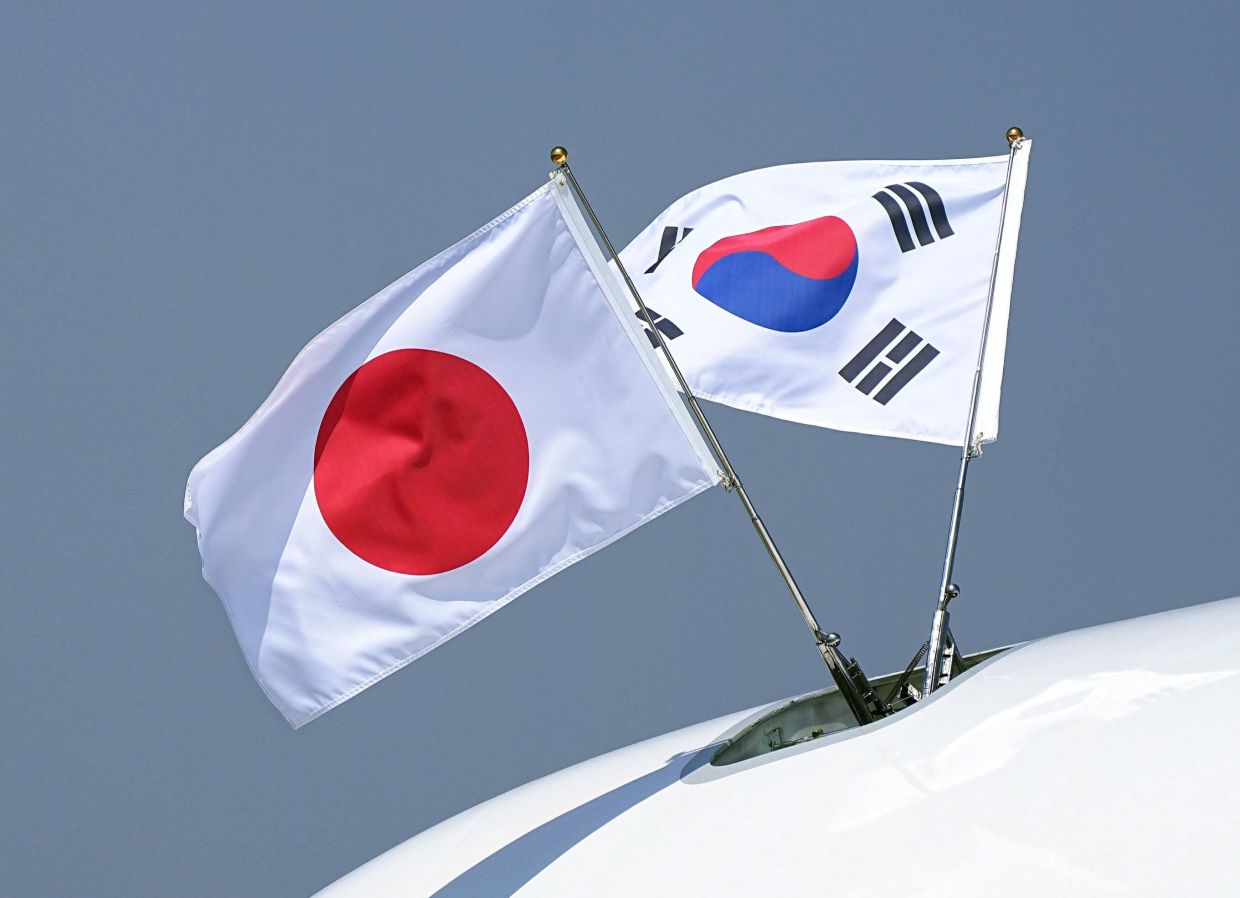
Japan and South Korea maintain strong official opposition to nuclear weapons among their political and strategic establishment, according to a comprehensive survey released Thursday by the Center for Strategic and International Studies. Yet this apparent stability masks a fragile equilibrium: the moment either country reverses course, support for nuclear armament could surge dramatically in the other, fundamentally reshaping the security architecture of Northeast Asia and potentially affecting regional stability more severely than any reduction in American military presence.
The CSIS survey, conducted through October and led by Victor Cha, president of the geopolitics and foreign policy department and Korea chair, alongside Kristi Govella, Japan chair and senior adviser, captured responses from a broad cross-section of strategic decision-makers. Participants included sitting and former government officials, members of parliament, academics, policy experts, and corporate leaders—the constituencies that would drive any pivot toward nuclearization. The findings showed that 75 percent of South Korean strategic elites and nearly 80 percent of Japanese counterparts expressed either outright opposition or significant uncertainty about their respective nations acquiring nuclear weapons.
These results diverge sharply from public sentiment in Seoul but not in Tokyo, revealing a critical fault line in South Korean politics. A 2024 Gallup poll commissioned by the Chey Institute for Advanced Studies found that over 72 percent of ordinary South Koreans back nuclear weapons development, reflecting deep public anxiety about North Korea and frustration with what many perceive as insufficient security guarantees from Washington. This 25-percentage-point gap between elite restraint and public demand creates political pressure that could rapidly intensify should circumstances change. Japan presents a more unified picture, with both strategic elites and the broader public—around 80 percent—opposing nuclear armament, though Govella cautioned that international media coverage has sometimes exaggerated the momentum within Japanese policymaking circles toward pursuing nuclear weapons.
The survey identified fundamentally different rationales driving the minority within each nation that does favour nuclear weapons. South Korean proponents are motivated primarily by the persistent threat from North Korea and the desire for independent deterrence capability. Japanese supporters, by contrast, focus more on long-term reliability of the United States security commitment and concerns about Washington's staying power in the region. These divergent calculations suggest that any proliferation trigger would operate through distinct pathways: North Korean nuclear escalation might push Seoul, while perceived American retrenchment might push Tokyo, but each could then pull the other down the path toward nuclearization.
The timing of the CSIS publication carries geopolitical significance. Earlier this month, the United States convened bilateral consultations in Seoul on nuclear cooperation initiatives with South Korea, followed by an extended deterrence dialogue in Tokyo with Japan. These meetings reflect Washington's strategy of reassuring allies through increased security coordination and explicit nuclear guarantees—an approach that CSIS research suggests is essential to preventing proliferation. According to expert analysis shared during the survey's publication event, such reassurance is not merely desirable but strategically critical: assured allies are demonstrably less likely to pursue independent nuclear capabilities.
China has intensified pressure on this equation by repeatedly accusing Japan of pursuing "remilitarisation," including alleged nuclear weapons ambitions. These accusations, while often overstated, reflect Beijing's genuine concern about shifts in Tokyo's strategic posture and its capacity to shape regional perceptions in ways that could eventually justify nuclear hedging by other actors. Meanwhile, North Korea's expanding arsenal adds concrete urgency to Seoul's calculations, creating a security dilemma where each Pyongyang weapons test marginally increases domestic political pressure for South Korean nuclear capacity.
American policy has been moving in the direction suggested by CSIS researchers as necessary for alliance stability. Brandon Williams, under secretary for nuclear security at the Department of Energy and administrator of the National Nuclear Security Administration, stated Thursday at the Hudson Institute that the United States must substantially increase nuclear weapons production to counter unspecified adversaries—language widely understood as addressing both China and Russia. The Department of Energy is investing $600 million in artificial intelligence this year to accelerate nuclear weapons design and production, with the goal of compressing the current 10-to-15-year development timeline for new systems.
Parallel discussions at CSIS examined whether the United States should deploy nuclear warheads on hypersonic delivery systems, moving beyond the current policy of restricting such weapons to conventional munitions. Heather Williams, director of the project on nuclear issues and senior fellow in the defence and security department at CSIS, argued that nuclear hypersonic weapons "should absolutely be in the mix" to provide Washington with more credible and diverse response options, complicating adversary calculations. The logic here parallels the Japan-South Korea dynamic: a more credible and varied nuclear posture would reassure allies, reducing their incentive to develop independent arsenals.
The broader strategic context involves American pressure on China to join arms control negotiations, efforts Beijing has consistently rejected. China has repeatedly stated it will not participate in bilateral arms control agreements with the United States, citing American military superiority and its own defensive posture. This impasse creates a structural tension: the United States seeks to build a constraining international architecture through nuclear arms control, yet the rising power most relevant to East Asian security refuses to participate, leaving Japan and South Korea increasingly dependent on unilateral American security guarantees.
For Malaysia and broader Southeast Asia, the implications are considerable though indirect. Regional stability depends partly on Northeast Asian equilibrium; Japanese or South Korean nuclearization would accelerate China's own expansion and could prompt changes to its posture toward smaller neighbours. The survey's finding that support for nuclear weapons could shift rapidly—potentially driven by seemingly unrelated factors like perceived American retrenchment or shifts in North Korean behavior—underscores how contingent regional security remains on continued American commitment and reassurance capacity. The CSIS research suggests that explicit diplomatic engagement and credible deterrence pledges remain essential tools for preventing destabilizing proliferation, even as technological advances in nuclear weapons systems may complicate efforts to maintain strategic stability across the region.

