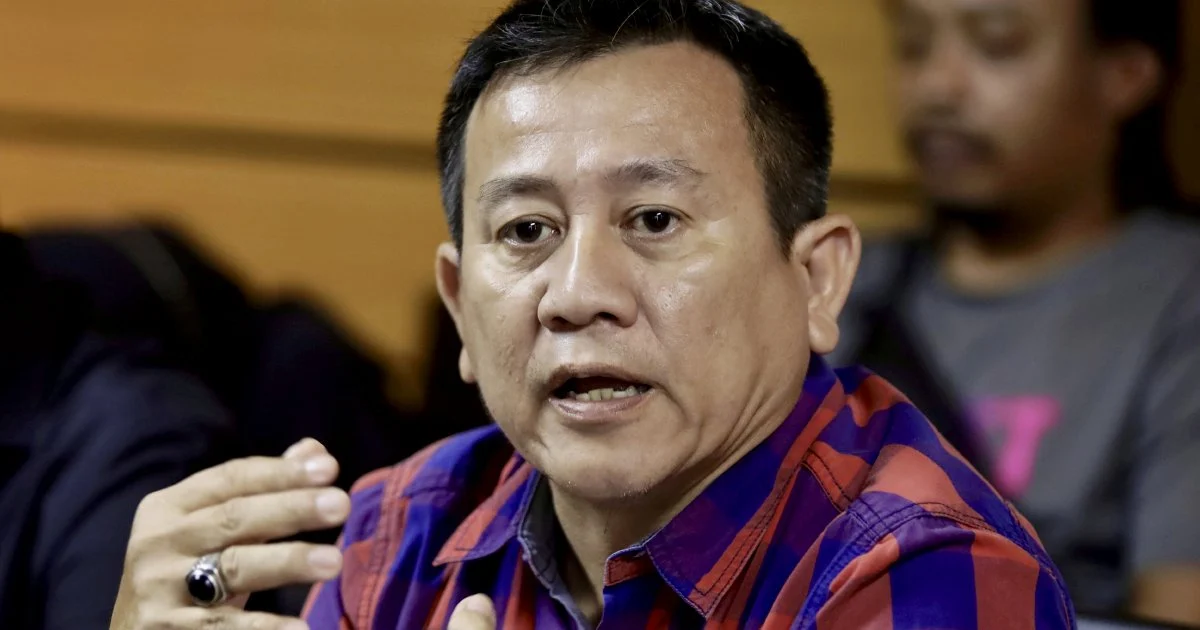
The alliance governing Malaysia's political landscape took another turbulent turn this week when Bersatu's information chief Datuk Tun Faisal Ismail Aziz called publicly for the Islamic party PAS to abandon the Perikatan Nasional coalition. The statement represents a significant crack in the multiparty bloc that has shaped Malaysian politics since late 2022, when it emerged as a key parliamentary force following the general election.
Tun Faisal's intervention signals deepening internal friction within PN, the three-party grouping that includes Bersatu, PAS, and Gerakan. The coalition, which currently holds substantial parliamentary representation, has faced mounting pressure from competing interests and divergent policy priorities among its members. His suggestion that PAS either pursue an independent political strategy or construct a new alliance from scratch reflects the degree to which fundamental disagreements have accumulated within the bloc.
The backdrop to this call reveals the complex dynamics that have persistently tested PN's cohesion. Since its formation, the coalition has juggled different ideological orientations, governance philosophies, and electoral ambitions among member parties. Bersatu, founded by former Prime Minister Mahathir Mohamad and subsequently led by Muhyiddin Yassin, has operated with considerable autonomy despite nominal alliance membership. PAS, meanwhile, brings substantial grassroots support particularly in predominantly Muslim regions, but maintains distinctive positions on various legislative and administrative matters. These structural tensions have periodically surfaced in policy disputes and public disagreements.
The timing of Tun Faisal's statement carries particular significance given Malaysia's ongoing political recalibrations ahead of state elections and potential parliamentary adjustments. Political observers note that pressure within PN has intensified as coalition members pursue divergent strategies for electoral positioning and governmental influence. Bersatu's move to articulate a formal position on PAS's membership status suggests internal calculations about optimal political configurations for the party's future trajectory.
For PAS, the public suggestion represents an unexpectedly direct challenge to its current alliance arrangement. The Islamic party has maintained PN membership while simultaneously pursuing its own political agenda across federal and state levels. Unlike some coalition members, PAS commands significant ground-level organisation and electoral mobilisation capacity, particularly in northern and eastern regions. The party's leadership would need to carefully weigh the implications of either accepting Bersatu's suggestion or rejecting it through formal response.
The broader Malaysian political context makes such alliance tensions particularly consequential. Since the 2022 general election produced a complex parliamentary mathematics, coalition management has become increasingly crucial to governmental stability. Bersatu's position as a coalition member holding ministerial positions and parliamentary influence means its public statements carry weight beyond merely factional positioning. Any substantial movement within PN could potentially reshape the current parliamentary arithmetic and governmental foundations.
Geopolitically and structurally, PN's potential reconfiguration carries implications extending beyond the coalition itself. Opposition coalitions have been positioning themselves to capitalize on any alignment shifts among ruling parties. Pakatan Harapan and other opposition groupings maintain their own internal coordination mechanisms and continue testing various political permutations. The Malaysian electorate, meanwhile, has demonstrated capacity for shifting preferences, as demonstrated in recent electoral cycles across both federal and state levels.
The explicit nature of Tun Faisal's call distinguishes this episode from earlier tensions that often remained backstage matters handled through private party mechanisms. Public pronouncements of this kind typically reflect calculations that internal resolution has become insufficient or impossible, and that external pressure might achieve what private negotiation could not. This escalation suggests PN's internal management structures have reached limitations in accommodating member party divergences.
PAS's response to this challenge will prove instructive for assessing PN's future trajectory. The party might attempt to negotiate internal reconciliation through Bersatu leadership, dismiss the call as factional positioning, or potentially initiate substantive reconsideration of its alliance commitments. Given PAS's relatively strong independent organisational capacity compared to some coalition partners, the party retains genuine strategic flexibility. Bersatu's proposal essentially offers the Islamic party an exit option that avoids appearing forced or reactive.
For the broader Malaysian political landscape, developments within PN demand monitoring given the coalition's structural importance to current governance arrangements. Coalition ruptures or significant realignments could trigger cascading effects across parliamentary configurations, state-level politics, and electoral strategies pursued by multiple political actors. The incident also illustrates how rapidly internal contradictions within multiparty alliances can surface once explicit articulation becomes strategically advantageous for particular members, a dynamic that will likely persist given Malaysia's multipolarised political environment.