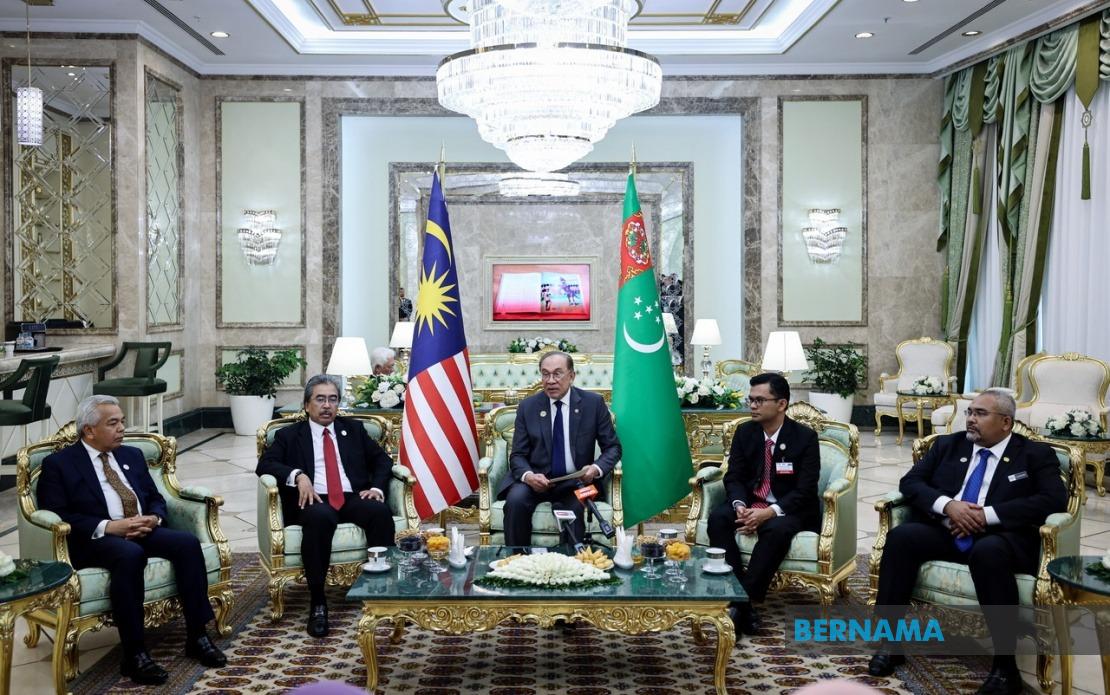
Prime Minister Datuk Seri Anwar Ibrahim has concluded his official working visit to Turkmenistan on a positive note, characterizing the engagement as a significant milestone in Malaysia's diplomatic outreach to Central Asia. Speaking through a Facebook post, Anwar emphasized that the mission had successfully realized its core objectives while laying groundwork for an enhanced partnership between Kuala Lumpur and Ashgabat, signaling Malaysia's renewed commitment to exploring relationships beyond its traditional Southeast Asian sphere.
The two-day visit, which commenced on June 18, represented Anwar's inaugural official journey to the energy-rich nation since his elevation to Malaysia's 10th prime minister in November 2022. The trip occurred at the formal invitation of Turkmenistan President Serdar Berdimuhamedov, underscoring the diplomatic importance both capitals attach to deepening ties. This maiden visit carries particular weight as it demonstrates Malaysia's strategic pivot towards establishing more robust connections with resource-rich nations in the Caucasus and Central Asian regions, areas traditionally underexplored by Malaysian policymakers.
Accompanying the Prime Minister was a high-level delegation that reflected the multifaceted nature of the engagement. Minister of Investment, Trade and Industry Datuk Seri Johari Abdul Ghani and Minister of Economy Akmal Nasrullah Mohd Nasir traveled alongside senior officials from the Prime Minister's Office and the Foreign Ministry. The composition of this delegation, particularly the inclusion of both investment and economic ministers, telegraphed Malaysia's intent to move beyond ceremonial diplomacy toward substantive negotiations on commercial and industrial matters. The participation of representatives from PETRONAS, Malaysia's national oil and gas corporation, proved especially telling regarding the primary focus of bilateral discussions.
Among the principal areas of collaborative opportunity identified during the visit, the energy sector emerged as the standout prospect for mutual benefit. Both nations recognized the considerable potential residing within this domain and committed to exploring avenues through which Turkmenistan's substantial hydrocarbon reserves and technical expertise could align with Malaysia's downstream capabilities and investment appetite. For Malaysia, particularly in an era of global energy transition and supply chain diversification, establishing partnerships with gas-rich Central Asian economies offers strategic hedging opportunities and access to alternative sourcing arrangements. Turkmenistan, conversely, stands to gain from Malaysian technical know-how and access to Asian markets through enhanced cooperation with PETRONAS and other domestic enterprises.
Anwar's remarks specifically commended President Serdar Berdimuhamedov and the Turkmenistan government for the exceptionally warm reception extended to the Malaysian contingent. Such diplomatic courtesies, while often formulaic, serve practical purposes in establishing rapport and demonstrating reciprocal goodwill that can facilitate smoother negotiations on weightier matters. The Prime Minister's public acknowledgment of this hospitality reflects standard diplomatic protocol while also signaling to Malaysian stakeholders that the Turkmen leadership has demonstrated genuine enthusiasm toward deepening bilateral engagement.
The Prime Minister further extended appreciation to the Malaysian Embassy in Ashgabat, emphasizing the critical role that diplomatic missions play in orchestrating high-level visits and maintaining continuity in bilateral relations. He also recognized PETRONAS representatives, security personnel, and media contingents who contributed to the operational success of the delegation. This recognition extends beyond mere courtesy; it underscores the interconnected nature of modern state diplomacy, where success requires coordination across government agencies, state-owned enterprises, and security apparatus alongside media communication strategies that shape domestic and international narratives surrounding such engagements.
The characterization of this visit as opening "a new chapter" in bilateral cooperation signals that Malaysian policymakers view the engagement as transitional, moving from a period of limited interaction toward a more comprehensive partnership framework. This language choice suggests that discussions likely encompassed not merely energy arrangements but potentially broader frameworks for commercial, educational, and cultural exchanges. For Malaysia, which has historically concentrated its diplomatic bandwidth on ASEAN affairs and relationships with Western and Middle Eastern powers, the conscious expansion of focus toward Central Asia reflects evolving geostrategic considerations and recognition of the region's importance within broader Asian economic architecture.
The timing of this inaugural prime ministerial visit carries additional significance within Malaysia's contemporary political context. Anwar's early tenure as the nation's leader has been characterized by deliberate efforts to expand Malaysia's international profile and diversify its diplomatic partnerships. The Turkmenistan visit forms part of this broader recalibration, positioning Malaysia as an engaged player in global affairs rather than a nation focused exclusively on regional concerns. For regional observers and Malaysia's Southeast Asian partners, such outreach demonstrates confidence in Malaysia's governance trajectory and its capacity to pursue multifaceted foreign policy objectives simultaneously.
From an energy security perspective, deepening ties with Turkmenistan carries particular relevance for Malaysia and potentially for other Southeast Asian economies. As the region grapples with questions of sustainable energy supply and the transition toward cleaner fuel sources, natural gas from Central Asian reserves could serve as a bridge fuel supporting economic development while renewable infrastructure develops further. Malaysia's own position as both an energy consumer and producer could enable it to serve as a facilitator for broader Central Asian energy integration into Asian markets, enhancing its strategic value proposition within regional economic frameworks.
The successful completion of this visit suggests that both nations have identified sufficient common ground to warrant sustained diplomatic engagement and concrete commercial negotiations. While the public statements from Malaysian leadership have focused on the positive tenor and forward momentum of the relationship, the substantive outcomes of discussions between technical delegations and policy officials will ultimately determine whether this diplomatic opening translates into tangible collaborative frameworks. The coming months will likely see intensified engagement between relevant government ministries and state enterprises as both sides work to operationalize the broader commitment to deepened cooperation articulated during the Prime Minister's visit.
Moving forward, the success of this diplomatic initiative will be measured through concrete indicators: formalized agreements on energy cooperation, investment flows, trade volume increases, and establishment of institutional mechanisms for ongoing dialogue. Malaysian stakeholders, particularly those in the energy and investment sectors, will be monitoring subsequent developments closely to assess whether Anwar's characterization of achieving objectives translates into sustained business opportunities and strategic advantages for Malaysia in an increasingly multipolar global environment.
%22%2F%3E%3C%2Fpattern%3E%3C%2Fdefs%3E%3Crect%20width%3D%22100%25%22%20height%3D%22100%25%22%20fill%3D%22url(%23phq81g)%22%2F%3E%3Crect%20width%3D%22100%25%22%20height%3D%22100%25%22%20fill%3D%22url(%23phq81p)%22%2F%3E%3Ctext%20x%3D%2250%25%22%20y%3D%2250%25%22%20text-anchor%3D%22middle%22%20dominant-baseline%3D%22central%22%20fill%3D%22rgba(255%2C255%2C255%2C0.95)%22%20font-family%3D%22Georgia%2C%20'Times%20New%20Roman'%2C%20serif%22%20font-weight%3D%22700%22%20font-size%3D%22320%22%20letter-spacing%3D%22-0.02em%22%3EPAS%3C%2Ftext%3E%3C%2Fsvg%3E)
%22%2F%3E%3C%2Fpattern%3E%3C%2Fdefs%3E%3Crect%20width%3D%22100%25%22%20height%3D%22100%25%22%20fill%3D%22url(%23ph1xbg6g)%22%2F%3E%3Crect%20width%3D%22100%25%22%20height%3D%22100%25%22%20fill%3D%22url(%23ph1xbg6p)%22%2F%3E%3Ctext%20x%3D%2250%25%22%20y%3D%2250%25%22%20text-anchor%3D%22middle%22%20dominant-baseline%3D%22central%22%20fill%3D%22rgba(255%2C255%2C255%2C0.95)%22%20font-family%3D%22Georgia%2C%20'Times%20New%20Roman'%2C%20serif%22%20font-weight%3D%22700%22%20font-size%3D%22151%22%20letter-spacing%3D%22-0.02em%22%3EPerikatan%3C%2Ftext%3E%3C%2Fsvg%3E)