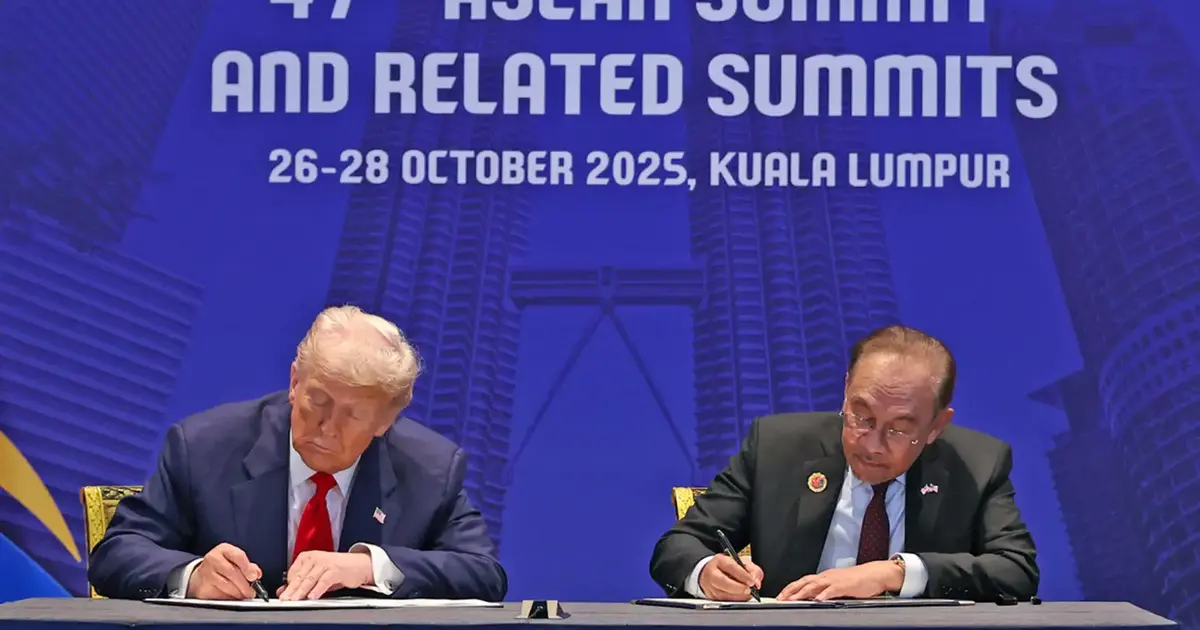
The Malaysian government under Prime Minister Anwar Ibrahim has made a formal application to have dismissed a legal action initiated by opposition Members of Parliament who are contesting the constitutionality and legitimacy of the reciprocal trade arrangement with the United States. The filing represents an escalation in the political and legal dispute surrounding the bilateral commercial agreement that has generated substantial debate within Parliament and among Malaysian civil society stakeholders.
The contested trade deal between Malaysia and the United States has emerged as a flashpoint in Malaysian politics, with opposition figures arguing that aspects of the agreement require greater parliamentary scrutiny and potentially fall outside the government's authority to execute without fuller legislative approval or public disclosure. The MPs have mobilised judicial proceedings to challenge what they characterise as an overreach by the executive branch in committing the nation to international commercial obligations.
The government's application to strike out the case suggests confidence that the opposition's legal arguments lack sufficient merit or standing to proceed through the courts. By seeking dismissal at an early stage, the administration hopes to avoid prolonged litigation that could keep the trade agreement under public and judicial examination. This procedural move is a standard legal tactic employed when governments believe a challenge lacks foundational legal grounds.
Parallel to the strike-out application, the opposition MPs have filed a separate motion requesting that the Federal Court accept a referral of specific constitutional questions arising from the Malaysia-US trade pact. This dual-track legal strategy reflects the MPs' determination to escalate their challenge beyond the lower court level and to force Malaysia's apex court to pronounce on constitutional principles governing the executive's treaty-making powers and parliamentary oversight mechanisms.
The constitutional questions likely centre on whether the government possessed adequate authority to enter into the reciprocal trade agreement without explicit parliamentary ratification, whether sufficient transparency was maintained throughout negotiations, and whether certain provisions of the agreement contravene existing Malaysian constitutional protections or legislative frameworks. These inquiries touch on fundamental questions about the separation of powers between the executive and legislative branches.
For Malaysian observers of constitutional law, the case represents a significant test of judicial boundaries in examining trade agreements and international treaties. The courts have historically demonstrated considerable deference to executive action in foreign policy and international commercial matters, viewing such domains as primarily within government domain. However, growing global trends toward greater parliamentary involvement in trade oversight have influenced some jurisdictions to permit deeper scrutiny.
The Malaysia-US relationship carries substantial strategic importance across defence, security, and economic dimensions, making this trade agreement politically sensitive. A judicial determination that the government overstepped constitutional bounds could complicate Malaysia's regional positioning and bilateral relations with Washington. Conversely, a ruling upholding government authority might discourage future parliamentary challenges to trade arrangements, potentially reducing legislative accountability.
The timing of these legal manoeuvres occurs amid broader debates within Southeast Asia about how nations should balance executive efficiency in negotiating international agreements against democratic principles requiring parliamentary transparency and public accountability. Malaysia's approach to this question will resonate across the region as other ASEAN member states grapple with similar tensions in their own trade negotiations and treaty processes.
Opposition parties have invested significant political capital in the Malaysia-US trade deal controversy, viewing it as emblematic of broader concerns about government accountability and transparency. For the Anwar administration, successful dismissal of the challenge would provide decisive vindication and allow the agreement to proceed without judicial impediment. The government's legal strategy therefore signals both confidence in its position and recognition of the stakes involved in this confrontation.
The Federal Court's decision on whether to accept the constitutional referral will prove decisive in determining whether these fundamental questions about executive authority receive sustained judicial examination. Should the court decline the referral and the lower court dismisses the case, the MPs' legal avenue would largely exhaust, though they could potentially pursue alternative parliamentary remedies or keep the issue alive through legislative debate and public advocacy.
The episode underscores tensions within Malaysia's constitutional framework regarding the proper allocation of powers over international commercial commitments. While the executive conventionally exercises considerable discretion in trade negotiations, the opposition's legal challenge reflects emerging demands for enhanced parliamentary involvement in ratifying or scrutinising major trade agreements before they bind the nation to substantial obligations.
This dispute will likely generate important judicial precedent regarding the scope of parliamentary standing to challenge trade agreements and the circumstances under which courts will examine constitutional limits on executive treaty-making powers. The outcome will consequently shape Malaysia's regulatory framework for future international commercial engagement and the extent to which legislatures retain meaningful oversight capacity in an era of complex multilateral and bilateral trade arrangements.