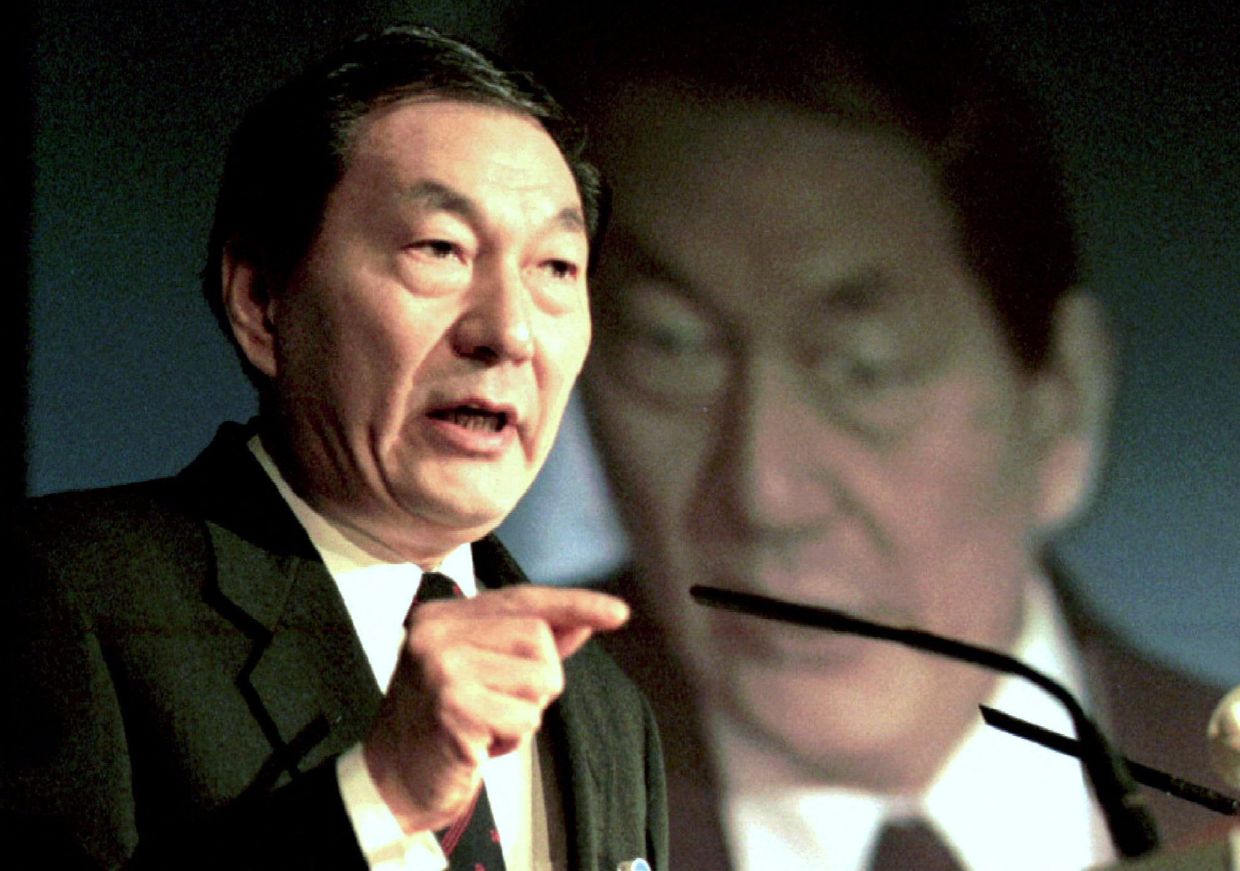
Zhu Rongji, the former premier of China whose bold restructuring of state-owned enterprises fundamentally altered the country's economic landscape and paved the way for its entry into the World Trade Organization, passed away in Beijing on Wednesday, August 12, following treatment for an unspecified illness. He was 98 years old. The death marks the end of an era for Chinese economic policymaking, as Zhu represented a generation of reformers willing to impose significant short-term pain for long-term systemic gain—a philosophy increasingly abandoned by his successors.
Zhu's tenure as China's top economic official spanned two distinct periods: first as the nation's chief economic planner navigating multiple crises in the mid-1990s, then as premier from 1998 to 2003. During these years, he confronted formidable challenges including the devastating 1997 Asian financial crisis and entrenched double-digit inflation that threatened macroeconomic stability. His willingness to tackle these problems through institutional restructuring rather than temporary fixes established his reputation as a decisive leader unafraid of difficult tradeoffs. When he relinquished the premiership to Wen Jiabao in 2003, he left behind a fundamentally transformed economic structure that would serve as the foundation for China's subsequent rise as an economic superpower.
The most contentious aspect of Zhu's legacy involved his comprehensive overhaul of China's bloated state-owned enterprise sector. Between 1998 and 2003, his administration shuttered tens of thousands of inefficient or loss-making entities across telecommunications, banking, oil production, and manufacturing. This restructuring resulted in tens of millions of workers losing their jobs, creating unprecedented social dislocation in urban centers. While the human cost was substantial, Zhu argued that this radical pruning was essential to eliminate the chronic debt accumulation plaguing state firms and to redirect capital toward viable private-sector enterprises. His strategic vision treated the immediate unemployment crisis as a necessary consequence of systemic financial rehabilitation rather than a policy failure to be minimized.
A pivotal achievement was Zhu's creation of asset-management companies in 1999 that absorbed approximately 1.4 trillion yuan—equivalent to roughly US$220 billion at the time—in accumulated bad loans from China's four largest state banks. These institutions had become clogged with non-performing debt, largely accumulated through mandatory lending to unprofitable state enterprises that the government refused to close. By quarantining these toxic assets into dedicated vehicles, Zhu enabled the parent banks to present cleaner balance sheets and pursue commercialization. This mechanism proved remarkably effective; the major banks subsequently went public beginning in 2005 and gradually adopted more market-oriented lending practices. For Southeast Asian observers, this restructuring model offered a cautionary example of how state-directed financial systems can accumulate hidden vulnerabilities—a lesson particularly relevant given the region's own development trajectories.
Zhu's role in negotiating China's accession to the World Trade Organization in 2001 carried implications that rippled far beyond Beijing's borders. In 2000, he met with then-European Union Trade Commissioner Pascal Lamy in the Chinese capital to resolve critical deadlocks in protracted accession negotiations. That breakthrough facilitated China's formal WTO entry the following year, fundamentally reshaping global trade patterns. Since that pivotal moment, China's economic output has expanded more than elevenfold, enabling the nation to become the world's second-largest economy. However, this triumph has been shadowed by persistent complaints from trading partners—including many Southeast Asian nations—that China has violated the spirit of WTO commitments through industrial subsidies, non-tariff barriers against imports, and systematic intellectual property theft.
Zhu's tenure as governor of the People's Bank of China from 1993 to 1995 demonstrated his commitment to financial liberalization and international integration. During this period, he introduced pilot programs allowing overseas financial institutions to establish operations within China and orchestrated the nation's inaugural global bond issuance. These initiatives signaled to international investors that China was genuinely opening its capital markets rather than merely rhetorical gestures toward liberalization. Such moves were particularly significant for regional financial centers like Singapore and Hong Kong, which positioned themselves as intermediaries for foreign capital flows into mainland China. Zhu's vision of financial integration contrasted sharply with subsequent administrations' emphasis on state control and capital account restrictions.
Beyond his economic portfolio, Zhu earned recognition for his administrative efficiency and anti-corruption initiatives. His efforts to streamline government bureaucracy and reduce the number of official document approvals earned him the colloquial nickname "one-chop Zhu," referencing the traditional red seals or "chops" used to authorize official documents in China. His anti-corruption campaign, pursued with notable vigor during his premiership, represented an early attempt to address systemic governance problems that would resurface as perennial challenges for subsequent administrations. These dual commitments—administrative lean-ness and corruption control—reflected a technocratic philosophy that emphasized institutional efficiency as a means to economic dynamism.
Zhu's fluency in English and facility with humor enabled him to navigate international diplomacy with unusual ease for a senior Chinese official. During a joint press conference with US President Bill Clinton in 1999, when asked about allegations that China had made political contributions to the Democratic Party, Zhu deployed sardonic wit to deflect the charge. He noted that if such contributions were genuinely effective, he could easily deploy a portion of China's US$146 billion in foreign-exchange reserves—surely far more than the alleged US$300,000. His remark, delivered with palpable humor, underscored the absurdity of the accusation while demonstrating the confidence of a leader secure in his intellectual command. Such moments revealed how personal charisma and intellectual agility could serve diplomatic purposes.
Zhu was born in Hunan province in October 1928 and attended Tsinghua University from 1947 to 1951, majoring in electrical engineering. He joined the Communist Party in October 1949, the same month Chairman Mao Zedong—also a Hunanese—proclaimed the founding of the People's Republic. During the Hundred Flowers Campaign of the mid-1950s, when the Communist Party briefly encouraged public criticism of government policies, Zhu voiced reservations about Mao's economic approach, arguing that it prioritized growth rates over rational resource allocation. This candid assessment cost him dearly; he was labeled a "rightist" and subsequently demoted. During the Cultural Revolution, the chaos engulfing the nation extended to Zhu, who spent five years performing manual labor on a farm, raising pigs and cultivating rice.
Zhu's political rehabilitation after 1978 set the stage for his rise through successive positions: work in state planning agencies, appointment as Shanghai's mayor in 1987, and elevation to vice premier in 1991. His membership in the Politburo Standing Committee, China's supreme decision-making body, came in 1992. Deng Xiaoping, the paramount leader who engineered China's initial reform period, characterized Zhu as a "rare talent" who possessed genuine economic understanding and demonstrated courage in confronting intractable problems. This endorsement from Deng provided crucial political cover for Zhu's sometimes-controversial decisions during the 1990s.
After stepping down as premier in 2003, Zhu devoted himself to philanthropic endeavors and institutional development. He channeled his efforts into elevating Tsinghua University's international standing and donated book royalties to rural schools, recognizing education's role in lifting disadvantaged communities. During a 2000 legislative session, Zhu articulated his hopes for legacy, stating that he would be satisfied if the Chinese people remembered him as a "clean official, not a corrupt one." Should they be more generous, he added, and acknowledge that "Zhu Rongji got some real things done," then he would "thank heaven and Earth." This measured aspiration—combining integrity and substantive accomplishment—captured the self-conception of a technocrat convinced that administrative competence and personal rectitude constituted the dual foundations of legitimate governance. Zhu was survived by his wife, Lao An, and two children: his son Levin Zhu, who directed China International Capital Corp, a Beijing-based investment bank, and his daughter Zhu Yanlai, who held senior positions at Bank of China (Hong Kong).

