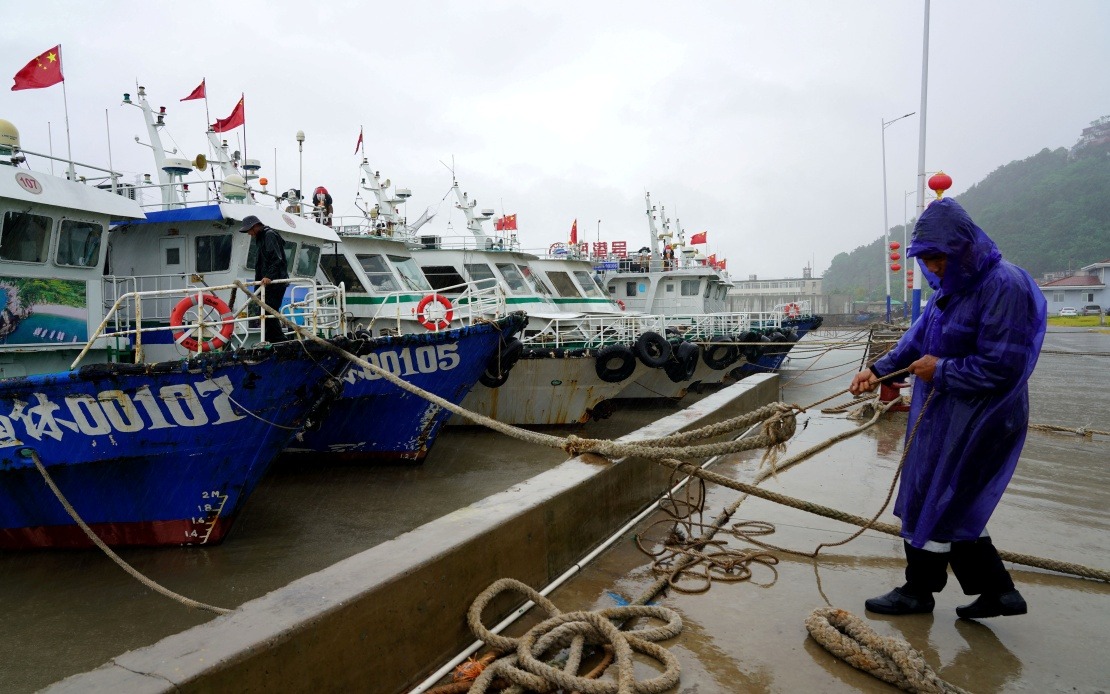
Zhejiang Province in eastern China has significantly heightened its state of readiness for Typhoon Dolphin, elevating its emergency response protocol from Level IV to Level III on Friday morning as the advancing storm system moves closer to the mainland. The escalation reflects mounting concern among provincial authorities that the typhoon, which marks the 13th major tropical system of 2026, poses a serious threat to densely populated coastal areas and major economic zones along China's eastern seaboard.
At the time the alert was raised, Typhoon Dolphin was positioned approximately 763 kilometres east of Wenling, Zhejiang, according to readings from the Zhejiang Meteorological Observatory. The system appeared to be maintaining a westward trajectory at an estimated speed of 15 to 20 kilometres per hour, with meteorologists suggesting its present intensity would either stabilise or intensify further before making contact with land.
The national weather authority issued a yellow-level warning on Thursday evening, predicting that Typhoon Dolphin would make landfall somewhere along China's eastern coast between Shanghai and Fuqing in neighbouring Fujian Province on either Sunday or Monday. This positioning places the storm on track to affect one of China's most economically vital regions, encompassing major ports, manufacturing hubs, and densely populated urban centres that collectively account for significant portions of the nation's GDP.
Meteorologists anticipate Dolphin will achieve typhoon or severe typhoon intensity upon landfall, with particular concern centred on the torrential rainfall expected to drench areas lying north of the impact zone. Lou Xiaofen, the chief forecaster at the Zhejiang Meteorological Observatory, emphasised that the typhoon carries a substantial probability of making direct landfall within Zhejiang itself, which sits geographically between Shanghai to its north and Fujian to its south, potentially triggering widespread disaster scenarios across multiple counties and cities.
In anticipation of the storm's arrival, Zhejiang's administrative and emergency management agencies have initiated a comprehensive suite of protective measures. All 162 passenger ferry routes operating throughout the province have been suspended, eliminating an important transport option for residents and commuters. Additionally, work has been halted at all 193 offshore development projects, encompassing oil and gas installations, renewable energy facilities, and other maritime infrastructure that would be vulnerable to extreme conditions.
The provincial maritime sector has been equally mobilised, with authorities directing 474 construction and support vessels to return to port where they can be secured or sheltered from the approaching system. Maritime authorities have disseminated approximately 86,000 early warning notifications across stakeholder networks and have conducted inspections of some 24,000 vessels to ensure they meet safety standards or have taken appropriate refuge. High-powered tugboats have been positioned at strategic locations along the coast, standing ready to launch emergency rescue operations should vessels encounter distress or maritime disasters develop.
The shift to Level III emergency response triggers a comprehensive set of operational protocols that bind local government agencies and essential service providers. Under these heightened conditions, authorities must maintain continuous surveillance of the typhoon's movement and intensity, issue frequent updated forecasts and warnings, coordinate the orderly evacuation of vulnerable populations to designated shelters, and communicate clear guidance to the general public regarding precautions and safe behaviours. The objective is to minimise loss of life and physical damage by ensuring that people and valuable assets are removed from harm's way before the storm arrives.
For Malaysian and broader Southeast Asian observers, Typhoon Dolphin's approach carries significant relevance given the region's own vulnerability to tropical cyclones and the interconnectedness of regional supply chains. Disruptions to China's eastern manufacturing and logistics zones during typhoon season invariably reverberate throughout the region, potentially affecting shipping schedules, component supplies, and trade flows. Zhejiang itself hosts numerous operations linked to Malaysian businesses, investors, and trading partners, making the outcome of this weather event a matter of more than purely academic interest.
The scale and speed of Zhejiang's response demonstrates the institutional capacity and coordination mechanisms that China has developed to manage natural disasters, drawing on decades of experience with frequent typhoons. The readiness to suspend entire economic sectors, mobilise thousands of vessels, and issue mass warning communications underscores how seriously authorities treat these cyclical threats to coastal populations and infrastructure. Whether the Level III response will prove sufficient or whether conditions will necessitate further escalation will become clearer as Typhoon Dolphin's exact trajectory and intensity become more certain over the coming days.

