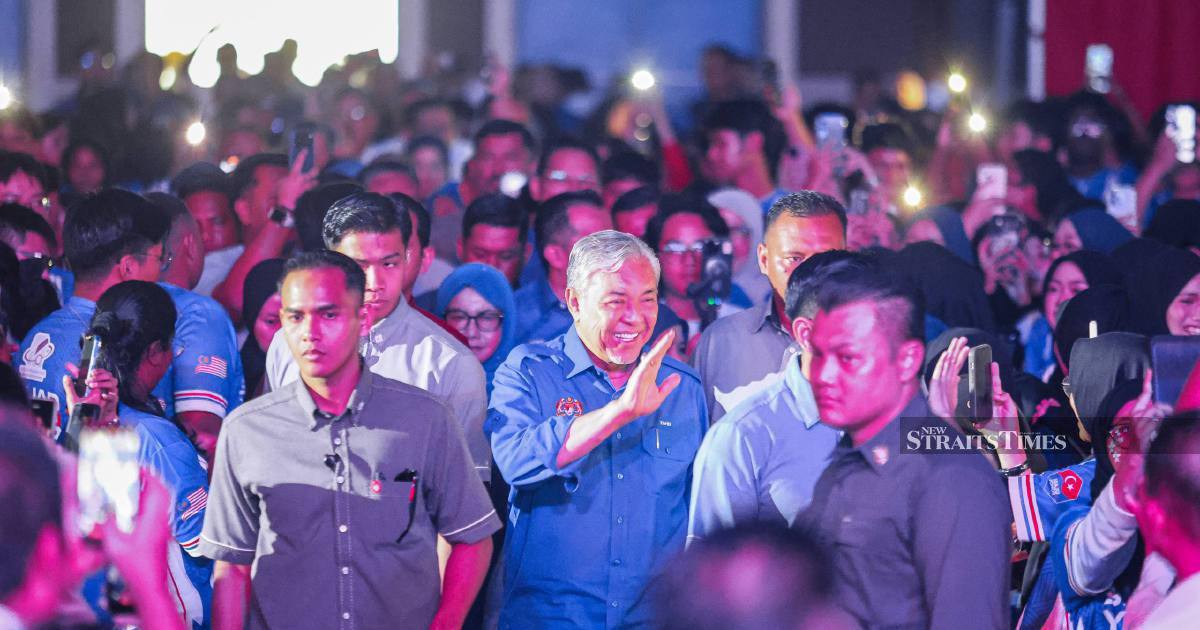
Deputy Prime Minister Zahid Hamidi has called upon Johor's youth population to sustain their backing for caretaker menteri besar Datuk Onn Hafiz Ghazi as Barisan Nasional gears up for the July 11 state election. Speaking at an event in Iskandar Puteri, Zahid positioned the BN-backed leader as the coalition's central figure in its bid to retain control of Malaysia's southern state, emphasizing that continued electoral support would allow the administration to pursue its development agenda without interruption.
The appeal reflects BN's broader strategy to consolidate voter confidence ahead of a crucial electoral contest in Johor, a state that has historically served as a powerhouse for the coalition at both state and federal levels. By specifically targeting younger demographics, the coalition appears to be countering perceptions that it lacks appeal among Malaysia's more progressive, digitally-engaged voters—a group that has shown unpredictable voting patterns in recent electoral cycles. The move also suggests BN recognizes that youth mobilization could prove decisive in a competitive three-way contest involving opposition parties contesting for relevance in the state.
Onn Hafiz has served as menteri besar during a caretaker period, a role that typically carries less administrative authority than a fully-elected incumbent but nonetheless provides visibility and opportunity to demonstrate governance capacity. His profile within the BN framework has grown considerably, and party leadership has signaled confidence in his ability to attract voters across different demographic segments. The nomination of Onn Hafiz as BN's focal point for the campaign underscores internal calculations about which personalities can generate electoral momentum in an increasingly fragmented political landscape.
Johor's importance to Malaysian politics extends beyond regional considerations. The state generates substantial revenue through port operations, petrochemicals, and manufacturing, making its economic health a matter of national interest. Should BN lose its grip on the state administration, it would represent a significant symbolic and practical loss for the coalition, potentially affecting federal-state coordination on infrastructure projects and economic initiatives. For context, Johor's election comes as Malaysia navigates post-pandemic economic recovery and grapples with inflation affecting household budgets—issues that directly influence voter sentiment.
Youth engagement in this election carries particular significance given Malaysia's demographic profile. Young voters aged 18 to 40 represent a substantial portion of the electorate, yet their turnout rates have historically lagged behind older age groups. Political parties across the spectrum have invested considerable resources in social media campaigns and ground-level mobilization to sway this demographic. BN's explicit outreach to young Johoreans suggests the coalition believes this segment remains persuadable through messaging centered on economic opportunity and developmental continuity.
The party's emphasis on "continuing development" taps into narratives about infrastructure completion, job creation, and business-friendly governance. Johor has been a recipient of major federal and state investment, including port expansion projects, industrial zones, and urban development schemes. By framing the election choice as one between continuity and disruption, BN attempts to position itself as the safe custodian of these initiatives versus alternatives that might alter course or priorities.
Regional dynamics also merit consideration. Johor borders Singapore, and cross-border economic interdependencies shape policy priorities for any state administration. Trade, labor mobility, and infrastructure connectivity with Singapore influence both business confidence and household prosperity. Voters in frontier areas are often particularly sensitive to how development policies affect cross-border commerce and investment flows. BN's pitch likely incorporates these local economic realities, positioning Onn Hafiz's continuity as preferable to uncertainty.
The caretaker status itself presents both advantage and disadvantage. While Onn Hafiz can point to interim achievements during his tenure, he lacks the full mandate and budgetary discretion that an elected menteri besar would possess. Opposition parties will likely exploit this limitation, arguing that only a decisive electoral victory provides the authority necessary to implement comprehensive development programs. BN's task involves converting administrative visibility into electoral endorsement.
Opposition movements in Johor have similarly mobilized youth-focused campaigns, recognizing that the state election represents an opportunity to challenge BN's traditional dominance. Whether through social media insurgencies or localized community organizing, rival coalitions have made headway in constituencies previously considered BN strongholds. The competitive environment means that Zahid's appeal to young voters occurs against a backdrop of active contestation for youth allegiance.
The timing of Zahid's remarks also reflects preparations for what is expected to be an intensive campaign period. With nomination day and polling day approaching, BN leadership is publicly staking its credibility on specific candidates, signaling to grassroots supporters and party machinery which personalities merit maximum effort. The elevation of Onn Hafiz in leadership messaging serves to clarify organizational priorities and mobilize volunteer networks.
For Malaysian observers and regional analysts, Johor's election outcome will signal whether BN can sustain electoral dominance in critical states or whether shifting demographics and political fragmentation are eroding its traditional base. The result may also influence calculations about federal-level coalition arrangements and parliamentary stability, given the interconnection between state and national politics in Malaysia's federal system.
As campaigning intensifies, the battle for youth support will likely intensify through digital channels, grassroots events, and personality-driven appeals. The willingness of senior BN figures like Zahid to directly engage young voters indicates that the coalition views this demographic contest as consequential to overall electoral prospects in Johor on July 11.

