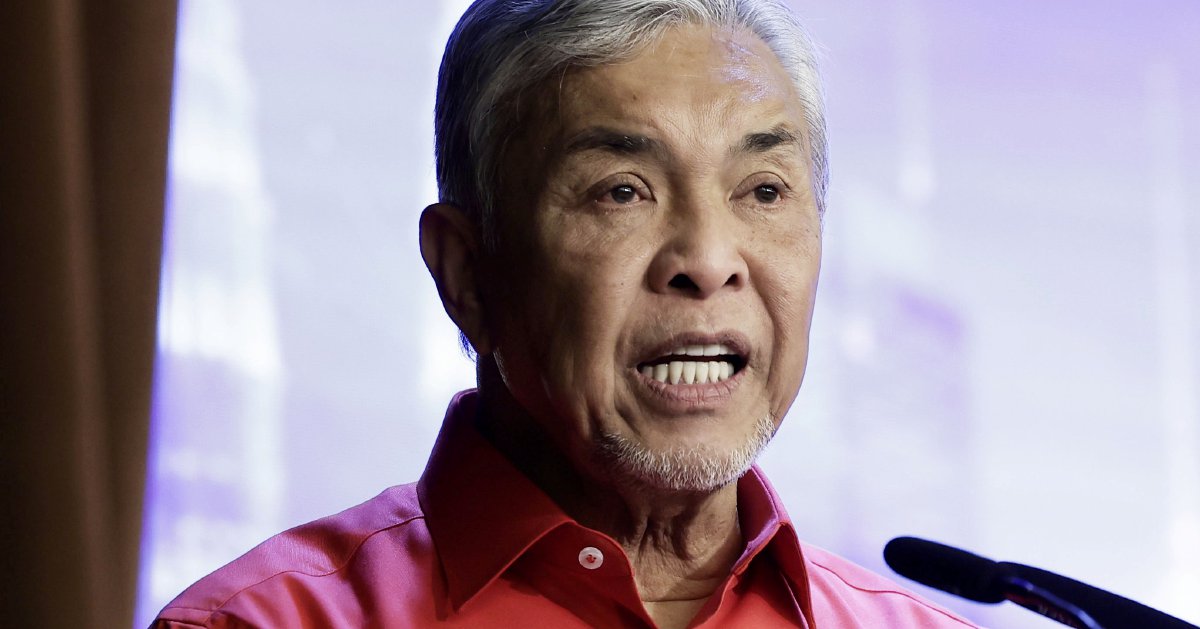
Deputy Prime Minister Datuk Seri Dr Ahmad Zahid Hamidi has appealed for stakeholders to cease making unverified claims and unfounded perceptions about Lembaga Tabung Haji, arguing that such discourse undermines confidence in the institution without basis in documented fact. The statement reflects growing concern within the government about the reputational damage caused by speculation and allegations that lack concrete evidence or substantiation.
Tabung Haji, Malaysia's pilgrimage fund established to facilitate Malaysian Muslims' participation in the Hajj pilgrimage, has faced sustained scrutiny in recent years regarding its financial management, investment strategies, and operational transparency. The institution manages billions of ringgit in savings from Muslim pilgrims nationwide, making it one of Southeast Asia's most significant faith-based financial entities. Any erosion of public trust carries implications not only for the fund's beneficiaries but also for Malaysia's reputation as a custodian of Islamic institutional frameworks.
Zahid's intervention appears timed to address a pattern of criticism that has periodically surfaced in public discourse, media commentary, and social media discussion without always being accompanied by detailed evidence or official investigations. The Deputy Prime Minister's emphasis on truth-grounded discourse suggests frustration with narrative-building that relies on assertion rather than documentation, a distinction that matters considerably when discussing institutional credibility and shareholder confidence.
The broader context involves Tabung Haji's complex role as both a religious institution and a sophisticated investment vehicle. The fund manages contributions from over 19 million registered pilgrims who entrust their savings to facilitate one of Islam's most important obligations. Its performance directly affects millions of Malaysian families who view these contributions as both spiritual investment and financial security, creating high sensitivity around management decisions and operational announcements.
Recent years have witnessed Tabung Haji navigating challenging market conditions, dividend adjustments, and criticism regarding investment portfolio decisions. Instances of reduced dividend payments have naturally sparked concern among contributors who depend on returns, though such challenges reflect broader economic headwinds rather than necessarily indicating mismanagement. The distinction between institutional difficulty and institutional failure remains crucial but often blurs in public conversation, particularly when detailed financial analysis requires technical expertise not uniformly distributed across commentators.
Zahid's call for restraint in allegation-making does not preclude legitimate oversight and accountability mechanisms. Malaysia's regulatory framework includes specific institutions responsible for financial supervision, and Tabung Haji operates within established governance structures. Public scrutiny and journalistic inquiry serve essential functions in democratic societies, but such scrutiny gains credibility when grounded in documented evidence, named sources, and specific claims amenable to verification or refutation.
The Deputy Prime Minister's statement carries implicit messaging about distinguishing between legitimate criticism and baseless rumour-mongering, a boundary that becomes increasingly important as digital communication enables rapid dissemination of unverified narratives. For Malaysian pilgrims and their families, particularly those with limited financial literacy or investment experience, misinformation about Tabung Haji's stability can trigger anxiety disproportionate to actual institutional risk, potentially prompting hasty decisions about accumulated savings.
This intervention also reflects government sensitivity toward institutional confidence more broadly. Zahid's portfolio responsibilities encompass domestic stability and public institutions' credibility, domains where unfounded crisis narratives can become self-fulfilling prophecies if they trigger panic behaviour or loss of investor confidence. The statement implicitly acknowledges that perception management and truth-based communication represent distinct approaches, with the former proving corrosive to institutional legitimacy while the latter sustains long-term confidence.
For Southeast Asian observers, Tabung Haji's situation illustrates broader challenges facing faith-based financial institutions across the region. Islamic finance continues expanding throughout Malaysia, Singapore, Brunei, and Indonesia, yet these institutions remain vulnerable to confidence shocks if reputational questions go unaddressed transparently. Zahid's emphasis on evidence-based discourse reflects recognition that sophisticated financial markets require sophisticated communication, particularly when institutional legitimacy depends partly on beneficiary confidence rooted in religious trust rather than purely financial calculation.
Going forward, the statement suggests government preference for direct institutional communication and formal accountability mechanisms over media-driven speculation. Tabung Haji itself may face expectations to enhance transparency through detailed reporting, stakeholder engagement, and clearer explanation of investment decisions and performance metrics. Such proactive communication strategies typically prove more effective than reactive defence against rumour, particularly in contexts where target audiences include contributors with varying financial sophistication.
The ultimate test of Zahid's appeal will involve whether stakeholders respond by distinguishing between documented concerns worthy of investigation and speculative narratives lacking evidentiary support. For Malaysian pilgrims, the priority remains ensuring that their accumulated Hajj savings remain secure, professionally managed, and transparently reported—outcomes that require both institutional diligence and informed public discourse grounded in verifiable fact rather than perception.

