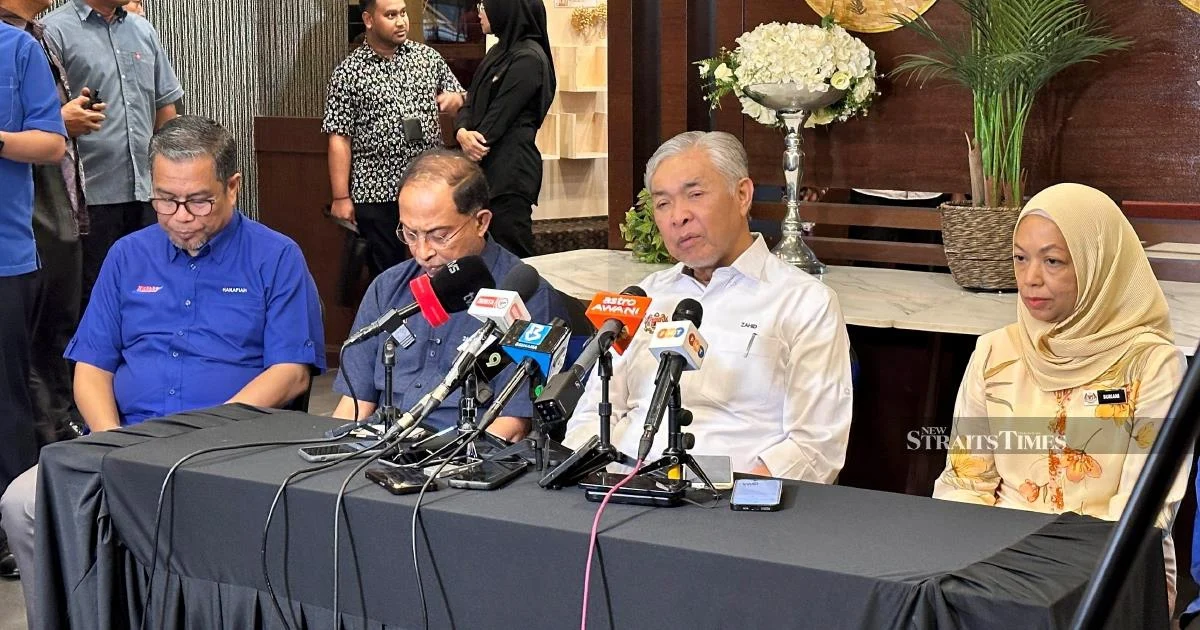
Barisan Nasional chairman Datuk Seri Dr Ahmad Zahid Hamidi has signalled that the coalition's unity partners ought to set aside contentious issues surrounding former prime minister Najib Razak and his wife Datin Seri Rosmah Mansor during the Johor state election campaign. The message, delivered in Kluang, appeared directed at one component party of the federal unity government over its use of imagery related to the pair in campaign materials.
The intervention by Malaysia's deputy prime minister suggests growing friction within the broader coalition framework that underpins federal governance. The unity government, formed following the 2022 general election, brings together Barisan Nasional, Pakatan Harapan, and several other political groupings in an unusual configuration designed to provide stability after a period of political turbulence. However, tensions over messaging and historical grievances continue to simmer beneath the surface.
The Najib-Rosmah issue remains deeply divisive in Malaysian politics. Najib's conviction on corruption charges and subsequent imprisonment created lasting fault lines between political factions. His wife has also faced legal scrutiny. For many in the opposition and reform-minded segments of society, these cases symbolise accountability and the rule of law. For Najib's supporters within UMNO and the broader Barisan establishment, revisiting these matters feels like reopening wounds that the political realignment was meant to help heal.
Zahid's public intervention carries particular significance given his position astride the BN and the federal government structure. As deputy prime minister and BN chairman, he serves as a key architect of coalition cohesion. His statement effectively sets a boundary for acceptable campaign discourse, establishing that invoking historical grievances and personal controversies around the Najib-Rosmah saga falls outside permissible bounds during state-level electioneering.
Johor remains strategically vital for Barisan Nasional, having been governed by BN continuously. The state election represents a critical test of coalition unity and organisational strength. A fragmented or visibly discordant campaign effort could undermine the broader narrative of stability and competent governance that the unity government attempts to project. Voters in Johor, particularly in urban centres, have demonstrated capacity to shift allegiances based on performance and credibility perceptions.
The rebuke of the unnamed coalition partner also reflects differing strategic calculations about what messages resonate with different demographic segments. Some parties may believe that invoking accountability and rule of law arguments strengthens their appeal among urban, educated, and reform-oriented voters. Others within the partnership view such messaging as unnecessarily divisive and potentially counterproductive to the unity government's broader project of stabilising national politics and building cross-coalition consensus.
This incident underscores the inherent tensions within Malaysia's current political architecture. The unity government exists partly because no single grouping commands overwhelming electoral support. This fragmented landscape demands constant negotiation and compromise. When component parties pursue independent messaging strategies that activate divisive historical issues, they risk destabilising the entire arrangement. Zahid's intervention seeks to reinforce coalition discipline by establishing that campaign messaging must prioritise forward momentum over settling historical scores.
For Malaysian observers and international commentators, this episode illuminates the precarious balance that holds the unity government together. The arrangement survives through tacit agreements to avoid triggering fundamental divisions. Campaigns that emphasise past grievances, criminality, and individual accountability threaten this equilibrium. Zahid's statement essentially asks coalition members to treat the Najib-Rosmah matter as settled history, not as ongoing campaign material.
The broader implications extend beyond Johor. As Malaysia approaches various electoral contests, including potential federal-level developments, the question of how coalition partners manage divisive historical narratives will become increasingly pressing. The unity government's durability may depend partly on whether political actors can exercise sufficient discipline to avoid weaponising past controversies. However, for parties whose electoral base has been mobilised around accountability and reform agendas, such restraint may prove politically costly.
Zahid's intervention also signals something about power dynamics within the coalition. His ability to publicly critique a partner's campaign strategy, albeit diplomatically, suggests the authority that BN and its senior figures maintain within the broader arrangement. This hierarchical dimension remains important even as Malaysia experiments with more inclusive and multi-factional governance models.
Looking forward, the Johor campaign will likely demonstrate whether coalition members accept Zahid's guidance. Success in maintaining campaign discipline while presenting a united front could strengthen the unity government's credibility heading into future contests. Failure to do so might expose the fragility of arrangements that depend on continued self-restraint from participants with fundamentally divergent political visions and historical narratives.

