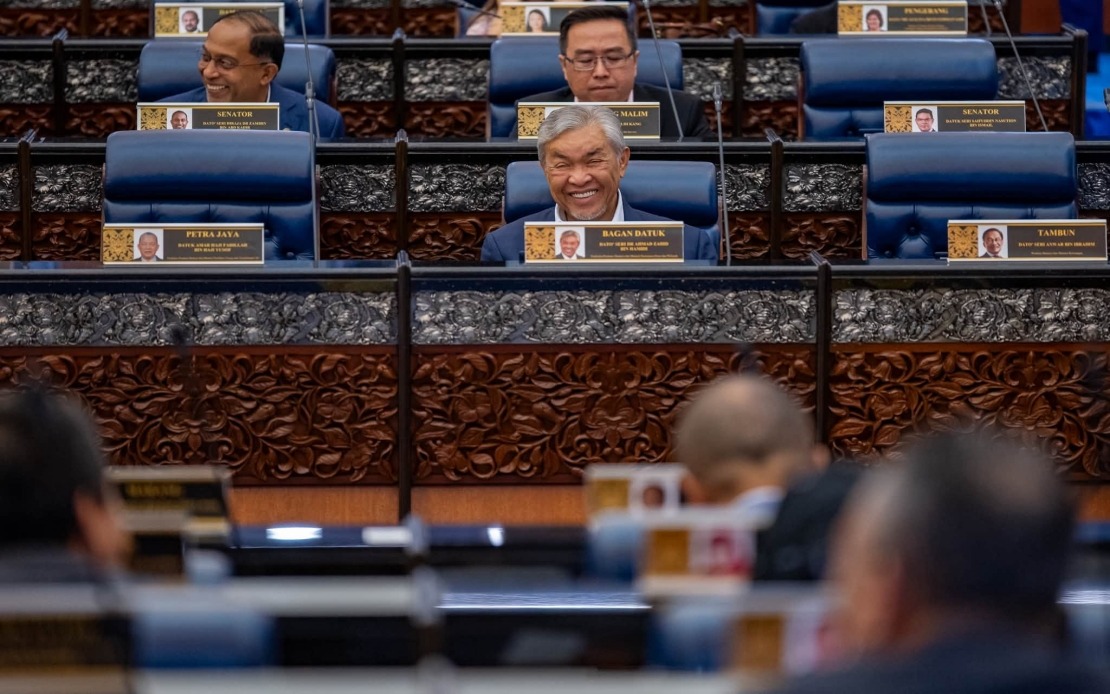
Deputy Prime Minister Datuk Seri Dr Ahmad Zahid Hamidi has emphasized that any constructive feedback regarding Lembaga Tabung Haji (Tabung Haji) must be paired with substantive action, underscoring the government's determination to preserve the credibility of this significant Islamic financial institution. Speaking in a Facebook post on August 11, Zahid, who also holds the portfolio of Rural and Regional Development Minister, stressed that maintaining the organisation's strength and public trust requires moving beyond criticism to implement meaningful reforms, while simultaneously preventing the institution from becoming mired in endless dispute.
The statement came in the context of a special parliamentary sitting during which Members of Dewan Rakyat had the opportunity to thoroughly examine, debate, and seek clarification on all issues arising from the Royal Commission of Inquiry (RCI) report into Tabung Haji's operations. The government had made the RCI report public on July 29, fulfilling its commitment to parliamentary scrutiny and transparency. This parliamentary forum represented a structured avenue for lawmakers to dissect the report's findings, raise concerns, and hold the government accountable for addressing the institutional challenges that the inquiry had identified.
Zahid's remarks carried an implicit caution against what he termed as excessive allegations or unsubstantiated claims. He expressed hope that following the parliamentary debate, stakeholders would refrain from making inflammatory statements or spreading unverified perceptions that lacked factual grounding. This appeal appears aimed at toning down political rhetoric surrounding the Tabung Haji controversy and encouraging a focus on evidence-based discourse. The comment suggests concerns within government circles that prolonged public criticism, if left unchecked, could further erode investor and pilgrimage customer confidence in an institution that manages billions of ringgit in hajj savings for millions of Malaysian Muslims.
The RCI report itself presented a comprehensive assessment of Tabung Haji's management and operational shortcomings spanning the period from 2014 to 2020. The inquiry identified multiple areas of weakness and subsequently formulated 25 specific recommendations designed to strengthen governance, enhance financial controls, and improve the institution's overall operational efficiency. The breadth of these recommendations reflected the depth of the problems uncovered during the investigation, suggesting systemic issues rather than isolated incidents. By the time of the public disclosure on July 30, Tabung Haji had already begun implementation efforts, with 75 per cent of the recommended improvements already underway or completed.
The high implementation rate of the RCI recommendations demonstrates that Tabung Haji management had not waited passively for public pressure or political intervention before responding to the inquiry's findings. This proactive stance potentially positions the institution as one already committed to reform, which Zahid's statement sought to reinforce publicly. However, the fact that one-quarter of recommendations remained unimplemented at the time of the report's public release indicates that the reform process, while advancing, still requires sustained effort and attention. The timeline and scope of implementation will likely become points of parliamentary scrutiny and public interest in the months ahead.
For Malaysian pilgrims and Tabung Haji customers, many of whom have accumulated savings over years or decades, the institutional recovery process directly impacts their confidence and financial security. The hajj savings scheme remains a unique and culturally significant financial mechanism in Malaysia, serving not merely as an investment vehicle but as a spiritual obligation preparation tool for millions of Muslims. The erosion of trust in the institution, should it occur, would have consequences extending beyond economic impact to affect religious practice and community wellbeing. Zahid's emphasis on preventing prolonged controversy reflects an understanding of these broader implications.
The parliamentary sitting itself represented a democratic mechanism for addressing institutional crisis. By opening the RCI report to parliamentary debate, the government signalled willingness to subject Tabung Haji's management failures to public scrutiny and legislative oversight. This approach contrasts with approaches that might have attempted to contain the issue administratively without parliamentary involvement. The forum allowed for diverse voices, including opposition parliamentarians, to contribute to the discussion and hold the government accountable, thereby strengthening democratic accountability while addressing a matter of significant public concern.
Zahid's prayer that all parties involved would be guided by wisdom and sincerity in addressing the issue carried both spiritual and practical significance. The invocation of ethical guidance suggested recognition that resolving the Tabung Haji matter required not merely technical reforms but also a genuine commitment from all stakeholders to prioritize the interests of pilgrims and the Muslim community over other considerations. This framing elevated the issue from a routine institutional governance matter to one with moral and religious dimensions, appropriate given Tabung Haji's unique status as an institution serving religious as well as financial functions.
Looking forward, the challenge for Tabung Haji management lies in translating the remaining 25 per cent of unimplemented recommendations into concrete action while simultaneously rebuilding customer confidence through demonstrable improvement in service quality and financial performance. The institution faces a credibility gap that extends beyond technical reforms to encompass broader questions about governance culture, oversight mechanisms, and accountability. Whether the parliamentary debate and public airing of the RCI report will facilitate genuine reform or whether it will further damage confidence remains an open question that will be answered by Tabung Haji's future performance and the speed with which remaining recommendations are implemented.
For Malaysia's broader regulatory and governance framework, the Tabung Haji case offers important lessons about the consequences of institutional drift and the necessity of maintaining robust internal controls and oversight mechanisms. The RCI process itself, by bringing institutional failures to light and triggering both administrative reform and parliamentary debate, demonstrated the value of investigative commissions in Malaysia's governance architecture. The subsequent public discussion and reform efforts signal that even significant institutional challenges can be addressed through a combination of transparent investigation, political commitment, and sustained implementation of reform recommendations.

