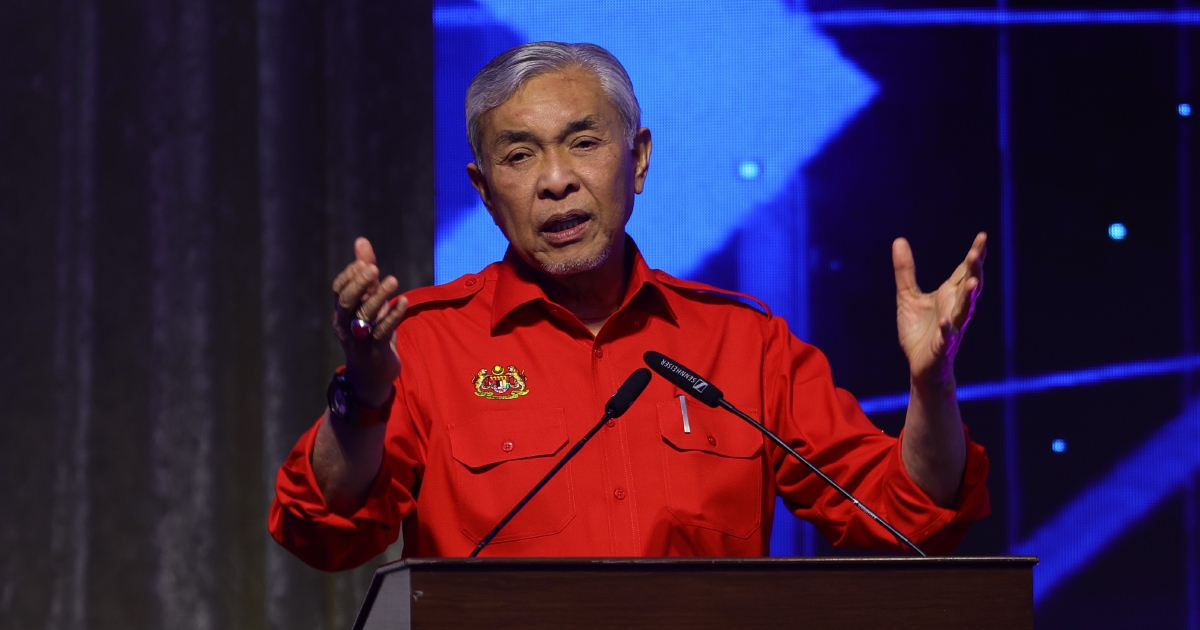
Barisan Nasional chairman Datuk Seri Dr Ahmad Zahid Hamidi has made clear that Prime Minister Datuk Seri Anwar Ibrahim retains the constitutional and executive authority to remove ministers from the coalition if their performance falls short of expectations. Speaking in Seremban, Zahid reaffirmed a principle fundamental to Malaysia's Westminster-derived system of governance: the prime minister, as head of government, exercises ultimate control over the ministerial portfolio and can restructure the cabinet as circumstances warrant.
The statement arrives at a moment when Malaysia's governing architecture remains in flux following recent electoral shifts and coalition realignments. The Pakatan Harapan-led administration, which brought Anwar to office, governs with the critical support of several BN component parties, making the coalition's performance and cohesion central to the government's stability. Zahid's comments signal that the BN leadership understands the conditional nature of ministerial positions within this arrangement and accepts the premier's right to enforce accountability.
In Malaysia's political context, ministerial dismissals or reshuffles typically occur when leaders perceive inadequate performance, policy misalignment, or political liabilities. Unlike some parliamentary systems where coalition partners might negotiate protected quotas, the Malaysian prime minister maintains considerable latitude in personnel decisions. This dynamic has intensified scrutiny of how individual BN ministers discharge their responsibilities, particularly those leading significant portfolios affecting the economy, public services, and domestic stability.
Zahid's remarks reflect broader positioning within BN as it seeks to stabilise its identity after years of electoral decline and internal fracturing. The coalition, which governed Malaysia uninterrupted for decades until 2018, has concentrated on rebuilding credibility by emphasising ministerial competence and delivery rather than merely occupying office. By publicly acknowledging the PM's authority over BN representatives, Zahid attempts to demonstrate that the coalition prioritises results and accountability over entitlement—a crucial messaging strategy as BN works to regain voter confidence.
The context matters equally for understanding factional dynamics within the ruling coalition itself. Pakatan Harapan and BN, whilst united in government, maintain distinct organisational interests and policy preferences on numerous issues ranging from economic reform to religious affairs. Zahid's statement implicitly accepts that the PM's prerogative to remove underperforming ministers supersedes any informal quota or protection mechanisms BN might otherwise claim. This clarity reduces uncertainty about ministerial tenure and may encourage more disciplined conduct within the coalition ranks.
For Southeast Asian observers monitoring Malaysian governance, Zahid's position reflects evolving norms around coalition politics in the region. As multiple countries navigate multiparty governing arrangements, the question of executive authority over ministerial appointments becomes increasingly salient. Malaysia's approach—where the PM retains substantial discretion—differs from systems where coalition partners negotiate fixed ministerial positions. This distinction shapes how coalition governments manage internal discipline and external credibility.
The practical implications extend to civil service morale and policy implementation. If BN ministers understand that substandard performance triggers dismissal, the pressure to demonstrate measurable outcomes intensifies. Conversely, this arrangement places greater responsibility on the PM's office to conduct fair performance evaluations and ensure that removals reflect genuine underperformance rather than factional scoring or political manoeuvring. The credibility of such processes ultimately affects public perception of meritocracy within government.
Zahid's comments also shed light on BN's strategic calculation regarding its role in this administration. Rather than resisting PM authority, the coalition chairman chose to affirm it—a posture suggesting that BN leadership prefers demonstrating ministerial competence over defending underperformers. This approach potentially strengthens BN's long-term rehabilitation prospects, as voters increasingly judge coalitions not merely by their presence in government but by the quality of governance they deliver.
Looking ahead, Zahid's statement establishes a baseline expectation that could reshape ministerial accountability across the entire government. If the PM acts on this principle by removing clearly underperforming BN ministers, it validates the chairman's words and reinforces a culture of performance-based tenure. Conversely, if accountability proves selective or inconsistent, the statement risks becoming politically hollow, damaging both the PM's authority and BN's credibility. The months ahead will test whether words translate into consistent action.
For Malaysia's business community and development agenda, ministerial stability combined with performance accountability offers a potentially positive combination. Investors value predictability, yet they equally demand effective administration. An implicit understanding that BN ministers face real consequences for poor performance could enhance policy continuity whilst maintaining pressure for results. This balance matters greatly as Malaysia navigates post-pandemic recovery and competes for regional investment against neighbours pursuing aggressive economic strategies.

