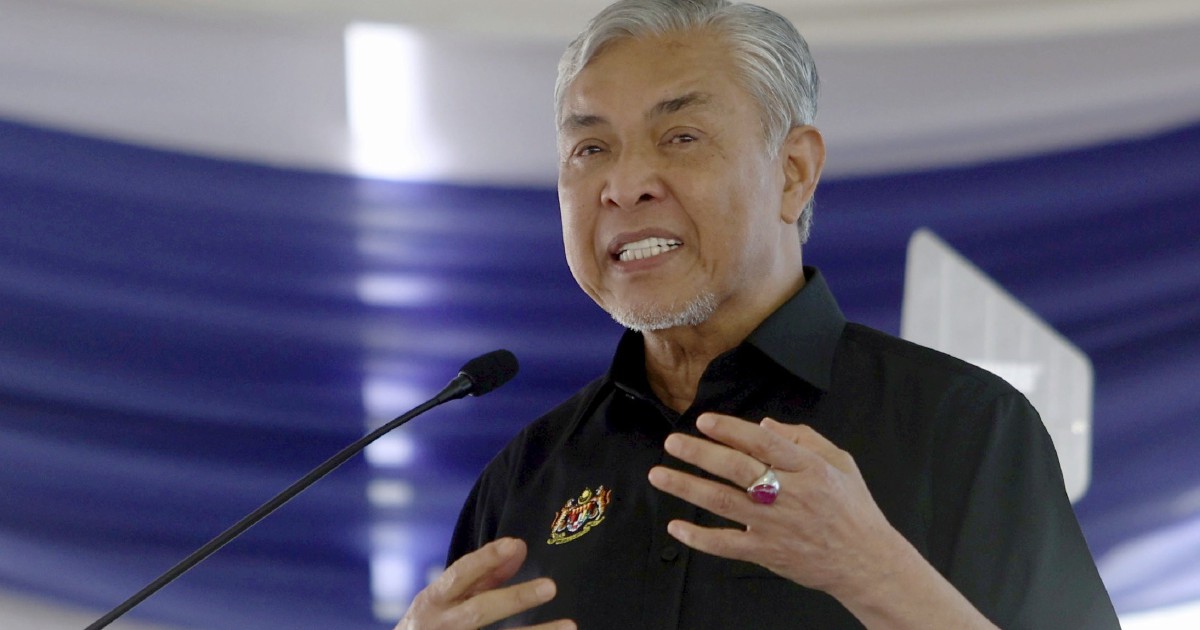
Datuk Seri Dr Ahmad Zahid Hamidi, Malaysia's Deputy Prime Minister, has moved to quash persistent rumours about a premature dissolution of parliament, stating categorically that no internal deliberations on this matter have taken place. Speaking in Tampin, Zahid sought to provide clarity on the government's electoral timeline following weeks of speculation in political circles and media commentary.
The Deputy Prime Minister's statement represents an important signal from the ruling coalition as Malaysia continues its political cycle. His direct rebuttal of early election talk suggests a unified approach from the government's leadership on constitutional and parliamentary matters. By personally addressing these rumours, Zahid has underscored the administration's commitment to the current electoral framework, which was established following the 14th general election held in 2022.
Such speculation typically emerges when governments experience strong polling numbers or when opposition alliances display visible fragmentation. In Malaysia's current political context, where coalition stability has been tested by defections and realignments, media focus on electoral timing is inevitable. However, Zahid's intervention demonstrates that the government sees no strategic advantage or necessity in advancing the electoral calendar at this juncture.
The timing of Zahid's statement carries particular significance given Malaysia's ongoing economic recovery and the government's legislative agenda. Dissolving parliament prematurely would interrupt policy initiatives and legislative work currently underway. The administration's preference for maintaining stability until the scheduled election timeframe reflects pragmatic governance principles, especially when broader economic and social challenges require sustained policy attention.
For Malaysian voters and political observers, Zahid's clarification provides certainty about the electoral horizon. General elections demand substantial public resources, institutional preparation, and administrative readiness. By confirming that no early dissolution is contemplated, the government allows election authorities, political parties, and the electorate to operate within a predictable framework. This certainty is valuable for longer-term planning across the political landscape.
The Deputy Prime Minister's remarks also reflect internal coalition discipline. In multi-party government arrangements like Malaysia's current administration, decisions of this magnitude require consensus among major partners. Zahid's public confirmation that no such discussions have occurred suggests that coalition partners remain aligned on fundamental governance matters, notwithstanding the routine tensions and negotiations that characterise any governing alliance.
Regionally, Malaysia's electoral stability carries broader implications. Southeast Asia has witnessed growing concerns about political instability and electoral unpredictability in various nations. Malaysia's demonstrated commitment to constitutional timelines and orderly transitions reinforces its standing as a region with established democratic institutions and predictable governance patterns. This reputation matters for investor confidence, international standing, and regional perceptions.
With the next scheduled general election expected within the standard five-year parliamentary cycle from 2022, Malaysian political actors and voters can now focus on substantive policy debates and coalition positioning rather than speculating about surprise electoral announcements. Political parties can refine their platforms and organisational strategies with a known timeline in view. Opposition coalitions can develop longer-term strategies for the campaign period ahead without uncertainty about potential early surprises from the government.
The dismissal of early election speculation also demonstrates how Malaysia's political system maintains institutional discipline despite intense factional competition. While the 2020-2023 period witnessed considerable political churning with multiple Prime Ministers and coalition reshuffling, the current administration appears to have achieved sufficient stability to rule out disruptive electoral surprises. This suggests lessons learned from earlier instability may have encouraged greater coalition caution.
Zahid's statement should be understood within the broader context of Malaysian coalition governance, where deputy and senior figures often clarify government positions on sensitive matters. His intervention here serves multiple audiences simultaneously: reassuring coalition partners of government stability, signalling to international observers Malaysia's institutional reliability, and providing Malaysian citizens with clarity about their political trajectory. Such clarity, while seemingly straightforward, actually requires considerable political consensus and leadership cohesion to maintain.

