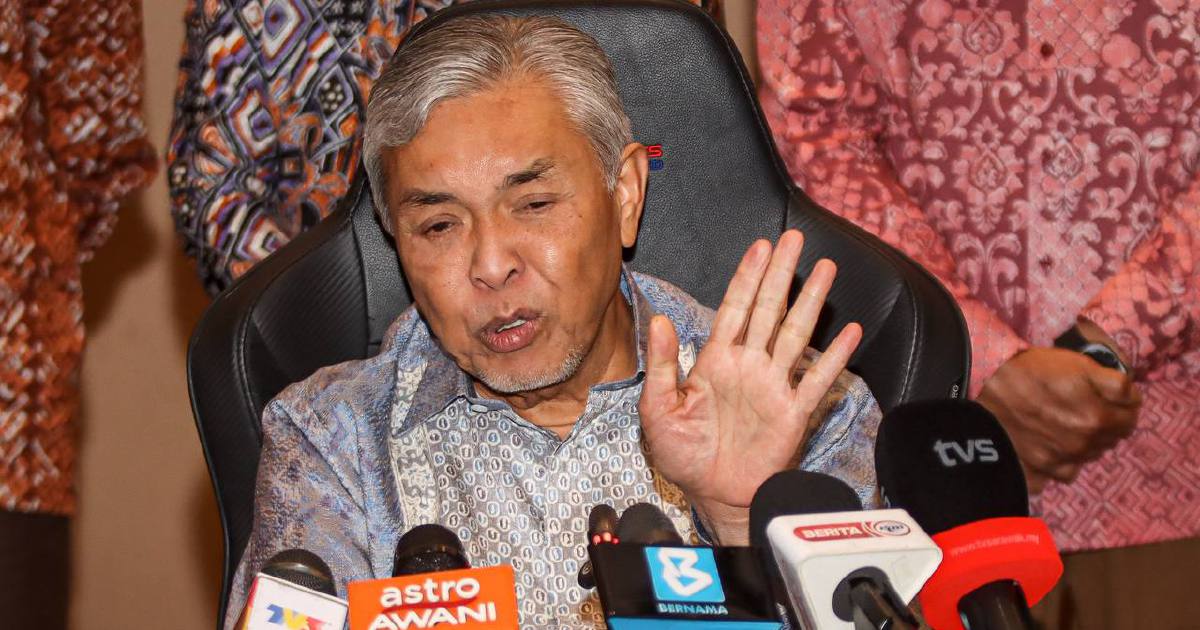
Datuk Seri Ahmad Zahid Hamidi has firmly rejected suggestions that any faction within the political establishment is plotting to dislodge Prime Minister Datuk Seri Anwar Ibrahim from office, declaring during remarks in George Town that Barisan Nasional stands steadfast in its backing of the unity government framework.
The UMNO president's public rebuttal addresses persistent conjecture about the stability of Malaysia's current political arrangement, a system that has undergone significant evolution since the 2022 general election. The unity coalition, which pairs Barisan Nasional with Pakatan Harapan, has become the defining political structure of contemporary Malaysian governance, though periodic speculation about its durability continues to circulate within political circles and among commentators.
Zahid's assertions carry particular weight given his position as leader of the largest component party within Barisan Nasional. UMNO's alignment with the broader coalition has been instrumental in maintaining parliamentary stability and enabling the government to navigate legislative processes without the kind of fragility that characterised previous administrations. His explicit commitment signals that no faction within Barisan Nasional is preparing to withdraw support in the near term, a reassurance that carries significance for both investors and policymakers who depend on governmental continuity.
The remarks come as Malaysia navigates a complex political landscape where informal negotiations and shifting allegiances have historically threatened governmental longevity. The emergence of the unity government represented an attempt to move beyond the adversarial two-coalition model that had dominated Malaysian politics, introducing instead a cross-partisan framework designed to achieve greater stability and facilitate policy implementation. Whether this arrangement proves durable beyond the 15th Parliament remains an open question that will likely animate political discussions in coming years.
Speculation about leadership transitions and coalition realignments periodically surfaces in Malaysian politics, often reflecting broader factional dynamics within parties or genuine policy disagreements. Such rumours can destabilise markets and complicate long-term planning by both public and private institutions. Zahid's categorical dismissal of these particular claims attempts to provide reassurance to stakeholders who require clarity about the government's prospective duration and parliamentary arithmetic.
The unity government structure itself represents a departure from Malaysia's traditional political conventions. Rather than a single coalition wielding overwhelming power, the arrangement involves negotiation and compromise between formerly opposing groups. This framework has created both opportunities for more inclusive policymaking and vulnerabilities stemming from the necessity of maintaining consensus across ideologically diverse partners. Zahid's statement implicitly acknowledges this delicate balance by emphasising Barisan Nasional's commitment to honouring agreements underpinning the coalition.
Barisan Nasional's role as kingmaker in the current parliamentary configuration grants it substantial influence over government stability and legislative agenda-setting. The coalition's continued support remains mathematically essential for maintaining the government's working majority in the Dewan Rakyat. Zahid's reinforcement of this commitment effectively signals that UMNO leadership sees greater value in the stability and influence derived from coalition participation than in the risks and uncertainties that would accompany an attempt to engineer an alternative arrangement.
The timing of Zahid's remarks reflects the ongoing nature of political uncertainty in Malaysia, where even firmly established arrangements occasionally face challenges rooted in factional disputes or shifting political calculations. By proactively addressing speculation, Barisan Nasional's president appears intent on establishing a clear narrative about his party's intentions and preventing rumours from accumulating into genuine governance crises. This approach mirrors strategies employed by government leaders elsewhere who seek to manage expectations and anchor political narratives during periods of uncertainty.
Looking toward the 15th Parliament's conclusion, questions about the subsequent political configuration will inevitably intensify. Zahid's emphasis on commitment extending to the end of this parliamentary term effectively brackets the timeline for which unity government stability can be presumed. This declaration provides relevant stakeholders with a planning horizon while simultaneously suggesting that discussions about post-2027 arrangements remain premature and potentially divisive.
The political implications of this statement extend beyond Barisan Nasional and Anwar Ibrahim's administration. The federal government's capacity to implement policy, manage economic challenges, and respond to public expectations all depend fundamentally on parliamentary stability and coalition cohesion. Zahid's words, therefore, carry consequences for Malaysia's broader development trajectory and international standing. Governments perceived as unstable face constraints in attracting investment, implementing long-term initiatives, and maintaining credibility in regional and multilateral forums.
Within Barisan Nasional itself, Zahid's unequivocal stance establishes parameters for internal debate about coalition participation. While individual parties retain autonomy regarding many decisions, the UMNO president's public commitment creates pressure on coalition partners to maintain alignment. This disciplinary function, while less visible than formal party structures, remains consequential for coalition durability. Parties considering unilateral action would face the prospect of defying their coalition leader's explicit declarations, a politically costly position in most circumstances.
The broader Malaysian electorate, observing these declarations, will form assessments about government longevity and stability. Such perceptions influence public confidence, consumer spending, and investment decisions. The government's ability to govern effectively depends partly on citizens' and businesses' confidence that it will remain in place long enough to implement policies and deliver services. Zahid's reaffirmation of coalition commitments, while not eliminating all uncertainty, provides a stabilising anchor for such expectations during a period when political commentary frequently focuses on factional tensions and potential realignments.

