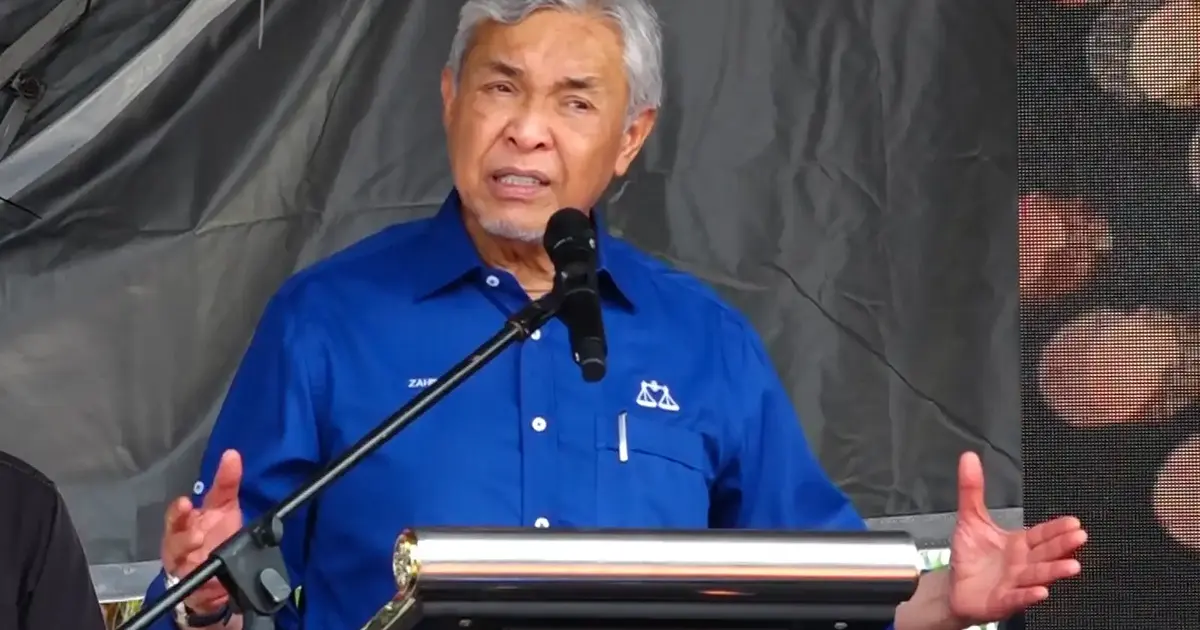
Umno President Ahmad Zahid Hamidi has moved to silence internal discord within the party by directing the election machinery to disregard any public statements made by former party leader Puad Zarkashi regarding the selection of Barisan Nasional candidates for the Johor state elections. The remarks represent an attempt to maintain party unity and focus during a critical campaign period, as Zahid seeks to consolidate support ahead of what promises to be a closely contested electoral contest in the southern state.
The tension between Zahid and Puad underscores deeper divisions within Umno that have periodically surfaced since the party's significant electoral losses in the 2018 general election. Puad, who held the position of deputy president before stepping back from frontline politics, has remained an influential voice within the party's broader membership and grassroots networks. His willingness to voice divergent views on candidate selection suggests lingering disagreements over the party's strategic direction and the composition of its electoral slate.
By instructing party officials to simply disregard Puad's commentary rather than engaging with his substantive concerns, Zahid appears to be adopting a containment strategy designed to prevent such internal disagreements from becoming public flashpoints that could undermine Barisan Nasional's cohesion during campaigning. The approach reflects the calculation that direct confrontation with a respected former leader could amplify divisions rather than resolve them, while simultaneously signalling to the broader party apparatus that the current leadership will not tolerate public dissent from senior figures.
The Johor elections represent a significant test of Barisan Nasional's electoral viability in one of Malaysia's most politically important states. As the economic heartland and a consistent stronghold for the coalition, maintaining party discipline and presenting a united front becomes essential to retaining voter confidence. Any perception of internal conflict or disagreement over candidate quality could provide opposition parties with valuable ammunition to deploy during the campaign, particularly if they can characterise such divisions as evidence of dysfunction within the ruling coalition.
Puad's interventions, whether relating to candidate competence, local political dynamics, or broader strategic concerns, touch on issues that resonate with party members and voters alike. His status as a former deputy president means his views carry weight among Umno's traditional power brokers and grassroots supporters who recall his role in party governance. The fact that Zahid felt compelled to issue a public directive to ignore Puad's comments indicates that the latter's words have gained sufficient traction to warrant formal leadership response.
This episode also illustrates the ongoing challenge Umno faces in reconciling competing leadership factions and different visions for the party's future direction. While Zahid has consolidated control over the party machinery and the Perikatan Nasional federal government, figures like Puad represent constituencies within Umno that may harbour reservations about certain policy directions or electoral strategies. The tension between maintaining hierarchical discipline and accommodating legitimate internal debate remains an unresolved structural challenge for the party.
From the perspective of Barisan Nasional's broader electoral prospects, such internal frictions can prove costly if they spill into public discourse and create perceptions of weakness or disunity. Opposition parties in Johor, particularly Pakatan Harapan and Perikatan Nasional-aligned forces, will be attentive to any signs of coalition dysfunction that they can amplify through their campaign messaging. Zahid's directive to ignore Puad represents an attempt to preemptively shut down such narratives by treating internal criticism as beneath notice rather than worthy of engagement.
The timing of these tensions is significant, coming as Umno and Barisan Nasional prepare for state-level elections that will serve as important barometers of their standing with voters following their federal electoral performance. Strong results in Johor would provide Zahid with a powerful platform for claiming a renewal of mandate and authority within the party, while disappointing outcomes could embolden critics who question his leadership approach and electoral strategy. This context lends additional weight to the party president's apparent determination to suppress internal criticism during the crucial campaign period.
Zahid's instruction to the party machinery reflects a strategic choice about how to manage dissent: rather than confronting Puad's critiques directly, engaging with their substantive content, and potentially legitimising them through high-level debate, the party president has opted for a dismissive approach that treats such commentary as beneath the dignity of serious response. Whether this strategy proves effective will depend partly on whether Puad continues to voice criticism publicly and whether his views gain significant support among key party constituencies. If his concerns resonate broadly within Umno's membership, ignoring them risks allowing grievances to fester beneath the surface.
Looking ahead, the Johor elections will serve as a crucial test of whether Zahid's leadership approach and the party's candidate selection process have secured sufficient internal buy-in and voter support. The outcome will likely determine whether internal critics like Puad gain renewed leverage to challenge the party president's decisions, or whether strong electoral performance allows Zahid to consolidate his authority and marginalise dissenting voices. For Malaysian politics more broadly, the Johor contest represents an important indicator of the evolving balance of power within both Umno and the broader Barisan Nasional coalition.

