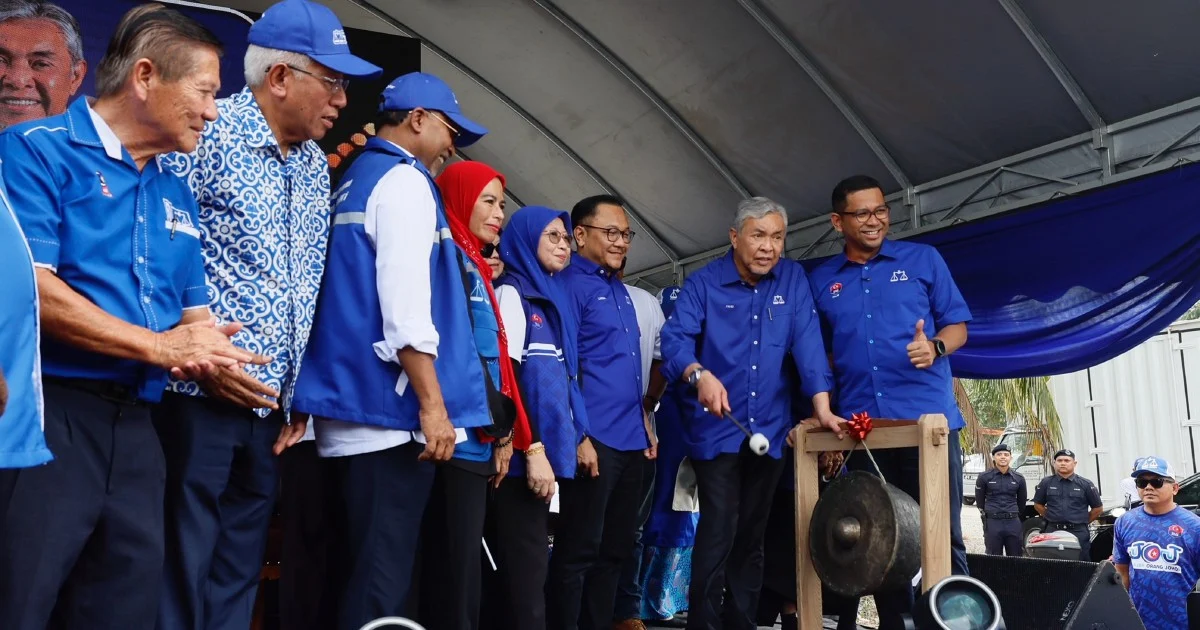
Datuk Seri Dr Ahmad Zahid Hamidi has raised questions about Pas's commitment to supporting Barisan Nasional candidates in the Johor state election, demanding that the Islamist party translate rhetorical backing into concrete ground-level action. Speaking in Batu Pahat, the Deputy Prime Minister suggested that merely voicing support for BN would prove insufficient if the party fails to energize its membership and voter base to campaign actively for coalition candidates.
The challenge represents a delicate moment for Malaysia's ruling coalition ahead of the Johor polls. While BN has historically dominated the state, the political landscape has grown increasingly volatile since the 2018 general election, forcing the traditional governing structure to forge collaborative arrangements with other parties. Pas's formal alignment with BN marks a significant shift, yet questions linger about whether this partnership will translate into measurable electoral advantage on the ground where campaigns ultimately succeed or fail.
Zahid's comments underscore a fundamental anxiety within BN circles: that electoral partnerships can appear strong in press conferences and formal announcements yet crumble when voters enter polling booths if supporting parties fail to mobilize their networks effectively. The distinction between endorsement and active campaigning carries enormous weight in Malaysian elections, where local party structures, volunteer networks, and community relationships often determine turnout and persuasion at the constituency level.
Pas has historically maintained substantial organizational machinery across Johor, particularly in rural and semi-urban constituencies where the party has built strong grassroots presence over decades. If Pas genuinely commits to BN's campaign efforts, this infrastructure could substantially amplify the coalition's reach and voter contact programs. Conversely, if Pas members adopt a passive stance—tacitly accepting BN support without enthusiastically promoting it—the electoral impact could prove marginal despite the headline-grabbing alliance announcement.
The Deputy PM's implicit warning reflects lessons learned from previous state elections where coalition partners failed to deliver expected vote transfers or community mobilization. Malaysian political dynamics increasingly depend on sophisticated coordination between allied parties, requiring synchronized messaging, joint campaign activities, and sustained engagement with shared voter demographics. Without such alignment, even formally allied parties can operate independently, limiting their combined effectiveness.
Pas's position in the Johor political equation has become more complicated following shifts in federal politics and changing urban-rural voting patterns. The party maintains substantial support among rural and religious-minded constituencies but has faced competitive pressure from PAS' own fractious history and from opposition parties in certain areas. By aligning with BN, Pas gains legitimacy and potential access to government resources and patronage networks, yet simultaneously faces skepticism from constituents regarding whether such partnerships compromise its identity as an independently-minded Islamist organization.
Zahid's intervention suggests that BN leadership wants explicit confirmation that Pas understands the seriousness of the commitment. The comment serves dual purposes: it publicly frames the burden of delivery onto Pas while simultaneously signalling to BN's own membership that the coalition will not tolerate free-riding partners. Such clarifications, though diplomatically phrased, prevent backsliding and establish measurable expectations for evaluating partnership success after voting concludes.
The Johor election carries symbolic significance extending beyond the state itself. As Malaysia's southernmost peninsula state with substantial population, strong economic output, and strategic proximity to Singapore, Johor's political direction influences broader federal dynamics and regional stability. A successful BN-Pas collaboration in Johor could establish a template for similar arrangements elsewhere, particularly in states where neither coalition commands overwhelming dominance and coalition-building becomes essential for governance.
Conversely, if the partnership underperforms or generates internal tensions, it could deepen fractures within BN itself, potentially emboldening opposition voices and complicating future electoral prospects. Malaysian voters increasingly demand genuine cooperation rather than purely transactional alliances, and superficial or self-interested partnerships risk generating voter backlash. Pas members, in particular, maintain strongly independent political cultures and may resist organizational directives perceived as subordinating party interests to broader coalition objectives.
The challenge Zahid has implicitly posed to Pas reflects broader questions about how Malaysia's political system accommodates multiple parties within governing coalitions. Clear expectations, transparent resource-sharing, and demonstrated commitment from all partners become essential for such arrangements to succeed. Without these elements, short-term electoral calculations can unravel into longer-term institutional instability.
As campaigning intensifies for the Johor election, observers will watch closely for evidence of genuine Pas mobilization versus passive compliance with BN leadership. Town halls, community engagement events, and volunteer activities featuring prominent Pas figures and active party workers will serve as tangible indicators of commitment depth. The results will ultimately demonstrate whether Zahid's challenge catalyzed meaningful action or merely highlighted underlying tensions within the coalition.

