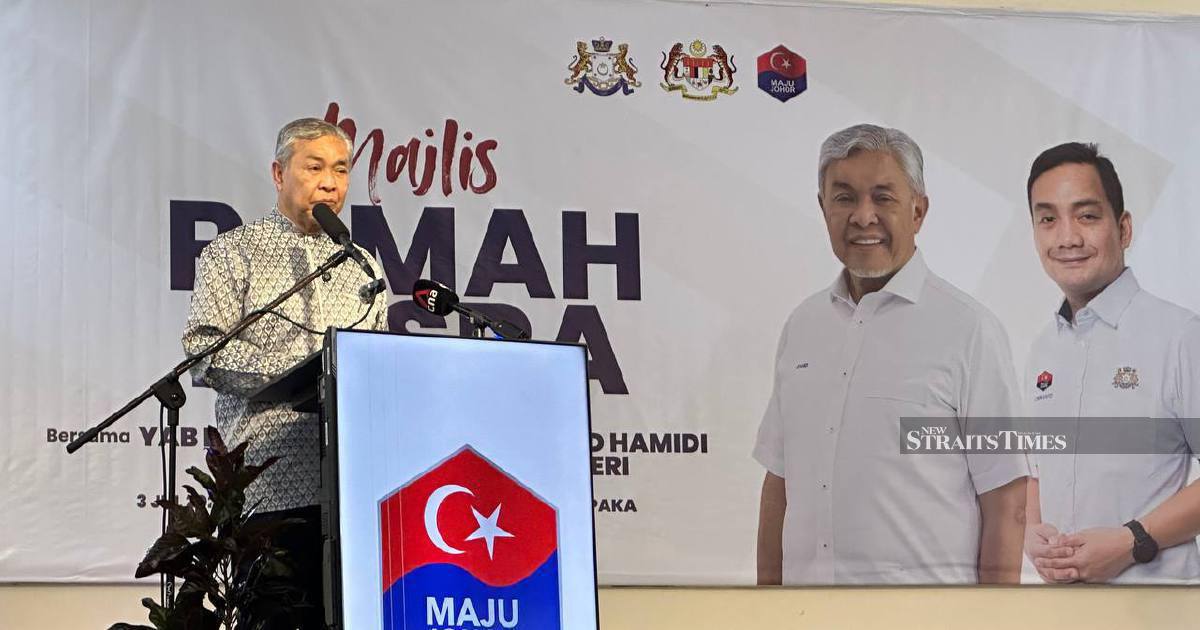
Barisan Nasional chairman Datuk Seri Dr Ahmad Zahid Hamidi has made a direct appeal to his unity government allies to move beyond historical grievances, urging them to abandon campaigns centred on previous attacks against Umno and the broader coalition during the forthcoming Johor state election.
The plea underscores lingering tensions within Malaysia's governing coalition, where multiple parties with distinct political traditions have been forced to coexist following the 2022 general election results. The unity government arrangement, which represents an unprecedented power-sharing experiment in Malaysian politics, has required considerable accommodation and restraint from all constituent parties. Zahid's comments suggest that beneath the surface of cooperation, sensitivities about past criticisms remain acute, particularly among Umno's traditional support base.
Zahid's intervention reflects broader concerns about maintaining coalition cohesion during crucial electoral contests. The Johor election carries symbolic weight as one of Malaysia's most electorally significant states and a traditional Umno stronghold. Any erosion of support in Johor could signal deeper problems within the unity framework and threaten the delicate balance that has kept the coalition functioning. By appealing for restraint now, Zahid appears intent on preventing campaign rhetoric from reopening old wounds that could destabilize the entire arrangement.
The request also reveals the asymmetric vulnerabilities within the coalition. While Umno remains the largest single party within the unity government, it faces potential criticism from partners who had previously positioned themselves as alternatives to Umno-led governance. Some coalition members had explicitly campaigned on platforms questioning Umno's stewardship and integrity in previous electoral cycles. Now operating within the same government, these dynamics create awkward political contradictions that require careful management.
For Malaysian voters, particularly in Johor, the appeal highlights the tension between acknowledging historical political divisions and the practical necessity of coalition governance. The electorate in the state has grown accustomed to clear ideological distinctions between competing blocs. The call to suppress past grievances may strike some as an attempt to enforce selective amnesia about genuine policy disagreements and governance track records that voters reasonably consider when making electoral decisions.
The timing of Zahid's statement during the campaign phase is strategically significant. Election campaigns typically represent moments when parties highlight their distinctiveness and criticize opponents. By asking partners to refrain from raising old issues, Zahid is essentially requesting that potential differentiators be suppressed in favour of unified messaging. This approach carries risks, as coalition partners may feel constrained in articulating their own political identities and rationales for joining the government.
From a Malaysian governance perspective, the appeal also raises questions about the sustainability of the unity model. If coalition members must continually suppress their previous criticisms and distinct platforms to maintain harmony, the arrangement may lack the ideological coherence necessary for long-term stability. Political partnerships built primarily on shared power rather than shared purpose often struggle when electoral dynamics or leadership changes alter the calculus of mutual benefit.
The Johor election thus becomes a test case for whether the unity government's constituent parts can campaign as a genuinely integrated force or whether they must resort to managing internal contradictions and restrained messaging. Success at the ballot box in Johor would suggest voters accept the coalition's current configuration. Disappointing results might indicate that suppressing past criticisms was ineffective at building genuine support for the partnership.
Zahid's position as Barisan Nasional chairman gives his appeal particular weight within Umno circles and potentially among traditional coalition supporters who may view the preservation of Umno-led governance as paramount. However, smaller coalition partners might view such appeals differently, particularly if they believe their electoral viability depends partly on maintaining distance from Umno and articulating their distinct contributions to the government.
Looking forward, the tension Zahid's comments reveal will likely persist throughout the coalition's existence. The unity government represents a pragmatic response to Malaysia's fragmented political landscape following recent elections, but it remains an experiment in managing fundamentally different political forces within a single framework. Whether appeals for internal restraint prove sufficient to maintain cohesion through successive electoral contests remains an open question that will shape Malaysian politics for years to come.

