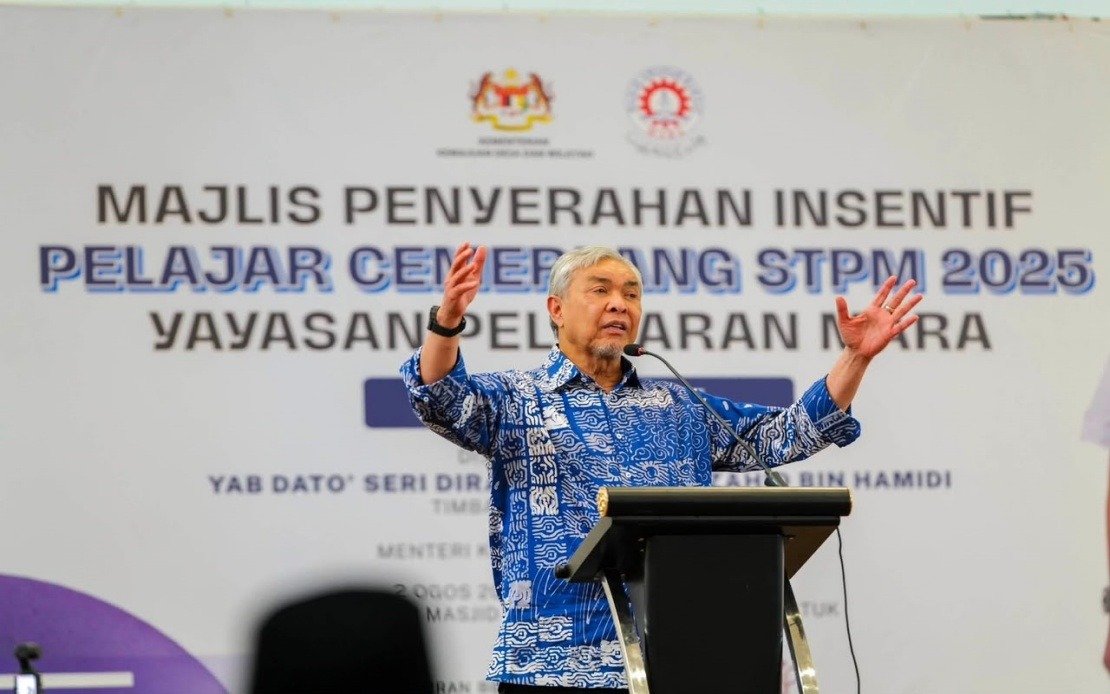
A group of 38 high-achieving secondary school students from Bagan Datuk in Perak has been awarded the 2025 Sijil Tinggi Pelajaran Malaysia (STPM) Excellence Incentive by Yayasan Pelajaran MARA (YPM), marking a significant achievement for the district's education sector. The recognition ceremony highlighted the exceptional calibre of learners emerging from Sekolah Menengah Kebangsaan Khir Johari and Sekolah Menengah Kebangsaan Tun Abdul Razak, the two institutions from which the award recipients were drawn. Deputy Prime Minister Datuk Seri Dr Ahmad Zahid Hamidi, who represents the Bagan Datuk constituency in Parliament, personally acknowledged the accomplishment and underscored its broader implications for the community's development trajectory.
Beyond the STPM excellence awards, the achievement encompasses wider educational gains that reflect positively on the district's scholastic standing. Among the noteworthy outcomes, three students from Bagan Datuk have successfully secured admission to Al-Azhar University in Egypt, a prominent Islamic institution of higher learning. These students will pursue advanced studies in Islamic Syariah and Usuluddin, fields that align with Malaysia's emphasis on maintaining robust religious scholarship and expertise within its borders. This international placement represents both a personal triumph for the selected candidates and a validation of the preparatory work conducted at the secondary level in the district's schools.
The scope of YPM's support extended further with the allocation of education assistance to an additional 23 students through the YPM Education Compassionate Fund. This targeted initiative addresses the financial barriers that can impede talented individuals from underprivileged backgrounds from pursuing tertiary education. The combination of excellence incentives and compassionate funding demonstrates a layered approach to educational accessibility that recognises both merit-based achievement and socioeconomic vulnerability. For Malaysian policymakers and education advocates, such multi-pronged support mechanisms exemplify how well-structured scholarship frameworks can simultaneously encourage academic excellence whilst mitigating inequality.
In his commentary on the announcement, Datuk Seri Dr Ahmad Zahid Hamidi emphasised that these results serve as compelling evidence of the latent capabilities within Bagan Datuk's youth cohort when provided with adequate resources, mentorship, and institutional backing. His remarks centred on a conviction that educational investment yields the highest returns in terms of long-term community welfare and individual empowerment. This perspective aligns with contemporary development economics, which consistently demonstrates that human capital formation through quality education generates multiplier effects across employment, health outcomes, and civic participation. The deputy prime minister's framing of the students' success as a testament to local potential rather than external charity positions education as a mechanism for revealing and cultivating talents that already exist within communities.
The Bagan Datuk MP articulated a vision in which students graduating from the district's schools pursue advanced qualifications at reputable institutions both domestically and internationally, subsequently returning to contribute meaningfully to local development initiatives. This circular model of brain gain—wherein educated individuals leverage their qualifications for community benefit—contrasts with concerns about brain drain that often plague less developed regions in Malaysia. By highlighting aspirations for returning graduates, Datuk Seri Dr Ahmad Zahid Hamidi underscores the importance of creating economic and professional opportunities within districts like Bagan Datuk that can retain talent and attract back those who have completed advanced studies elsewhere.
The recognition of achievement at the STPM level carries particular significance in Malaysia's educational structure. The STPM, or Malaysian Higher School Certificate, serves as the primary qualifying examination for admission to public universities and represents a critical juncture in students' academic trajectories. Strong performance at this stage correlates directly with university placement outcomes and subsequent career prospects. Therefore, the identification and honouring of 38 students who have excelled in this examination reflects not merely an acknowledgement of past success but an investment in the likelihood of these individuals accessing quality tertiary education and assuming leadership roles in their respective fields.
Yayasan Pelajaran MARA itself functions as a cornerstone institution within Malaysia's scholarship and educational support ecosystem. Operating under the purview of the Ministry of Education and MARA, the foundation disburses substantial annual funding to deserving Malaysian students across all levels of formal education. Its dual mandate—promoting excellence through incentive schemes whilst providing need-based assistance—positions it as instrumental in reducing educational disparities. The recognition of Bagan Datuk students by YPM brings visibility to high-performing cohorts in peripheral areas, potentially encouraging similar institutions to identify and nominate their outstanding achievers for broader recognition and support.
The emphasis placed by Datuk Seri Dr Ahmad Zahid Hamidi on parental involvement and encouragement signals an important dimension often underrepresented in discussions of educational success. Extensive educational research demonstrates that parental engagement, regardless of socioeconomic status, substantially influences student motivation, persistence, and academic outcomes. By publicly appealing to parents to serve as sources of strength and encouragement, the deputy prime minister recognises the indispensable role of the home environment in sustaining the momentum that produces high-achieving students. This holistic understanding of educational success—encompassing family, school, and systemic support—provides a more nuanced framework than those focusing exclusively on institutional or individual factors.
For readers across Southeast Asia and particularly within Malaysia, this recognition of Bagan Datuk students carries implications extending beyond local celebration. The consolidation of educational achievement at the secondary level, coupled with successful transitions to tertiary institutions including international universities, demonstrates the viability of meritocratic pathways even in non-metropolitan areas. This model becomes increasingly relevant as Malaysia navigates regional economic competition and seeks to develop diverse centres of excellence across its geography. The success of Bagan Datuk students indicates that with appropriate structural support and local advocacy, districts positioned outside major urban centres can produce talent competitive at national and international standards.

