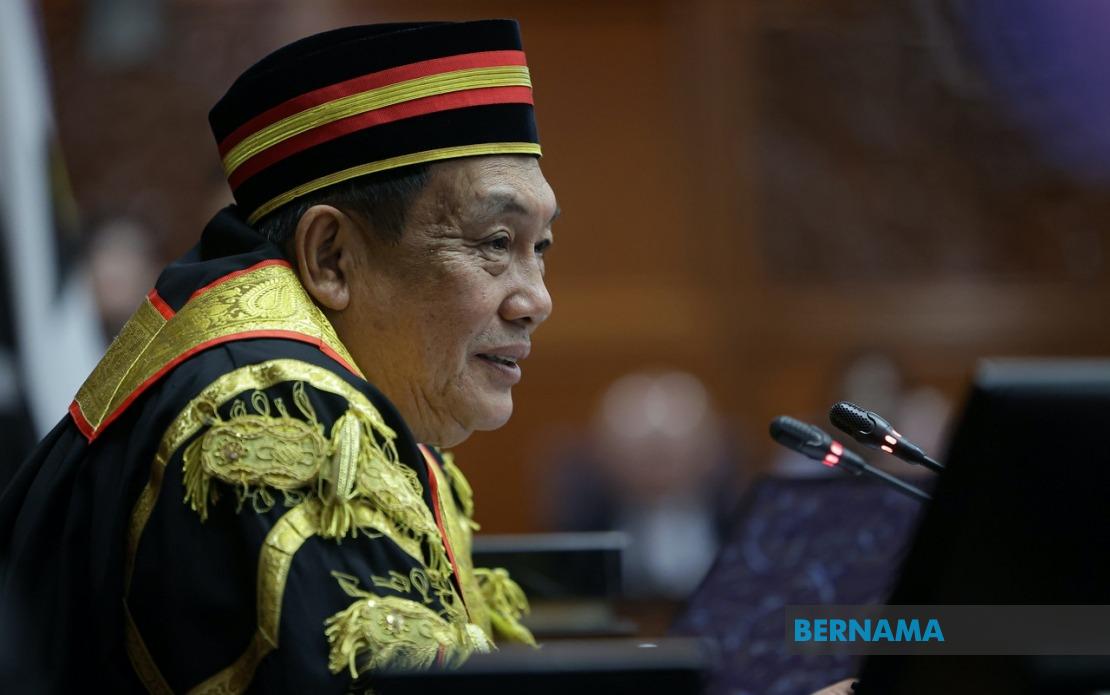
Malaysia's Youth Parliament (PBMy) functions as an incubator for developing politically aware and democratically engaged young people who can think independently and articulate their positions with responsibility, according to Dewan Negara President Datuk Awang Bemee Awang Ali Basah. Speaking at Universiti Malaysia Terengganu during the "Tranung Mari! From Campus to Parliament: Youth Voices Shaping Malaysia's Future" programme, he characterised the initiative as a "school of democracy" designed to equip the next generation with hands-on exposure to parliamentary practices. This framing positions youth political participation not as peripheral activism but as foundational preparation for future national leadership.
The Senate president argued that the Youth Parliament's value extends beyond symbolic inclusion of younger voices. Rather, it provides substantive apprenticeship in the mechanics and ethics of democratic governance, allowing participants to experience the full arc of civic engagement: expressing viewpoints, engaging in structured debate, receiving and processing critical feedback, and ultimately accepting collective decisions even when individual preferences diverge. These experiences, Awang Bemee suggested, impart character-shaping lessons about the reciprocal relationship between exercising voice and accepting accountability that cannot be acquired through classroom instruction alone.
Awang Bemee articulated a specific conception of leadership that moves beyond oratorical prowess or hierarchical command. He emphasised that genuine leadership combines listening skills with speaking ability, problem comprehension with directive authority, and positional power with ethical obligation. This philosophy reflects an emerging consensus among Malaysian institutional leaders that the country's governance challenges require leaders educated in consensus-building, stakeholder engagement, and values-driven decision-making rather than top-down management. By framing Youth Parliament as a training venue for this model of leadership, the Senate president positioned democratic participation as directly relevant to Malaysia's contemporary governance needs.
Central to Awang Bemee's argument was the complementary relationship between Parliament and the Youth Parliament. Whereas Parliament functions primarily as the mechanism for translating public will into legislation and policy, the Youth Parliament supplies essential demographic and ideological perspectives from younger Malaysians whose priorities and worldviews shape long-term national interests. This positioning acknowledges a genuine democratic deficit in most institutional frameworks where young people, despite constituting a substantial proportion of the population and bearing consequences of current policies for decades, lack proportional representation in formal deliberative spaces. The Youth Parliament addresses this gap through a parallel channel that feeds youth perspectives into parliamentary consciousness.
The Senate president outlined three interconnected pillars for youth empowerment that reflect contemporary challenges facing Malaysia. The first pillar—openness and inclusive democracy—emphasises that a thriving democratic system must actively protect and amplify diverse voices, particularly those of marginalised groups. Awang Bemee explicitly connected this to Malaysia's multicultural composition, suggesting that the nation's racial, religious and cultural plurality constitutes a potential strength if managed through mutual understanding and respect rather than treated as a liability requiring suppression. This framing offers a corrective to discourses that position Malaysia's diversity as inherently divisive.
The second pillar addresses educational modernisation beyond traditional academic metrics. Awang Bemee advocated for curriculum development that cultivates critical reasoning, technological literacy, artificial intelligence comprehension, creative problem-solving, entrepreneurial thinking, and civic awareness. This represents a significant departure from examination-focused pedagogies that have historically dominated Malaysian schooling. Importantly, he coupled technological competency with value formation, recognising that digital capabilities without ethical frameworks create risks for individual users and broader social cohesion. The inclusion of emerging economic sectors like the Blue Economy signals recognition that youth education must align with evolving labour market demands and environmental sustainability imperatives.
The third pillar—freedom balanced with responsibility—directly addresses contemporary anxieties about social media, misinformation, and unmonitored speech in democratic societies. Rather than framing digital rights as absolute freedoms, Awang Bemee advocated a nuanced position where exercise of expression carries commensurate obligations toward truthfulness and respectful discourse. His formulation—"before sharing, verify; before believing, scrutinise; before judging, understand; and before acting, consider consequences"—provides actionable guidance for digital citizenship that acknowledges both individual agency and collective welfare. This philosophy responds to documented problems of viral falsehoods and polarised online discourse that have degraded democratic deliberation in multiple Southeast Asian contexts.
The roadshow undertaken by Parliament Malaysia, which included the UMT event, represents institutional recognition that meaningful democratic participation requires deliberate bridge-building between legislative institutions and citizen populations, particularly younger demographic cohorts. By bringing parliamentary leadership to university campuses and creating structured forums for direct dialogue between students and senior parliamentary administrators including Datuk Dr Ahmad Husaini Abdul Rahman, the initiative cultivates informed engagement and demystifies legislative processes. This scaffolding approach acknowledges that meaningful civic participation depends partly on educational access to how formal institutions actually operate.
Awang Bemee's emphasis on Malaysian youth as potential "bridge-builders" who can unify communities and solve collective problems reflects an optimistic assessment of generational capacity despite considerable evidence of political polarisation among young Malaysians. This framing implicitly challenges narratives of youth political cynicism or withdrawal, instead positioning young people as possessing both the agency and responsibility to reshape national trajectories. The confidence expressed in youth potential may itself function as performative empowerment, creating social expectations that younger Malaysians internalise and act upon.
The broader initiative aims to cultivate what the statement characterises as "leadership with integrity" and develop a generation that is "informed, responsible and prepared to play a more active role in shaping Malaysia's future." These articulated objectives encompass both individual character development and systemic capacity-building. They suggest that institutional leadership views youth political education not merely as civics instruction but as essential investment in democratic sustainability and good governance. For Malaysian universities and educational institutions, this positioning implies responsibility to create conditions enabling students to translate parliamentary exposure into substantive civic engagement beyond campus.
The Youth Parliament roadshow's focus on bridging higher education and legislative institutions recognises that university environments uniquely concentrate young people during formative years when political attitudes crystallise and civic habits develop. By conducting the initiative at UMT and presumably other tertiary institutions, Parliament Malaysia expands reach beyond traditionally politically active cohorts. This inclusive approach potentially broadens the demographic base of informed democratic participation, though impact ultimately depends on how effectively participants translate parliamentary exposure into ongoing civic engagement and leadership roles within their communities and professional trajectories.

