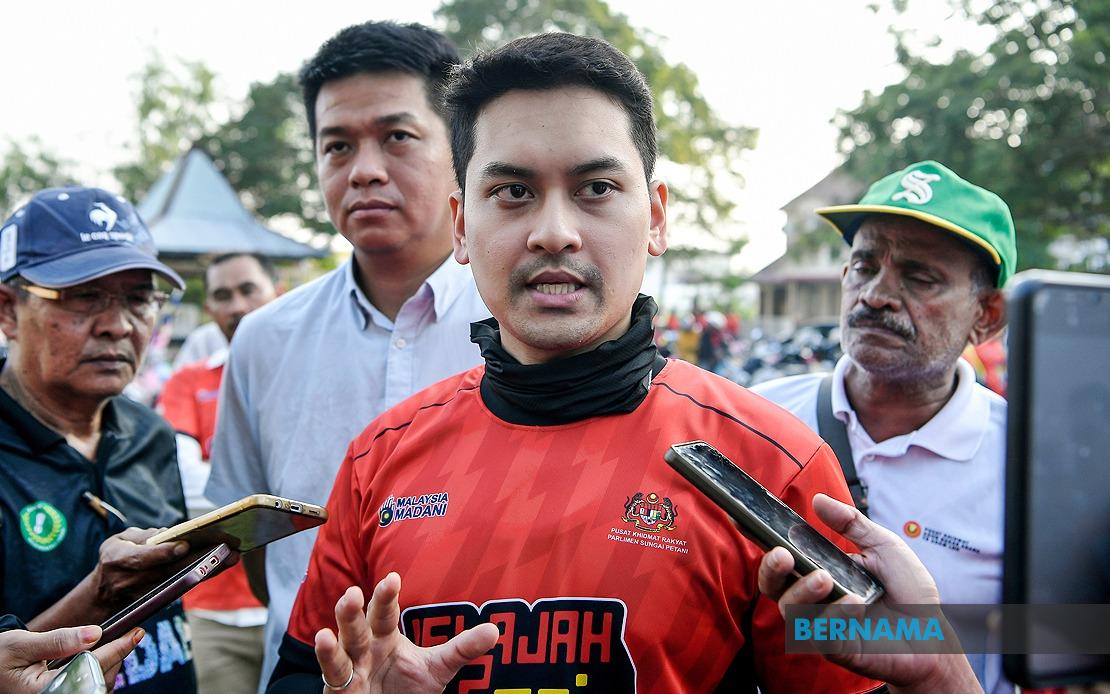
The Ministry of Youth and Sports has embarked on an ambitious nationwide consultation initiative designed to capture the voices and aspirations of Malaysian youth before the government tables Budget 2027 in October. Launching what has been branded the MADANI Youth Budget Tour, the ministry is systematically visiting six distinct geographical zones across the country, beginning with the northern region encompassing Kedah, Penang, and Perlis. This structured approach represents a deliberate effort to ensure that young people from all corners of Malaysia have a direct channel to communicate their needs, concerns, and policy preferences to federal decision-makers during the crucial budget-planning phase.
Youth and Sports Minister Dr Mohammed Taufiq Johari unveiled the initiative at a culminating event for the Sahabat MADANI Merdeka Eve programme held at Universiti Teknologi MARA's Penang campus. The gathering was graced by Prime Minister Datuk Seri Anwar Ibrahim and Penang Chief Minister Chow Kon Yeow, signalling the political significance attached to youth engagement at the highest levels of government. The minister explained that the tour would progress through multiple states over the following month, with each stop featuring town hall sessions and interactive forums where young people could articulate their views directly to government representatives. This cascading approach aims to consolidate grassroots insights that will subsequently be presented to the Prime Minister for consideration in the budget formulation process.
The consultation tour reflects a broader government commitment to institutionalising youth participation in policy-making rather than treating it as an afterthought. Dr Mohammed Taufiq emphasised that engagement sessions under the tour framework provide essential platforms for young Malaysians to articulate their perspectives without intermediaries, particularly given that contemporary youth demonstrate both willingness and courage to speak candidly about their aspirations. By formalising these town hall sessions across multiple zones, the government appears to be acknowledging that youth concerns are too diverse and geographically dispersed to be captured through conventional centralised consultations. The zonal approach also allows for regional nuances to emerge, recognising that aspirations in northern Peninsular Malaysia may differ from those in Sabah, Sarawak, or the southern states.
Beyond budget priorities, the minister articulated a broader vision positioning Malaysian youth as custodians of national unity and social cohesion. He called upon young people to transcend sectarian divides and serve as bridges across racial and religious communities, framing youth responsibility as extending well beyond economic concerns. This framing situates the budget consultation within a wider nation-building context, suggesting that the government views youth engagement as essential not merely for fiscal planning but for strengthening Malaysia's social fabric. The emphasis on unity carries particular resonance in contemporary Malaysia, where inter-communal tensions periodically surface and where youth demographics make them increasingly influential in determining national trajectory.
Complementing the budget tour is the Sahabat MADANI initiative, which Prime Minister Anwar formally launched at the same event. The programme has already recruited 11,060 volunteers nationwide, creating a nationwide network committed to promoting mutual respect and community service across diverse backgrounds. This volunteer movement serves as the grassroots infrastructure through which the government's MADANI vision—emphasising prosperity, inclusivity, and sustainability—can be disseminated and operationalised at community level. The interplay between the budget consultation tour and Sahabat MADANI volunteers suggests a coordinated strategy to deepen government-community connections and channel public sentiment back into institutional decision-making processes.
For Malaysian youth, the MADANI Youth Budget Tour represents a tangible opportunity to influence government spending priorities that directly affect their generation. Whether the consultation addresses education funding, employment programmes, mental health services, digital infrastructure, or housing affordability, youth input at this stage could shape allocations that determine their immediate economic prospects. The timing is strategically significant: Budget 2027, announced over a year in advance, suggests that captured feedback still has meaningful opportunity to influence departmental planning before the formal budget document is finalised.
The consultation framework also carries implications for how Malaysia's government engages with younger demographics more broadly. Should the MADANI Youth Budget Tour successfully translate youth feedback into visible budget allocations, it could establish a precedent for regular, structured youth consultation on major policy matters. Conversely, if the exercise becomes performative without demonstrable impact on budget outcomes, youth confidence in participatory governance mechanisms could be diminished. The visibility of Prime Minister Anwar's presence at the launch signals that outcomes will receive attention at the highest political levels, though translating consultation into actual policy change remains the ultimate test of the initiative's credibility.
Regionally, Malaysia's approach to youth consultation may influence how other Southeast Asian governments engage with younger populations. Many countries in the region face challenges of youth disengagement from formal political processes, and the MADANI tour model—combining grassroots town halls with structured feedback collection—offers a replicable template. Should Malaysia demonstrate successful outcomes from this consultation, it could inform best practice discussions within ASEAN and influence how regional governments approach fiscal policy consultation more inclusively.
The initiative also reflects evolving expectations around democratic participation in the digital age. Contemporary Malaysian youth, particularly those in urban areas, increasingly expect government institutions to be responsive and accessible rather than hierarchical and distant. The tour's emphasis on direct dialogue and town hall sessions responds to these expectations, though successful implementation will depend on government demonstrating genuine openness to challenging or unconventional feedback rather than merely validating pre-determined positions. The success of the MADANI Youth Budget Tour will ultimately be measured not just by the volume of feedback collected but by the visibility and influence of that feedback in the final Budget 2027 document tabled before Parliament in October.

